Information checked: September 2026
A note before you start: Everything in this series is based on my own experiences of wild camping while travelling by bicycle. Conditions, laws and risks vary enormously between locations and can change over time. What has worked for me may not be appropriate or safe for you. Always check current local rules, assess the conditions for yourself and make your own decision about whether and where to camp. This article is not legal advice. Where possible, I’ve linked to official sources, but rules can change, so always check the current guidance for the place you are visiting.
Whether wild camping is legal or not is usually one of the hardest questions to answer, especially in simple terms of yes or no. Over the years, I have wild camped in dozens of countries around the world and the rules have ranged from places where camping outdoors is treated as a perfectly normal use of the countryside to others where, technically speaking, I probably shouldn’t have been putting the tent up at all.
Laws can change from one country to another, from one region to another and sometimes according to the exact type of land you’re standing on. A national park can have different rules from the countryside surrounding it. Beaches can have their own restrictions. Forests can be governed differently from open land. That means the first rule of wild camping law is probably the least satisfying one: taking the time to check the rules for where you actually are.
Legal, Tolerated and Possible Are Different Things
Before getting into individual countries, I think there is an important distinction to make. Something being possible does not mean it is legal. Something being tolerated does not mean you have a legal right to do it and something being legal does not mean you can behave however you like once you arrive.
A cyclist quietly arriving in the evening, putting up a small tent, leaving no trace of them ever being there and disappearing again early the following morning is very likely to receive a different reaction from somebody setting up a large camp for several days, playing music late into the night and leaving piles of rubbish behind.
Adopting a low-profile and minimal-impact style of wild camping is fundamental to how I wild camp, regardless of where I am, but it does not change the law.
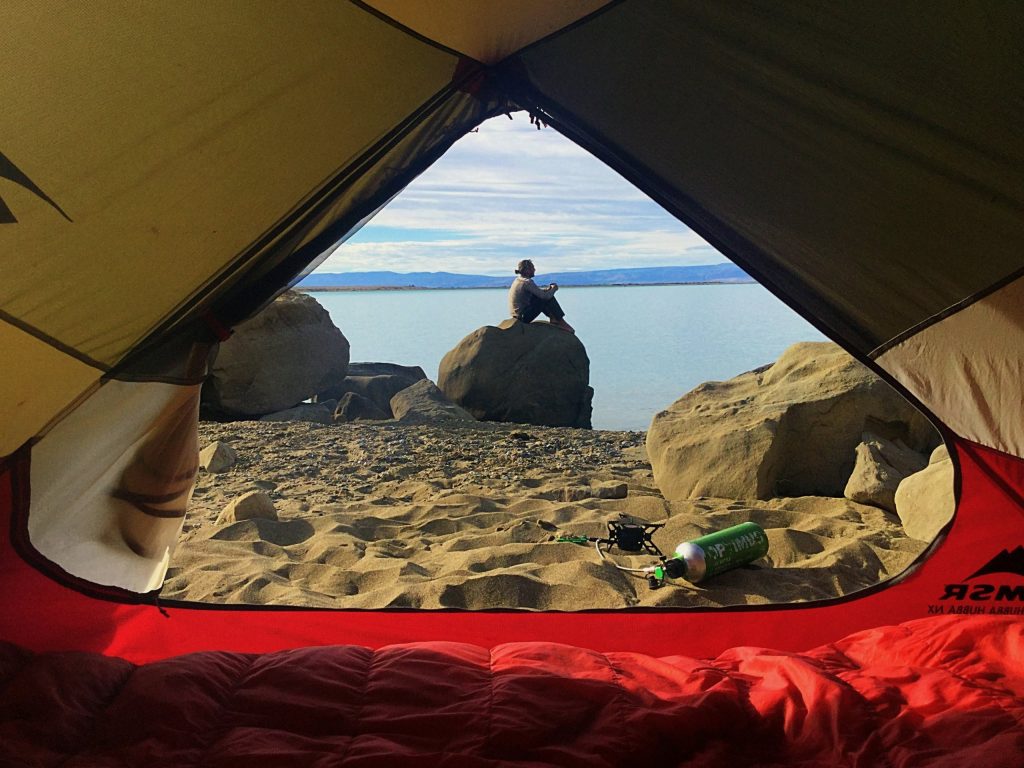
The advice in this series is solely based on my own experience, and over the years I have camped in places where I had permission, places where camping appeared to be tolerated and others where I could not honestly say I had an established legal right to be there. None of that should be taken as encouragement to ignore local laws or restrictions. The fact that I have successfully camped somewhere without being moved on does not suddenly make it legal.
For me, the practical reality is that I have almost always managed to find somewhere to spend the night, but that is very different from saying wild camping is always legally permitted. Doing it respectfully, both to nature and to other people nearby, and leaving your camp as you found it — or, better still, in a better state than you found it — is fundamental to how I approach it. Packing out a bag of someone else’s rubbish and tying it onto a pannier until you reach a bin won’t suddenly make an unauthorised camp legal, but it does at least mean you have left the place better than you found it.
My experience is useful in helping others establish whether wild camping is right for them, but it is not, and shouldn’t be taken as, legal permission. Knowing the laws will certainly help you make a decision, but even then, as we are about to find out, they aren’t always clear-cut.
England is a particularly good example. Even where the public has a right to roam over certain open-access land, camping is specifically listed among the activities that are not normally included in that access right. So, on that note, let’s start by taking a look at what the countries closer to my homeland have to say about wild camping.
Wild Camping in England
In England, there is no general right to wild camp wherever you choose without the landowner’s permission. Even designated open-access land does not automatically give you the right to put up a tent. The right to walk across or spend time on an area of land and the right to camp on it are not the same thing.
Government guidance specifically lists camping among the things you cannot usually do under the ordinary right to roam. So, as a general rule, if you want to wild camp legally in England, you should have the landowner’s permission.
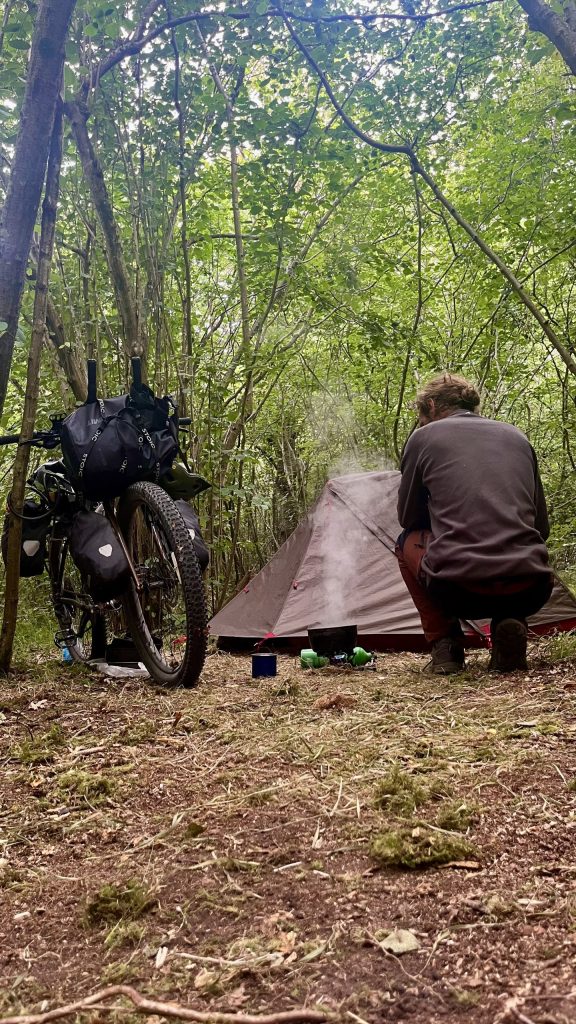
There is, however, one very well-known exception in England: Dartmoor.
In May 2025, the Supreme Court ruled that the public right of access under the Dartmoor Commons Act 1985 includes wild camping as a form of open-air recreation. The ruling confirmed that camping can fall within the statutory right of access on the Dartmoor Commons, subject to the rules and byelaws that apply there. That still does not mean all of Dartmoor is one giant free campsite.
The practical position depends on where you are and the current rules in force at the time. Anyone planning to rely on that right should check Dartmoor National Park’s current guidance and camping map rather than simply assuming the entire National Park is available.
There is also a slightly awkward question for bicycle travellers because the public-facing guidance around this right has historically been framed around backpack camping and walking expeditions.
For that reason, I would check the current guidance rather than assume that arriving with a loaded bicycle automatically puts you in exactly the same practical position as somebody travelling on foot.
What the Repeal of the Vagrancy Act Actually Changed
One of the biggest legal changes in England and Wales happened very recently. On 29 June 2026, the Vagrancy Act 1824 was repealed, ending legislation that had criminalised forms of rough sleeping and begging for almost two centuries.
At first glance, that might sound like good news for wild campers. If sleeping outside is no longer an offence under the Vagrancy Act, does that mean we are now free to put up a tent wherever we like?Unfortunately, despite what all those Instagram videos you’ve seen may suggest, no.
The repeal was primarily about stopping people experiencing homelessness from being criminalised simply because they had nowhere else to sleep. It did not create a new recreational right to camp on somebody else’s land.
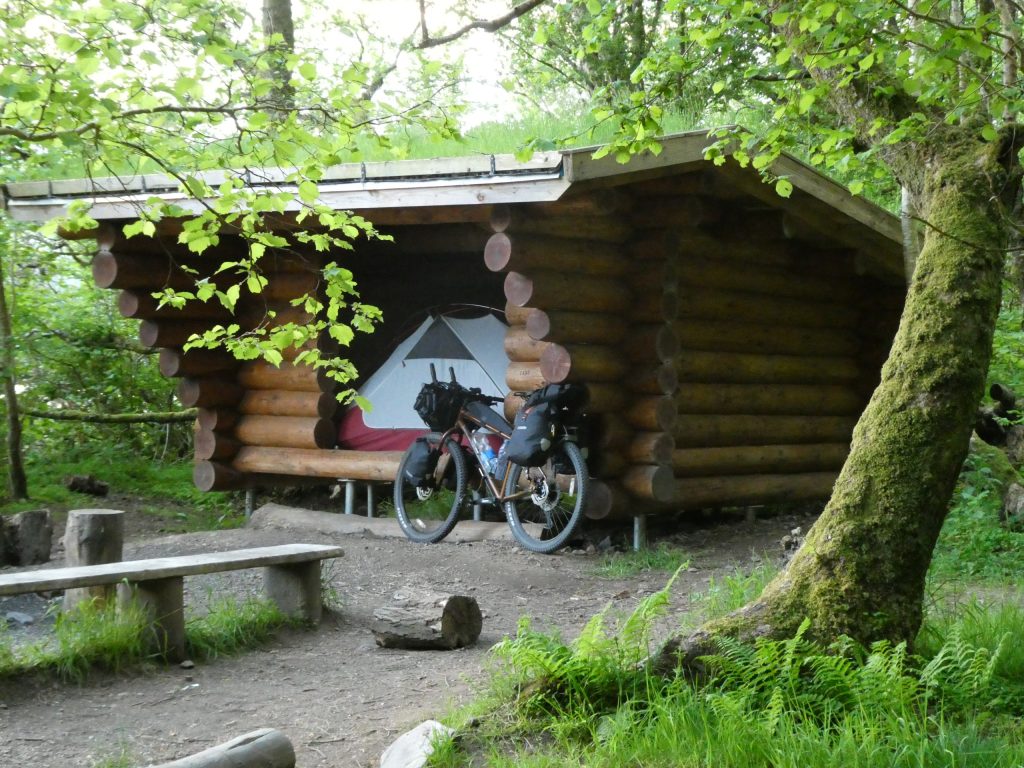
The rules governing recreational wild camping in England and Wales largely sit elsewhere. Landowner rights, trespass law, open-access rules, local byelaws, national-park regulations and protected-area restrictions can all still apply.
So the practical position for a bikepacker changed much less than the headlines might suggest. The repeal removed the old rough-sleeping offences. It did not suddenly turn private land, commons or open countryside into a legal free campsite.
The important point for wild camping in England is therefore simple: the Vagrancy Act may have gone, but the basic position on recreational wild camping in England and Wales has not suddenly disappeared with it.
Wild Camping in Wales
Wales is much closer to England than Scotland when it comes to wild camping. There is no broad general right to pitch a tent wherever you choose, and open-access land does not automatically carry a right to camp.
For example, Eryri National Park states clearly that wild camping is not a permitted activity under the Countryside and Rights of Way access provisions unless permission has been granted, and much of the National Park remains privately owned.
That does not mean wild camping never happens in Wales. It obviously does. But once again, something happening regularly and something being legally permitted are not the same thing.
The safest legal starting point is therefore to seek permission from whoever owns or controls the land.
Wild Camping in Scotland
Scotland is very different and an ideal place to dip your toe, or tent, into the world of wild camping.
Scottish access rights include responsible lightweight camping in tents, in small numbers and generally for no more than two or three nights in one place. Campers are expected to stay well away from buildings and roads and to leave no trace.
For somebody travelling by bicycle, this makes Scotland considerably more straightforward. It does not mean, however, that absolutely everywhere is available. You still need to respect homes, working land, crops and areas where access rights do not apply.
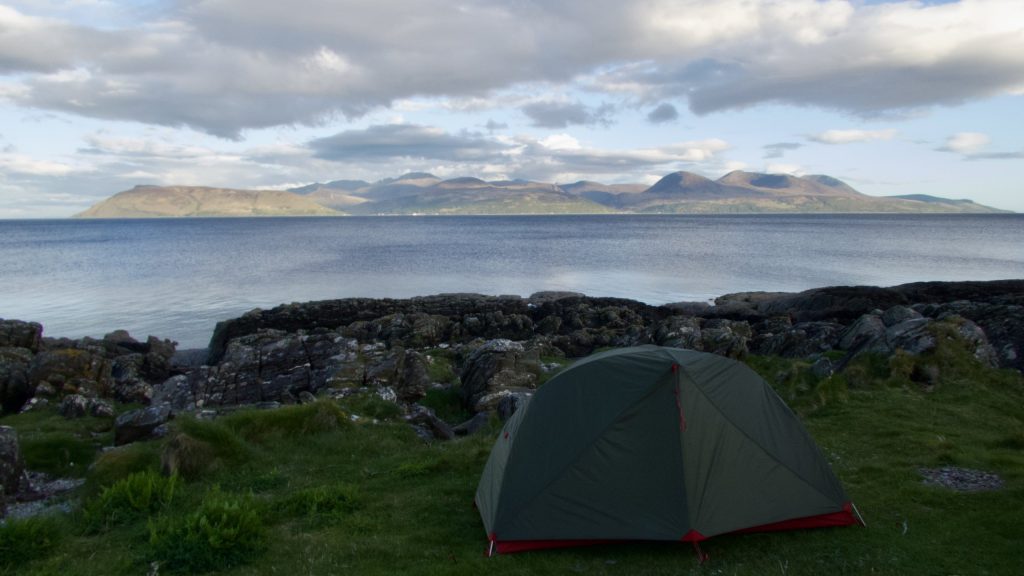
There can also be local restrictions in heavily used areas or places under particular environmental pressure.
A good example is Loch Lomond & The Trossachs National Park. Some of its most heavily used lochshore areas fall within seasonal Camping Management Zones. From 1 March to 30 September, camping in those zones requires either a campsite booking or a camping permit. Outside those zones, the normal Scottish Outdoor Access Code continues to apply.
So even in Scotland, saying “wild camping is legal” is too simplistic.
The underlying right is much broader than in England or Wales, but it still comes with responsibilities and local exceptions. Having spent a lot of time travelling and camping in Scotland, that difference is noticeable. Wild camping feels far more embedded in the outdoor culture rather than something you are automatically trying to do unofficially.
Wild Camping in Northern Ireland
Northern Ireland does not have Scotland’s broad right-to-roam system.
There is no general right to wild camp wherever you choose, so the safest assumption is that permission is required unless camping is specifically permitted in a particular place.
Even on public Forest Service land, designated campsites are the normal option and anyone wishing to camp outside those designated areas is required to obtain permission from Forest Service.
Again, that is the legal starting point. What people actually do in practice can be another matter.
The Law and Reality Don’t Always Match
I’m currently back in the UK preparing for my next long journey from Kent to Cape Town, and I still regularly wild camp despite often being surprisingly close to towns and cities.
That does not somehow change the legal position. What it does show is that what happens in practice can be much more nuanced than a simple legal-or-illegal label suggests. I arrive late, stay quiet, put up a small tent somewhere unobtrusive as darkness falls, cause no damage and leave no trace of the fact I was ever there. Come morning, I’m up at first light and gone before most people are awake. But just because I always try to maintain a low profile, that is very different from saying I had a legal right to camp there.
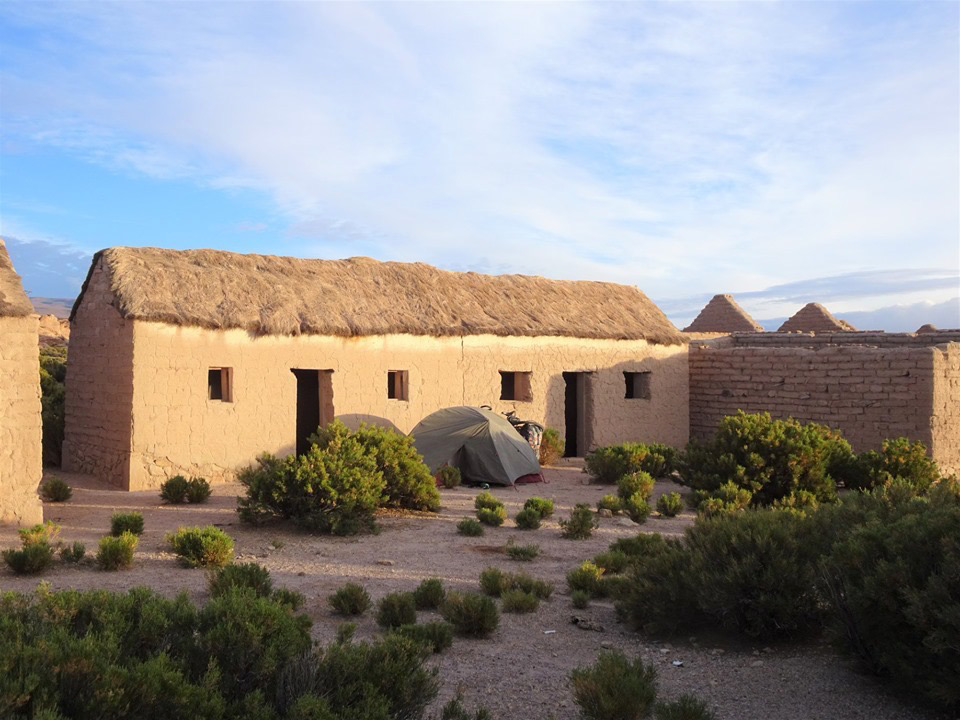
I’ll go into the actual techniques I use to stay unnoticed later in this series because that subject deserves an article of its own. For now, the important distinction is that avoiding attention and having permission are not the same thing.
Tolerance is not permission. Lack of enforcement is not legality. And legality does not remove responsibility.
What About Europe?
Cross the Channel and the picture becomes even more complicated.
Europe is not one legal system and there is no useful answer to the question, “Is wild camping legal in Europe?” In some countries, public-access traditions make it relatively straightforward. In others, wild camping is much more restricted. Then there are countries where national law is only part of the story because individual regions, municipalities and protected areas impose their own rules.
That is why I would never rely on a simple red-and-green map online telling me which European countries allow wild camping and which do not. They may help form an understanding, but they are often far too oversimplified.
The reality is usually much more complicated than that. A few examples show just how different the approaches can be.
Scandinavia and Right to Roam
Norway, Sweden and Finland are probably the best-known European examples of countries with strong public-access traditions.
Broadly speaking, these systems allow people to enjoy uncultivated countryside and, under certain conditions, spend the night there. That makes lightweight wild camping considerably easier than somewhere like England. But even in countries known for generous access rights, there are still rules.
In Norway, the right to roam includes overnight camping on uncultivated land. Tents normally need to be at least 150 metres from an inhabited house or cabin, and stays in the same place are generally limited to two nights, although longer stays can be allowed in mountains and remote, sparsely populated areas. Local rules and protected-area restrictions can still apply.
Sweden’s Right of Public Access allows people to pitch a small number of tents for a night or two, provided they stay away from homes, crops and livestock and do not cause damage or disturbance. Larger groups and more intensive camping may require the landowner’s permission, and protected areas can impose their own rules.
Finland follows a similar broad principle through everyman’s rights, which allow people to temporarily stay in nature without landowner permission where those rights apply, provided they do not cause damage or disturbance. As with the other Nordic countries, local and protected-area rules still matter.
The important lesson is that right to roam does not mean do whatever you like. Those rights exist alongside responsibilities.
France and the Difference Between Camping and Bivouacking
France is particularly interesting because the distinction between camping and bivouacking can matter. French law allows isolated camping away from roads and public ways where the person entitled to use the land agrees, but it also prohibits or restricts camping in a number of sensitive areas and allows additional local restrictions to be introduced.
That is where the difference between camping sauvage and bivouac becomes important.
In some protected areas, full wild camping may be prohibited while a simple overnight bivouac is permitted under specific conditions. That might mean arriving late, sleeping for one night and leaving again early rather than establishing a camp for several days.
For somebody travelling by bicycle, that distinction is particularly relevant because what I normally do already looks much more like a bivouac than a conventional campsite. I arrive, sleep and leave.
But that does not automatically make it legal. Exactly what is permitted can change from one protected area to another, so the local rules still need checking.
Germany and More Restrictive Systems
Germany gives another useful contrast. Access to forests and countryside does not automatically mean you have a right to pitch a tent there, and the exact rules depend partly on the federal state you are travelling through.
Bavaria, for example, explicitly states that the ordinary right of access to nature does not itself include pitching tents or sleeping outdoors and that these activities require the owner’s consent, subject to any other restrictions that apply.
That makes Germany a good example of why broad statements such as “wild camping is illegal in Germany” are tempting but often too crude. The more accurate position is that access, camping and overnight stays are regulated differently, with state law, protected areas and landowner permission all potentially playing a role.
For a touring cyclist, the sensible approach is therefore to check the rules for the particular state and area you are actually travelling through.
What About the Rest of the World?
Once you leave Europe, generalising becomes even more difficult.
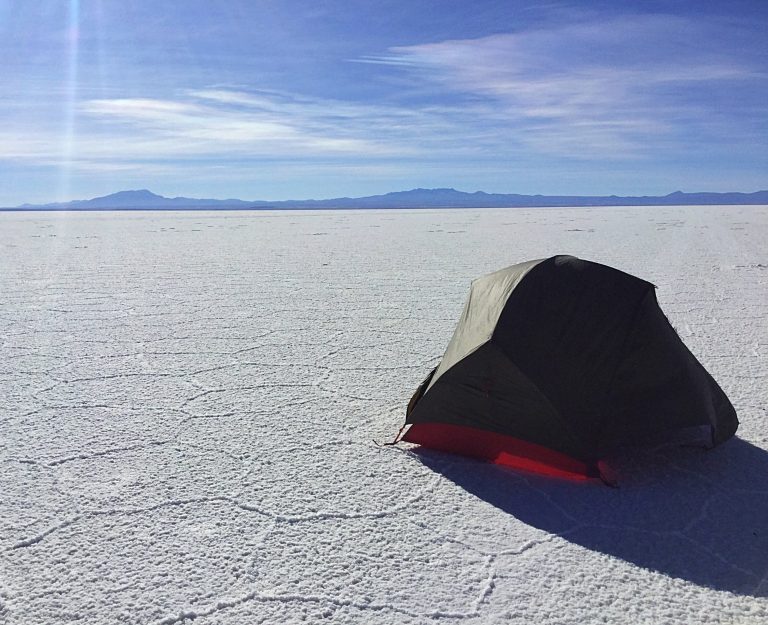
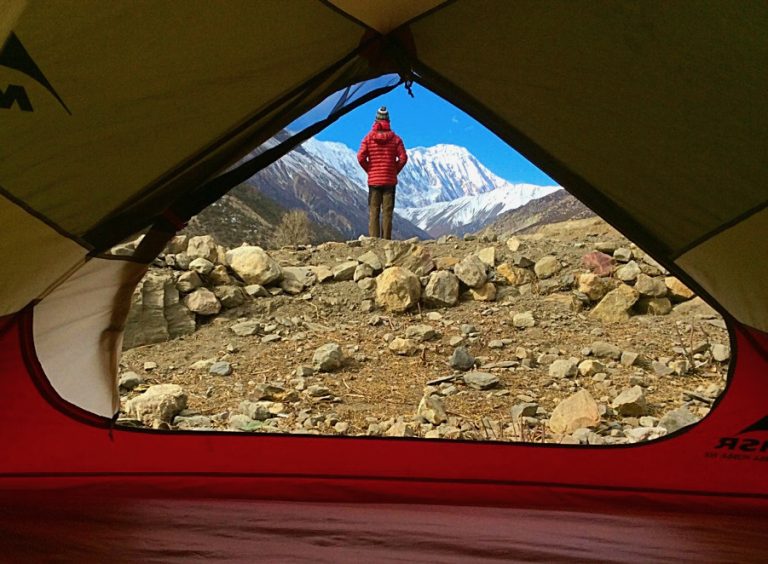
During my own travels I have wild camped throughout Asia, Australia, New Zealand and North and South America, and I managed to find somewhere to sleep in every country I crossed on my round-the-world journey.
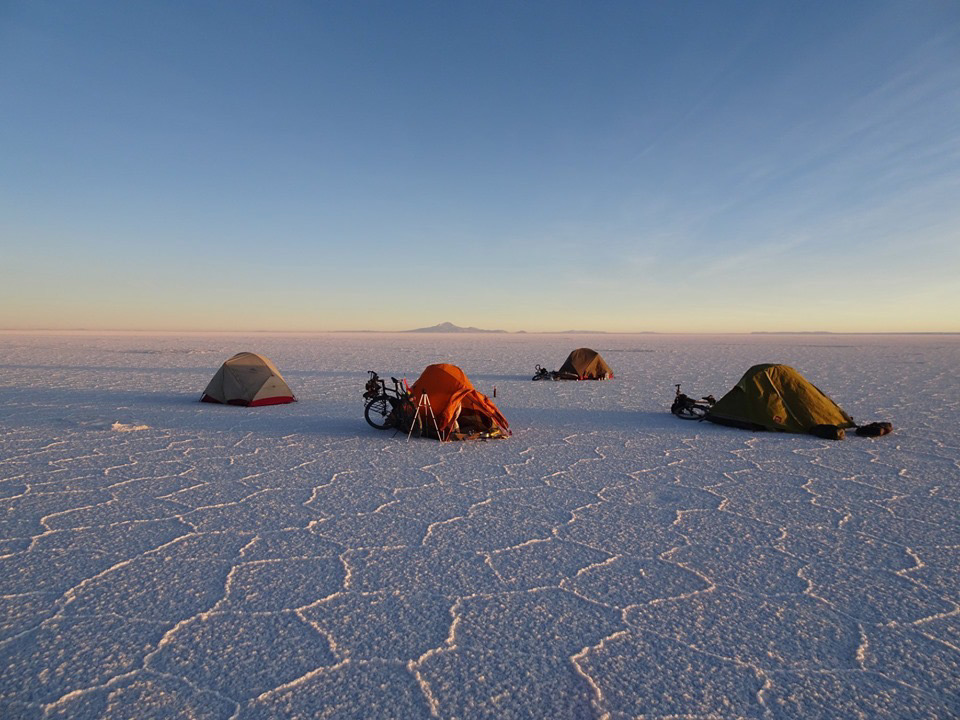
That certainly does not mean wild camping was legally permitted everywhere I did it. There were undoubtedly nights where the legal position was unclear to me, and others where I may not have been complying with every local rule.
In some places there was so much empty land that finding somewhere to camp hardly required any thought at all and the chance of encountering anyone was minimal. In others, discretion became much more important. Sometimes, if I could work out who controlled the land, I asked permission. Other times people invited me onto their land or actively suggested somewhere better for me to sleep.
The rules can be national, regional, municipal or specific to protected areas, which is why saying “wild camping is legal in Africa” or “wild camping is legal in South America” is almost meaningless. Africa is not one legal system. Neither is Asia or South America.
The United States gives a useful example of how different the terminology can be. On much Bureau of Land Management land, camping outside developed campgrounds is referred to as dispersed camping, and it is expressly allowed in many areas subject to local restrictions and stay limits.
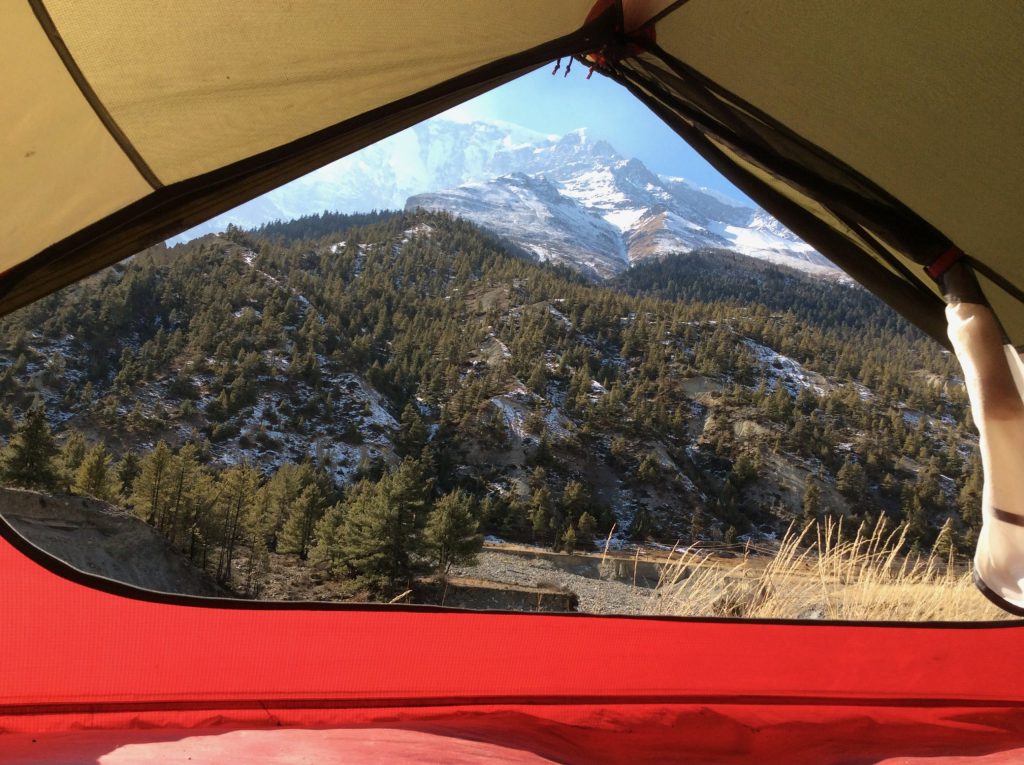
The mistake, therefore, is not assuming wild camping is always illegal. The mistake is assuming that because it worked in one country, the same rules apply once you cross the next border.
As FTtouring’s Destination Guides develop, I’ll include country-specific information where I have reliable firsthand experience and current information, because that is far more useful than trying to create one huge worldwide list that becomes outdated almost immediately.
Asking Permission
There is also one very simple way of removing much of the legal uncertainty in some situations. Ask. This isn’t always possible, as just knowing who owns what piece of land isn’t easy. It’s even harder if darkness is an hour away and nobody is in sight.
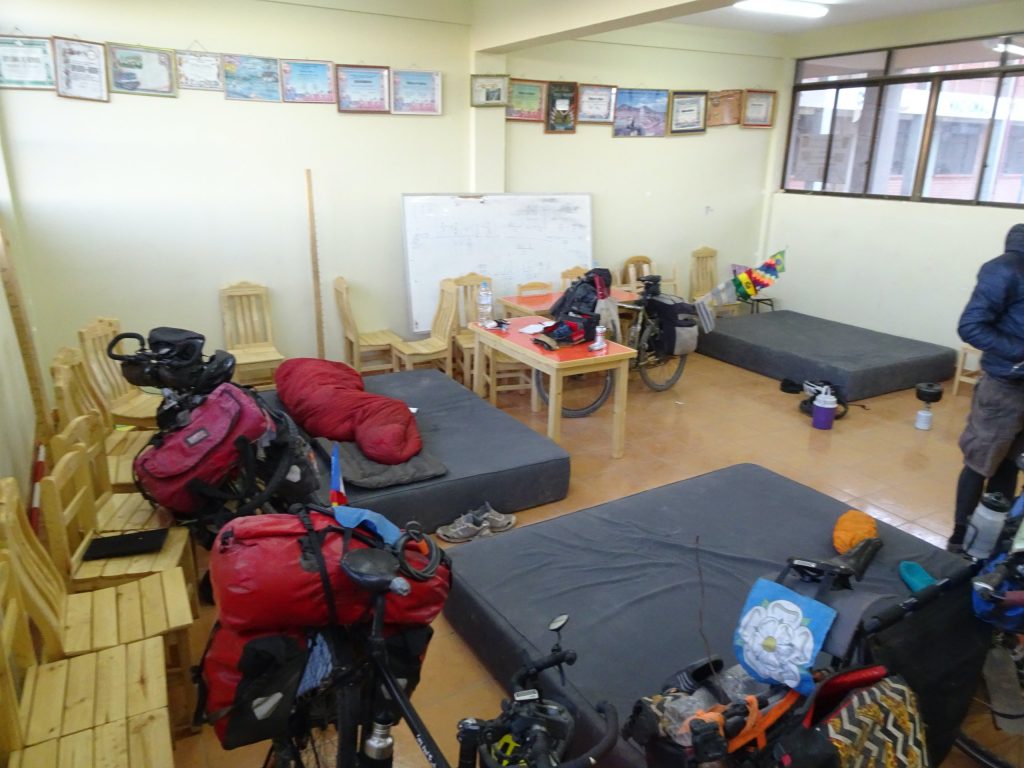
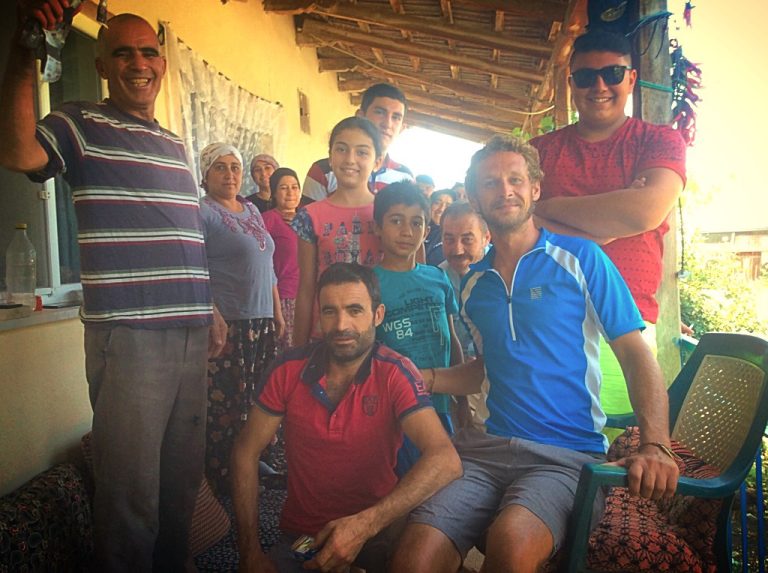
A farmer, café owner, petrol station, restaurant, church or somebody with a patch of land may be perfectly happy for you to put a tent somewhere for the night. In Turkey, asking at petrol stations is a well-known option amongst touring cyclists. I was never turned away and was always shown to a patch of grass or disused plot next door where I could camp.
These camps came with both a big upside and a big downside. The upside was that they were usually open 24 hours, so it was a bit like having a private security guard watching over you and your belongings all night. The downside was that, because they were open 24 hours, it could be a noisy night’s sleep.
In Latin American countries, I would often ask at local police and fire stations and, again, was frequently given somewhere to put the tent.
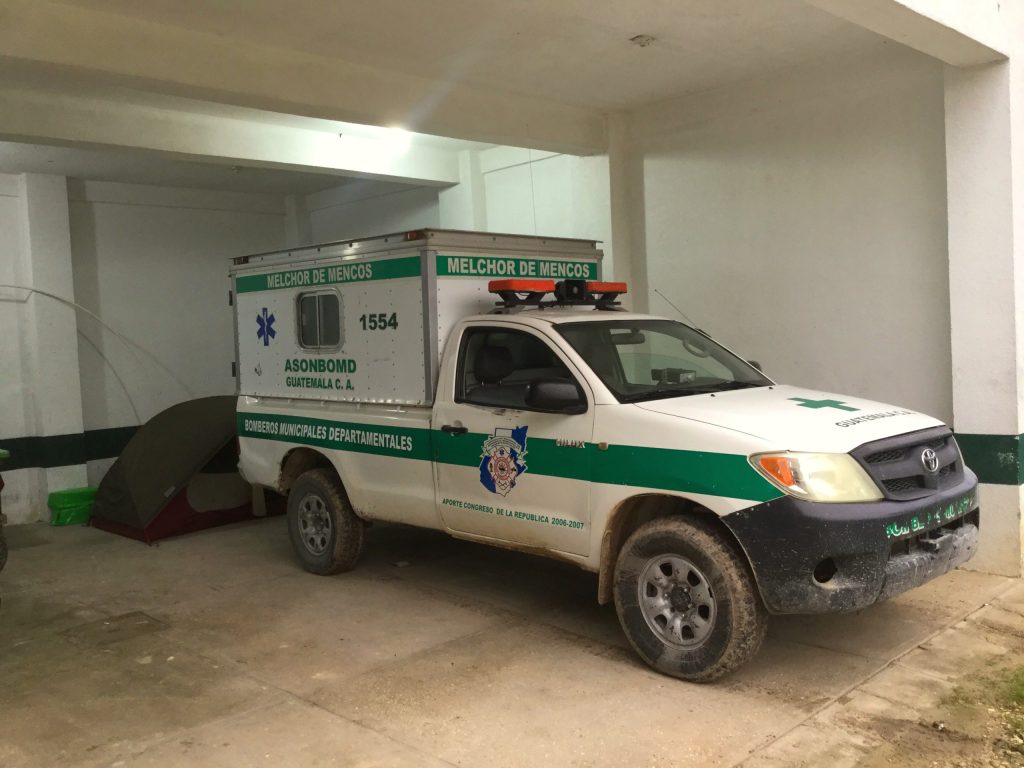
Sometimes asking leads to much more than simply receiving permission to camp. People have pointed me towards better places, offered food and water and generally turned what might have been an anonymous night beside the road into one of the more memorable evenings of a trip.
Of course, asking has one obvious disadvantage. You can be told no. But if somebody who controls the land says no, then the decision has been made for you. Move on. There will be somewhere else.
What If Somebody Finds You?
The same principle applies if I am discovered somewhere I probably should not be. I don’t argue. If somebody genuinely has the authority to ask me to leave, I leave. Most situations do not need to become confrontational.
Over all the nights I’ve spent wild camping, my experience has generally been that people are far more curious than angry, particularly once they realise I’m travelling by bicycle and only intending to stay for one night. That does not mean everybody will react that way, but some of my most memorable experiences have come from late-night interactions.
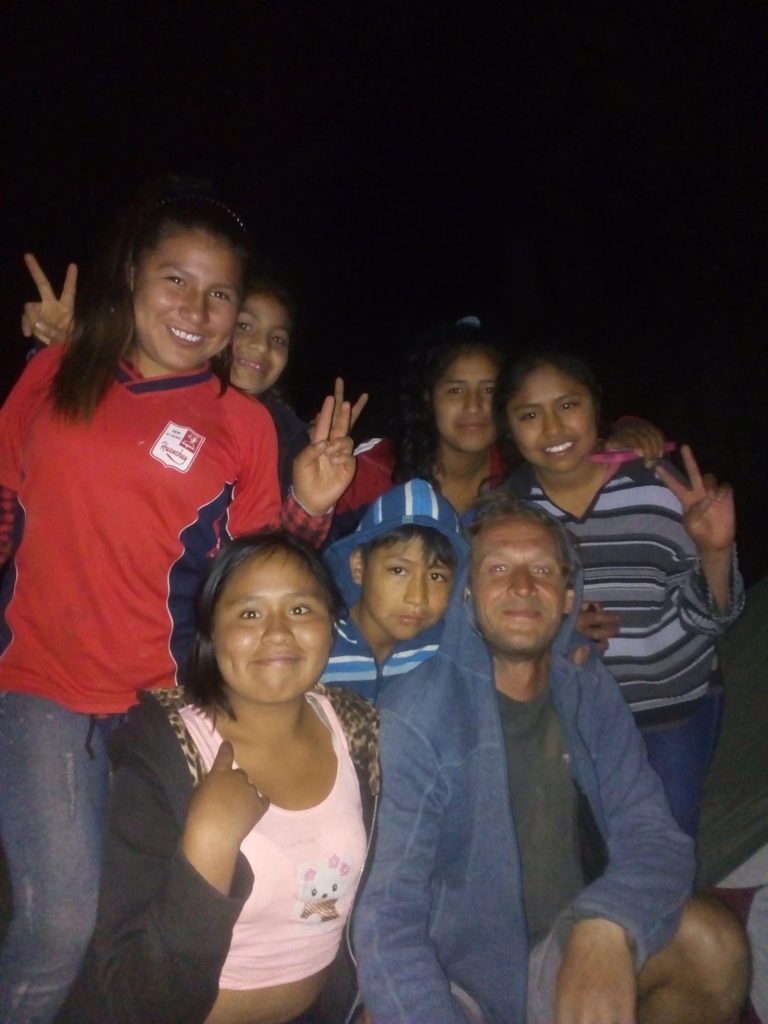
In Bolivia, I thought I’d found the perfect wild camp on the sandy shores of a river, far from the nearest settlement. I’d only just got into my sleeping bag when I became aware of voices nearby and, within minutes, the full moon was illuminating the silhouettes of people outside the tent. Unzipping the tent to investigate revealed two things to me. The first was that my map of the local area was wholly inadequate when it came to identifying villages and, secondly, that what felt like the vast majority of a previously unknown village just around the river was now standing around my tent door.
Again, it was curiosity more than anything, and my quiet night in nature turned into an evening talking with people in a mixture of broken English and Spanish that, without wild camping, would never have happened. The next morning I was invited to the local school to talk to the students and fed one of the best meals I’d had in months.
Not all experiences have been as comfortable.
In India, I awoke one night to the sound of my tent zip being unfastened and, by the time I’d found my headtorch and turned it on, a middle-aged man was sitting cross-legged next to me with a blank stare on his face. No amount of attempted communication could coax him into speaking and, after around three minutes, he simply got up and left. It was just another example of how differently personal space can be viewed in different places. I’m convinced he meant me no harm, but his inquisitive nature had apparently ensured he saw no particular problem with coming right on in.
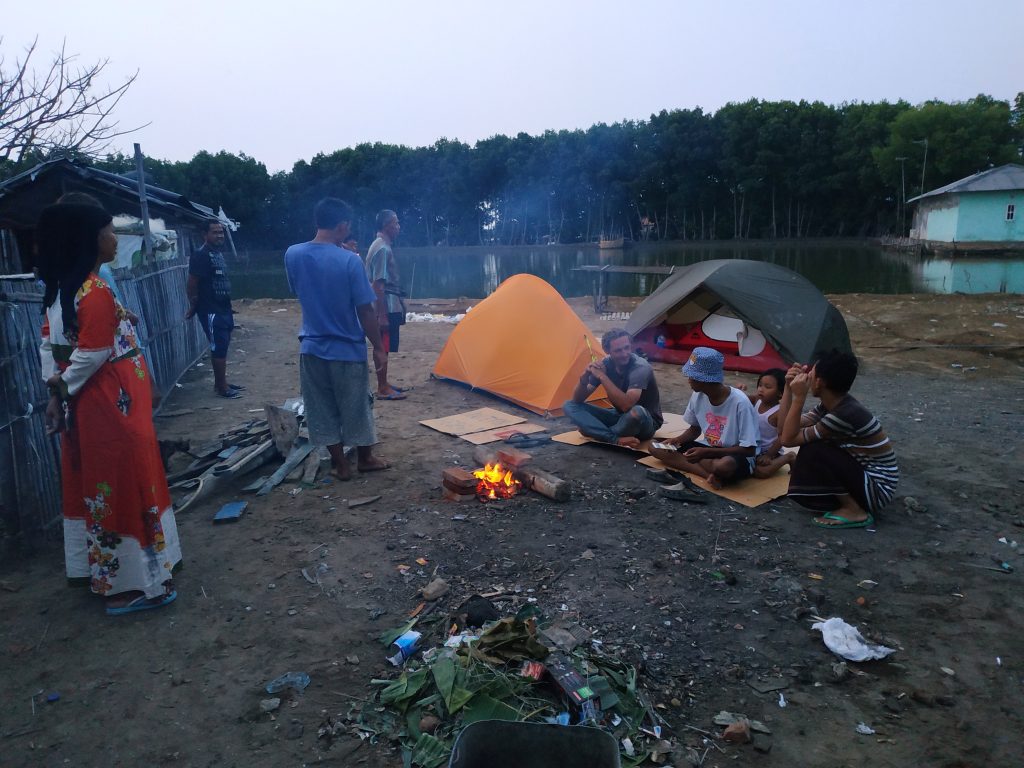
And I could go on, both good and bad. Romania saw me found by police one night, the only time in more than three years it had happened, only for them to give me their phone number in case I needed them during the night and wish me luck on my journey.
The short of it is that, in my own experience, most people you encounter, whether cycling or camping, are kind, curious and simply want to help. I’m not saying the chances of encountering the village nutter are zero, but it is more likely that those you do come across will simply want to know what you are doing.
That does not mean every encounter will be harmless, and I’ll detail how I deal with safety later in this series. From the point of view of this article, the important part is much simpler: if somebody who genuinely controls the land asks me to move, I move.
Responsible Camping Still Matters
Whatever the law says, behaviour matters. Wild camping only continues to be tolerated in many places because most people leave very little evidence they were ever there, respect nature and those who share it with them, and act in ways that ensure they aren’t a nuisance to anyone or anything.
That means taking rubbish away, not damaging vegetation or fences, not blocking tracks or gates and being careful not to disturb livestock. After all, camping in a field of cows is nobody’s idea of a tranquil nights sleep.
It’s a very rare camp where I’ll have a fire. Usually it’s just not worth it, as I’m arriving late and just want to sleep, but if you do have one, make sure fires are actually permitted and appropriate for the conditions before lighting it. Where they are allowed, they should be completely extinguished before you leave.
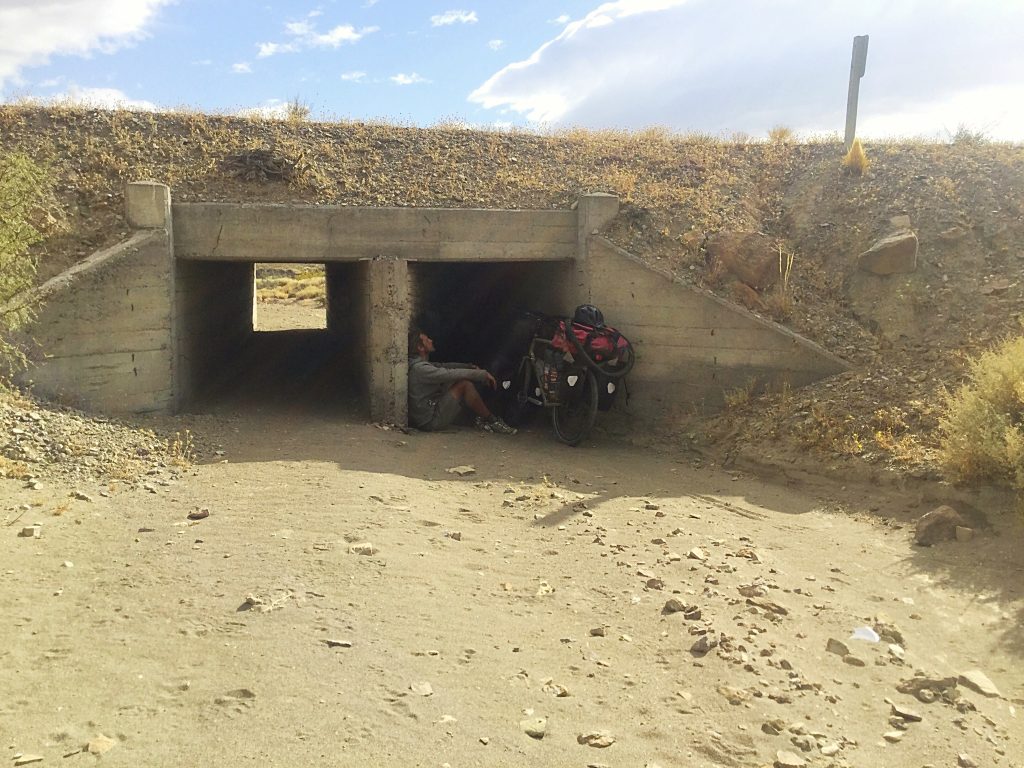
Human waste is another area where local rules matter. In many places that means burying it properly, well away from water sources, paths and camps, while in some environments and protected areas you may be required to pack it out instead. There isn’t one rule that works everywhere, so check what applies where you are.
The best wild camp is one where somebody can walk through the following morning and have no idea you spent the night there. Removing rubbish is a no-brainer and I’ve never understood why people leave it behind. Food packets weigh far more and take up more room when they are full, so why you can’t take them away when they’re empty and lighter is beyond me.
The countries with some of the strongest access rights make this responsibility particularly clear. Scotland, Norway and Sweden all tie camping freedoms closely to responsible behaviour and avoiding damage or disturbance.
If more people followed that principle, there would probably be far fewer places where wild camping ends up restricted because somebody has abused the privilege.
How I Check the Rules Before I Pitch
When entering a new country or region, one of the first things I do is try to establish what rules it may or may not have around wild camping. Government and legislation websites are normally where I head first.
If I’m entering a national park or protected area, I check its own rules because, as we’ve just seen, those can be different from the general position in the country around it.
If regional or municipal rules apply, I check those too. Then I pay attention to local signs. And if I am still unsure, asking permission remains the simplest way of turning an uncertain situation into a clear one.
Only after that do I start looking at blogs, forums or other travellers’ experiences. Those can be useful for finding out what actually happens on the ground, but somebody writing, “I camped there last year and nobody cared,” tells me absolutely nothing about whether they had a legal right to do it.
What I would never do is assume that because I camped somewhere successfully five years ago, the same rules still apply today. Laws change. Local restrictions change. Protected areas change. And sometimes a place that tolerated camping for years stops doing so because too many people took advantage of it.
Knowing the law is only part of wild camping. The next challenge is finding somewhere you would actually want to sleep. A perfectly legal place can still be exposed to wind, beside a noisy road, underneath a dead tree or sitting in a hollow that turns into a pond when it rains. And somewhere that looks completely useless on a map can turn out to be perfect once you reach it.
In Part 3 I’ll take you through what I look for in a wild camp and how I go about finding one, with real-life examples from around the world.