
The last of the goodbyes were said on Monday and Tuesday, which meant that by Wednesday there was only one more familiar place left to leave behind: the library.
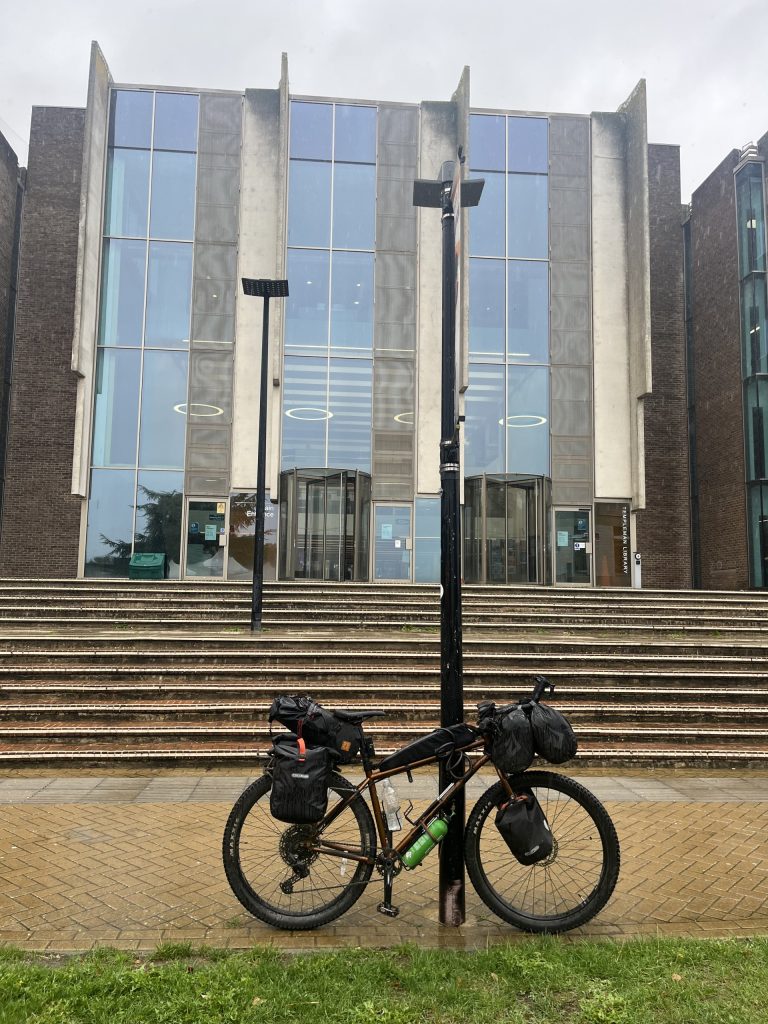
I’ve spent so much time there over the last couple of months that sitting down at the same desk for the final time felt stranger than I expected. I always chose the same spot, for the sole reason it meant I could see the bike locked to the same lamppost outside. Since my return to Kent, the library had become an unexpectedly important part of daily life. Its vast halls where somewhere quiet and dry to work on the Africa plan, somewhere I could refill water bottles for free and almost as importantly, somewhere I could charge electronics without depending on the sun.
For weeks I had been counting down the jobs still to do. On Wednesday there really wasn’t much left, a few last tweets to the website and a little time spent double checking things were in place for my crossing to Spain. I packed the laptop away, looked back at the desk that had become my office and, with one last goodbye to the receptionists, walked out knowing I probably wouldn’t be back for a very long time.
Two days later I did much the same thing with the woods I’d been wild camping in since my return, long enough for what had started as somewhere convenient to sleep to become strangely familiar. I knew which trees the squirrels preferred, the route the foxes took on their nightly forage past my tent and had grown used to, almost comforted by, the calls of the owls once darkness settled in. I knew where the ground stayed driest after rain and which way to leave in the morning without attracting attention. As far as I know, nobody ever found the camp or saw me leaving it.
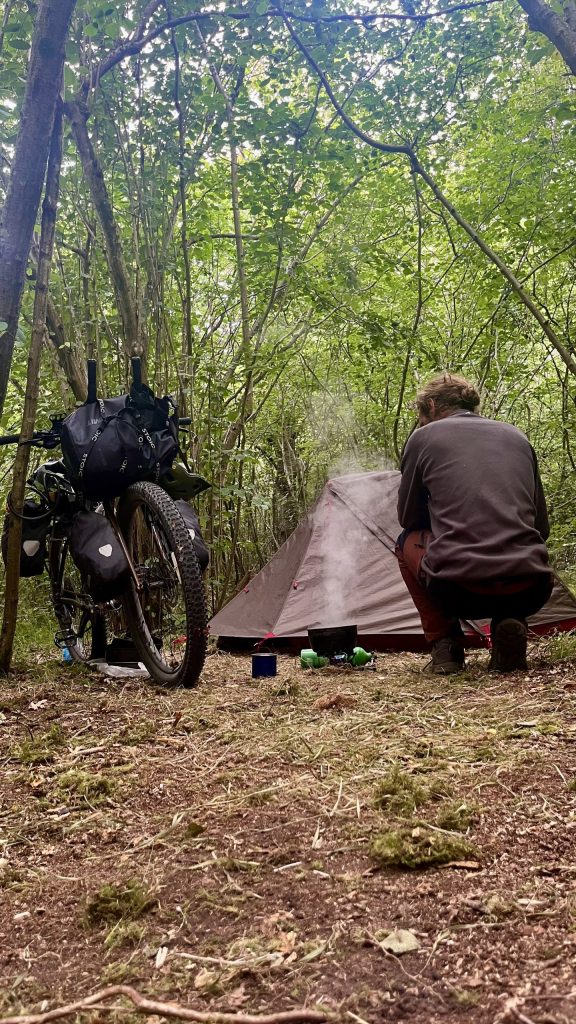
Packing everything away on Friday morning felt different because there would be no return that evening. With the last pannier clipped into place and the tent rolled away, I pushed the bike back onto the path one final time. I stopped for a last look into the woods and gave a silent thanks to the trees that had concealed me into autumn.
Rather than taking the route I had ridden almost a hundred times over the previous weeks, I turned the bike the other way. It seemed fitting that the trip should begin on a track out of the woods I hadn’t taken before.
Back on the road
The first day was deliberately gentle. I stuck to quiet back lanes as I worked my way towards the North Downs and onto a line that would eventually lead me towards Portsmouth. The weather was kind, although it quickly became apparent that in my time away from long distance cycling, I’d forgotten the art of layering clothing, something, I seem to remember, I was good at once. One minute I was too hot, the next too cold, endlessly stopping to add or remove a layer only to reverse the decision ten minutes later.
The road rolled rather than climbed, never especially steep or prolonged but enough to remind the legs that sitting in a library for two months is not ideal training for a 22,000km bike ride. Even so, it felt good to be moving again with somewhere to go beyond returning to the same woodland at the end of the day.
I had hoped to spend the first night near Pluckley, a village I’ve always had a liking for, largely because of its reputation for the supernatural. Pluckley became famous as “the most haunted village in Britain” with a mention in the 1989 Guinness Book of Records after years of stories involving phantom highwaymen, mysterious figures and a ghostly coach. Nearby Dering Wood became known in local folklore as the “Screaming Woods”, thanks to endless tales of unexplained screams among the trees. What screams have been heard could well be that of foxes, they sure can sound human at times, but that’s the missing the point.
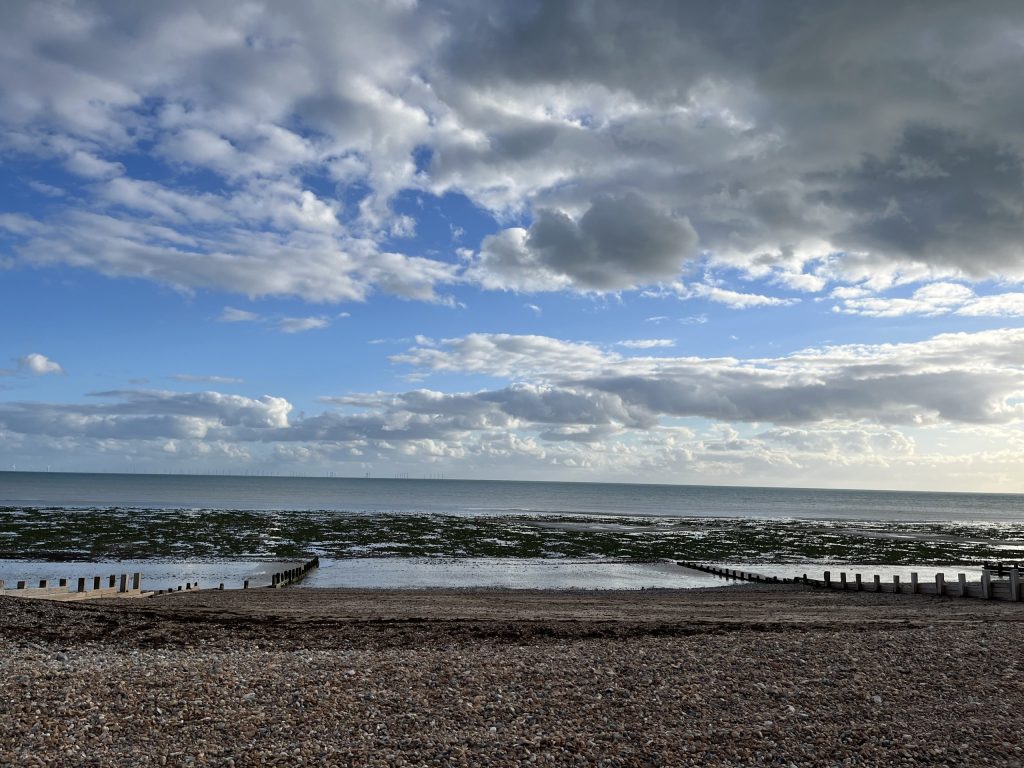
I first visited around twenty years ago on Halloween, thinking this was obviously the ideal time to investigate whether any of it was true. Unfortunately, half the country appeared to have reached exactly the same conclusion and rather than wandering nervously through an empty haunted village or stumbling through the undergrowth of local woodland, I found myself surrounded by crowds equally in search of sighting the unexplained. It is difficult to be scared by the supernatural while stuck among enough people to form an orderly queue for it.
This time I thought I might have better luck and planned to camp in Dering Wood to see if they really do scream at night. The woods have several public entrances, but all have now been gated off, adorned with no cycling signs and engineered in a way no bike can enter. I guess the screams and ghostly figures are now for walkers only. My night in one of Britain’s supposedly most haunted woodlands would have to wait for another trip.
By the time I found somewhere more suitable, albeit less scary, to camp I had covered around 50 kilometres and darkness wasn’t far away. I had just wheeled the bike into a quiet corner of woodland when the rain arrived before I could get the tent up. I threw the tarp over the bike, gave thanks to myself that I’d brought it along as I almost didn’t, and crawled underneath it too, spending the next hour lying beside the bike listening to the rain hammer against the fabric while the woods slowly disappeared into darkness. Viewing the bike from the perspective of the ground, its tyre pressed against my shoulder and the handlebars seemingly far above me made the whole thing look huge. In comparison to my previous bike I used on my round the world trip, it is but I’d never really appreciated it till now. Strange what a different perspective can do.
Eventually the rain eased enough to put the tent up. I’d long since mastered doing so in the darkness, bright lights have a habit of attracting unwanted attention after all, and although it always takes a few minutes longer to feel around for each pole and every peg placement, it was soon up and the first day was done.
I had, unfortunately, selected a slight slope, so the rest of the night was spent slowly sliding towards the bottom-right corner of the tent, waking up, shuffling myself back uphill and beginning the process again. It wasn’t my finest night’s sleep, but I slept well enough.
The next morning I was awake before first light and back on the road by eight. Those first few minutes after waking are still some of my favourite parts of living this way. The world is quiet, the woods barely moving and for a short while it feels as though everybody else is still asleep. Watching the first light work its way through the trees is magical no matter how badly I slept the night before.
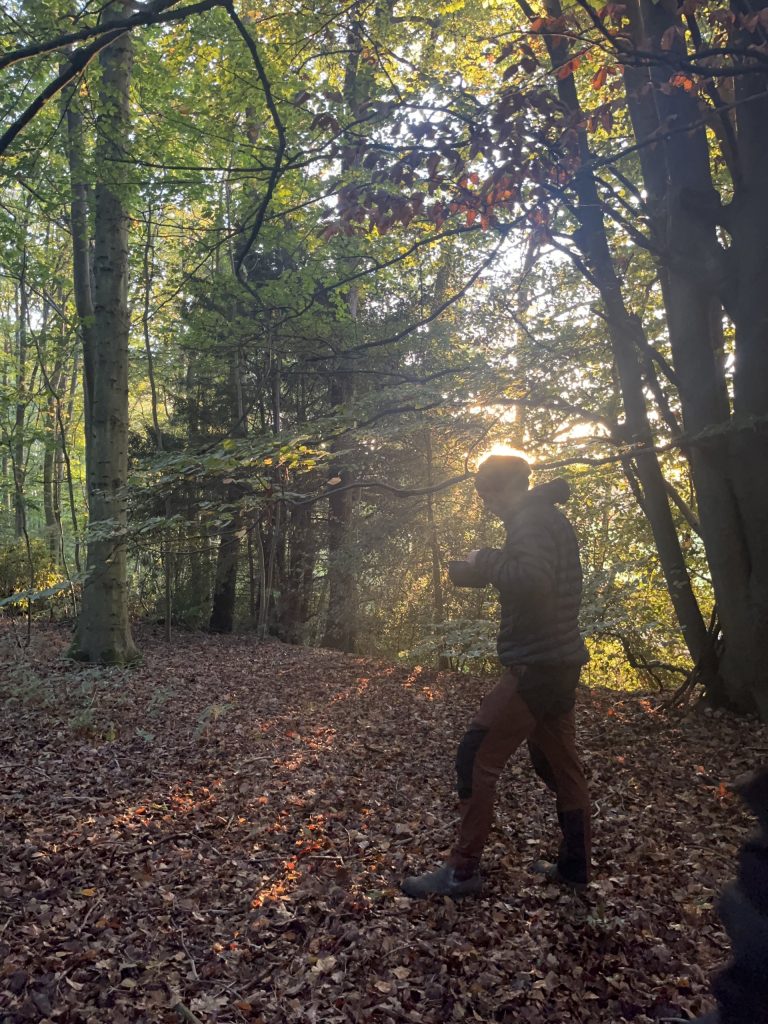
It was a feeling I had written about only a week earlier while trying to explain why I keep choosing this life. Now, as I sat eating a breakfast of porridge, I was even more sure I was onto something.
Towards the coast
The second day began on more quiet lanes, but they eventually gave way to faster roads where I found myself pushed towards the gutter while cars passed rather closer to my right shoulder than I would have liked. I hate roads like these. They turn cycling from something enjoyable into a prolonged exercise in hoping everybody behind you is paying attention. Their one advantage is speed.
By mid-afternoon, after more rolling roads and bumpy cycle paths where tree roots had done their best to reclaim the tarmac, I began the ride into Brighton and finally found myself on proper cycle infrastructure again.
I had never been to Brighton before and was surprised by how much I liked it. Anyone who has followed me for a while will know that I’m not naturally drawn to cities, towns or, if I’m being particularly honest, groups of more than about five people. There are only a handful of cities around the world where I’ve thought I could happily spend time. Madrid and Kuala Lumpur are two, largely because their green spaces stop them feeling relentlessly urban.
Brighton was different again. It felt lived in.
That probably sounds like a strange compliment for a city, but so many places seem to consist of people rushing between whatever they have just done and whatever they need to do next, headphones in, eyes down and apparently doing their best not to interact with any of it. Brighton, especially the seafront, felt almost the opposite. On either side of the pier people were playing tennis, padel (still no idea what this) volleyball, skating and even windsurfing in a little man made lake. More importantly, none of it looked like something a council had built enthusiastically twenty years ago and then forgotten about. It was busy and well maintained, and people looked as though they were actually enjoying being there.
Maybe it was the sunshine or the universities giving the city its younger feel, but I felt a small twang of disappointment that I was passing through so quickly. Another time, perhaps.
The rest of the afternoon was spent battling a strong headwind west along the coast. The only kindness it offered was that the route was almost entirely flat. Southwick, Shoreham-by-Sea and Worthing gradually disappeared behind me and, at around five, I turned inland and made a beeline for a patch of woodland I had spotted on the map.
Finding a wild camp from a map is always something of a gamble. Woodlands and field edges can look perfect from above, but maps rarely show the locked gate, six-foot fence or very obvious house overlooking the one patch of ground you had decided would work. Late in the day, when you’ve already decided mentally that the riding is finished, discovering your chosen spot doesn’t work can be particularly irritating.
Thankfully this one did. The woodland was unfenced and easy to enter and, just before darkness, I wheeled the bike beneath a beech tree and began the well honed routine of setting up camp. I had covered 105 kilometres and was now only 52 kilometres from the ferry terminal.
The night passed peacefully, with just me and the deer apparently lucky enough to have the place to ourselves. With an easy final ride ahead, I took my time packing the following morning and stayed long enough to enjoy the quiet before getting back on the bike.
Sunday’s ride was predominantly flat and, despite another headwind and more dual carriageway riding than I would have preferred, the kilometres disappeared quickly.
My budget doesn’t stretch to paying ferry prices for food so before reaching Portsmouth I stopped for supplies. To be fair, even if my budget were limitless I’m not convinced I’d pay them. There is something slightly unsporting about taking a captive audience, handing them a sandwich and asking for an amount roughly comparable to a small mortgage payment in return. I’d rather go hungry just out of principle.
With only nine kilometres left and around seven hours before I needed to be at the port, I stopped beside the water to make the most of the sunshine, charge some electronics and sit for a while.
For the first time it occurred to me that, for quite a while at least, these would be the last kilometres my wheels rolled on English soil. Soon I would be back in places where I didn’t fully understand what was being said around me, where somebody shouting in my direction could be angry, helpful or simply unusually enthusiastic, and where even an ordinary conversation would require more effort than it did here. Not that there was anybody around to talk to.
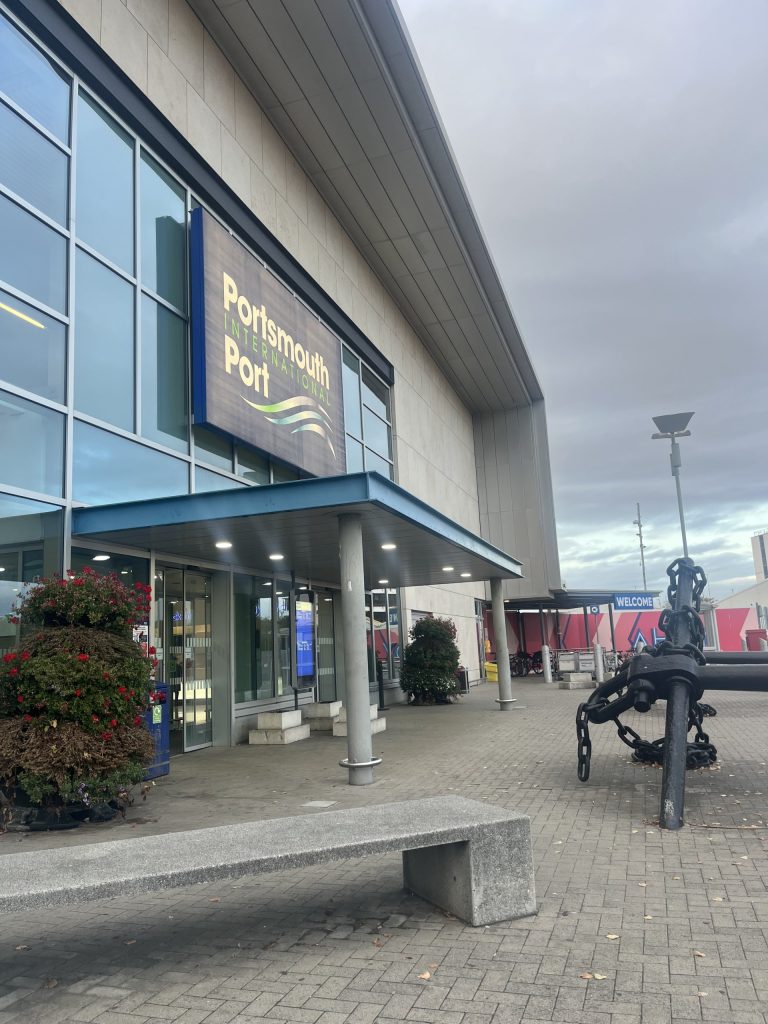
As it turned out, England wasn’t quite finished with me. An email arrived saying the ferry had been delayed by four hours. A little later another appeared extending that to five. The original 10pm departure was already late enough for someone whose preferred bedtime is matched with the setting sun, so the prospect of leaving somewhere around three in the morning wasn’t especially welcome.
I’m writing these final words from the departure terminal in Portsmouth, surrounded by an increasingly restless collection of passengers and with no confirmed departure time. I feel it’ll be a long night but, for a few more hours at least, I’m still in a country I understand.
Well, as much as anyone understands Britain these days anyway.
Enjoyed the read? Scroll down to see how you can support the ride by buying SJ a coffee.


