Serpa had given me a useful twenty-four hours off the bike, enough time to rest up and sort the last of the admin jobs in preparation for my crossing into Africa. Wheeling the bike out of the little campsite, I felt surprisingly rested and ready to get moving again.
The previous few weeks in Portugal had been a little more demanding than I’d anticipated, the combination of heat and 6000m+ of climbing through the mountains and hills ensuring I was perhaps more in need of a rest than I’d realised, but with Spain now only a short ride away and Africa getting ever closer, I was looking forward to being back on the road again.
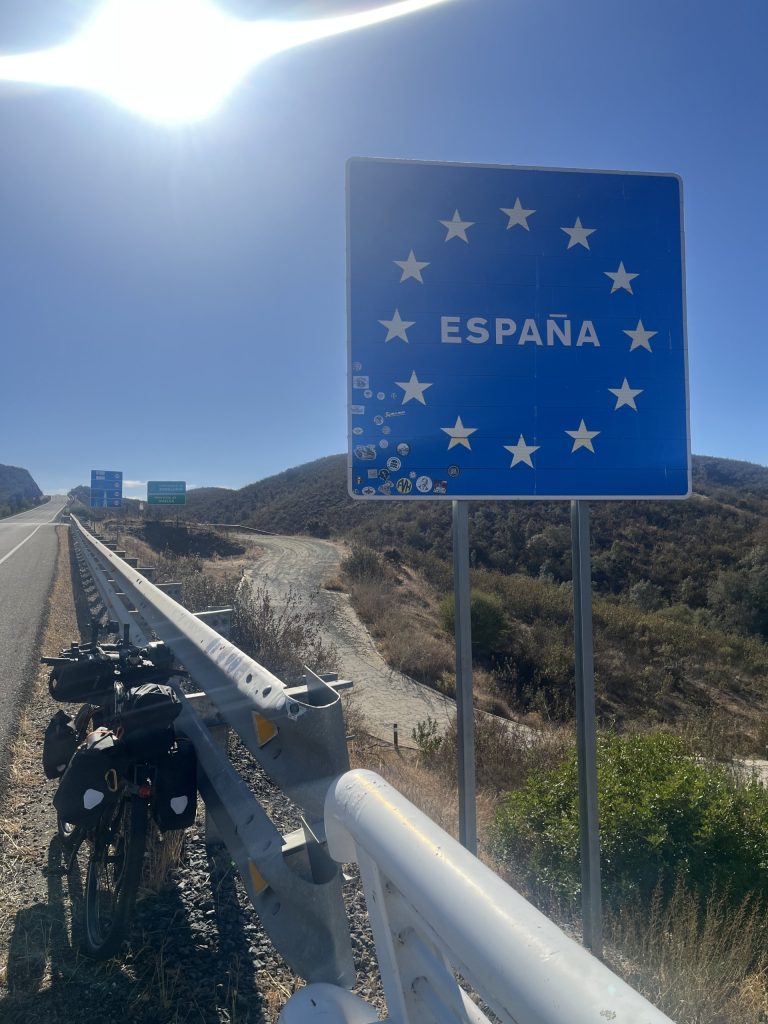
By midday I’d reached the border and crossed back into Spain, where the road immediately began climbing again, a sure sign that although I was now leaving the higher ground, the road ahead was going to be far from flat. The crossing itself was quiet, with very little traffic, and I was once again struck by just how easy it is to move between countries in much of Europe. No immigration queues, no passport checks or border formalities, just a road that continues into another country.
To be honest, I was rather relieved to be back in Spain, although for a reason I never thought I’d find myself saying.
The drivers.
My previous experiences of cycling through Spain hadn’t always left me particularly impressed with the consideration shown towards cyclists, but compared with what I’d experienced in rural Portugal over the preceding weeks, Spanish motorists appeared saintly.
Spain has introduced and strengthened regulations intended to protect cyclists, including requirements for drivers to leave at least 1.5 metres when overtaking, and from what I’d experienced during my earlier time riding through the country on my way into Portugal, the difference was noticeable.
Of course, there was still the occasional driver who seemed to have a rather creative interpretation of what constituted a metre and a half, but on the whole cars, trucks, tractors and lorries had given me plenty of room.
Portugal, at least the rural areas I’d spent most of my time riding through, had been a different matter. Time after time vehicles had passed uncomfortably close, sometimes seemingly oblivious to the fact that I was even there.
Now, back in Spain, the difference was almost immediate, and for the most part I once again found myself sharing the roads with drivers who didn’t seem to feel the need to run up against me.
Spain, you’ve come a long way in my opinion. Long may it last.
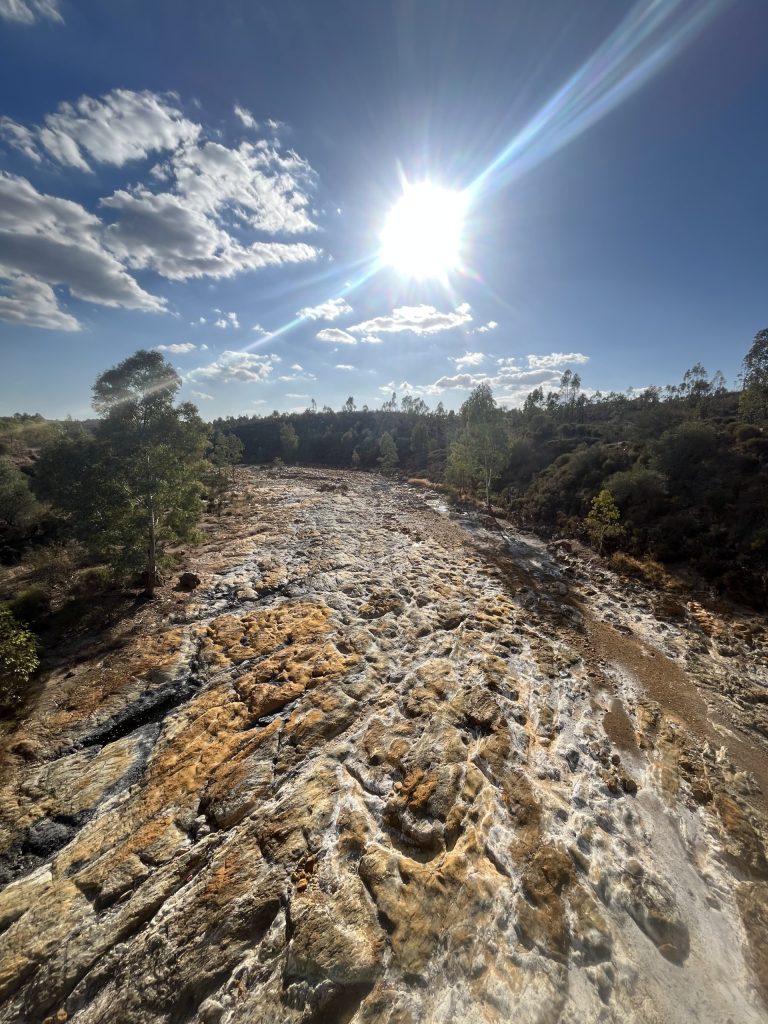
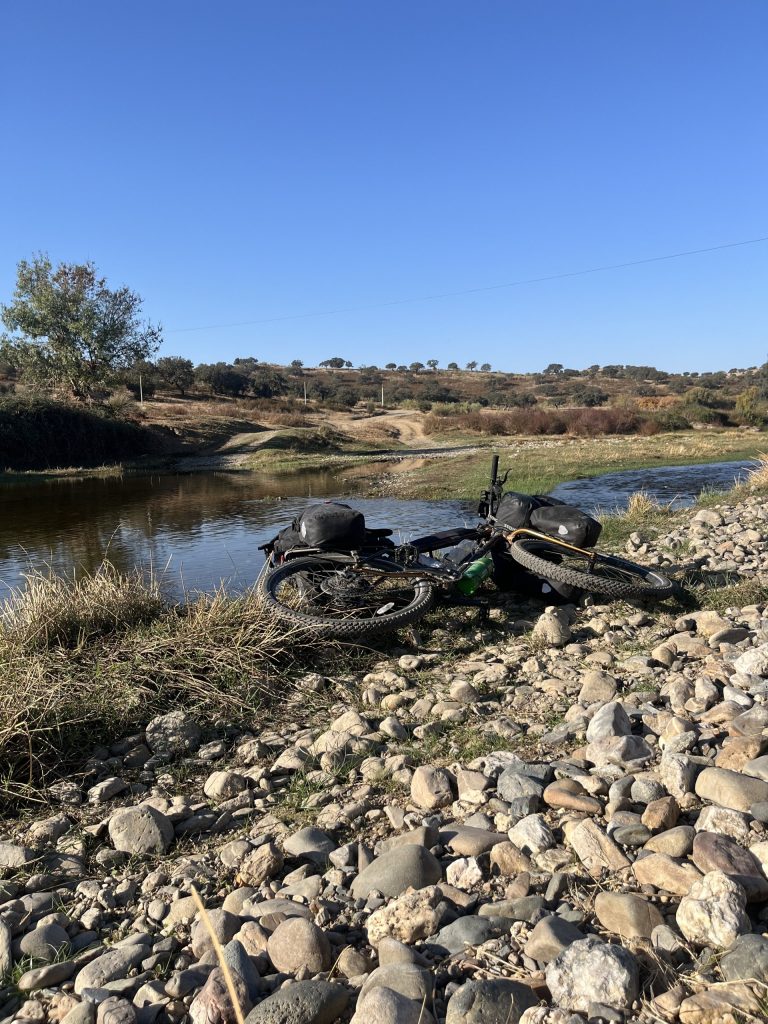
The weather was still remarkably hot for the time of year, growing hotter as the afternoon wore on, and by evening I was ready to find somewhere to spend the night. What I eventually came across was one of the most beautiful semi-dried riverbeds I’d seen in a long time, a landscape that reminded me of places I’d travelled through in South America.
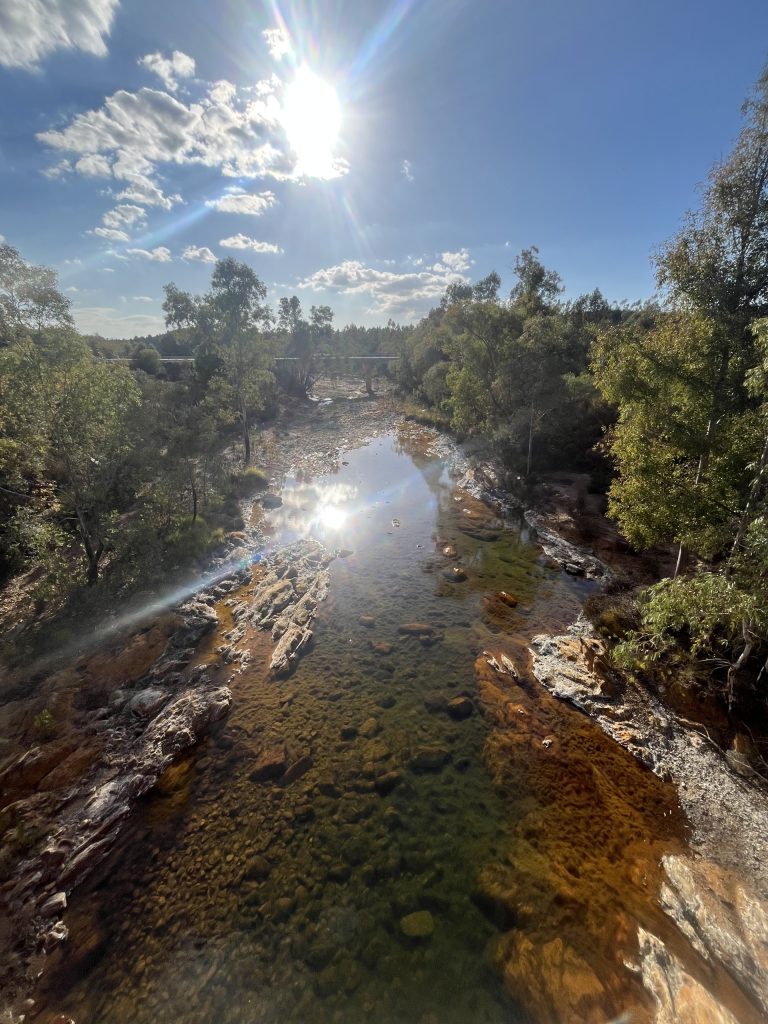
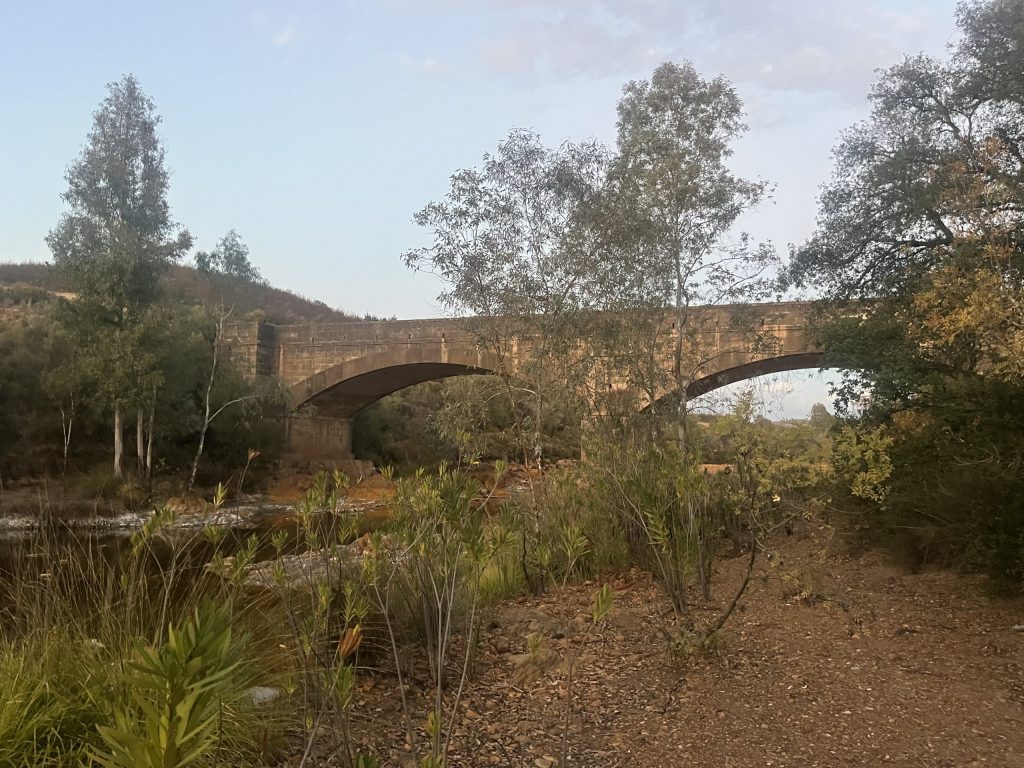
Peach and orange-coloured rocks lined the remaining pools of greenish-blue water, whilst an old brick bridge, long since superseded by a modern highway crossing a hundred metres further downstream, framed the landscape to the east. Its silhouette was reflected almost perfectly in the pools beneath it. I doubt I’ve eaten dinner in a more beautiful spot on this trip so far.
It was an incredibly peaceful place to spend the night, and after the previous weeks of climbing and the heat of the afternoon, I couldn’t have asked for much more.
Over the following two days I continued southeast through rain-deprived landscapes of cork oaks, olive groves and freshly ploughed farmland. Occasionally a small woodland would appear, an island of green amongst what was a predominantly yellowish landscape.
The mornings often began beneath a blanket of mist, the rising sun struggling to pierce the haze that hung over the roads and hills and sat sleepily in the valleys around me. By mid-morning, however, the blue skies would return and the temperatures would climb high enough to ensure that the constant succession of short, testing hills kept me in a fairly permanent state of perspiration.
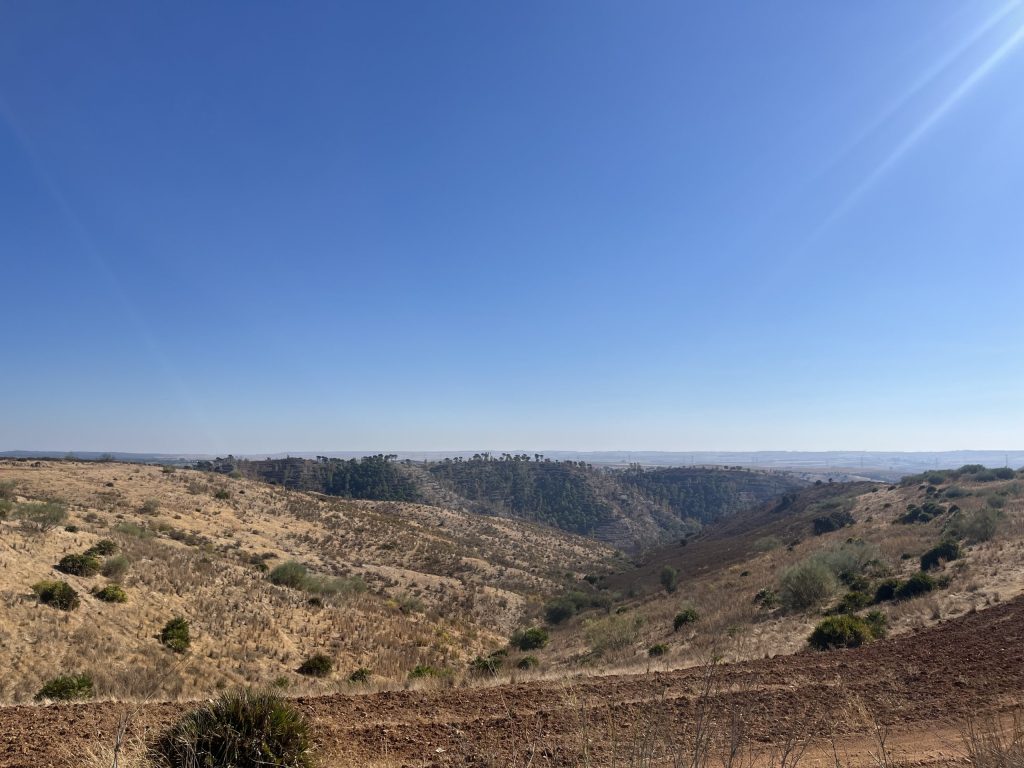
The climbs were rarely particularly long or steep, but there were enough of them to make sure the legs woke quickly each day, and with the loaded bike still weighing somewhere around forty kilograms, even the smaller hills required a reasonable amount of effort.
My evenings were spent in a mixture of woodland and scrubland camps, sometimes I’d put the tent up, but more often I opted just for a cowboy camp, with nothing between me and the night sky but my sleeping bag. There’s something very wonderfully simple about ending a day like this. There’s no fussing around with tent poles or banging in pegs, just a need to find a little flat parcel of land, roll out the sleeping bag and climb in, leaving the stars to watch over you as the day’s efforts ensure sleep is never far away.
Everything seemed to be going remarkably well. The roads were quiet, the drivers were behaving themselves, the weather remained warm and I was making steady progress towards Tarifa, where the ferry would finally carry me across the Strait of Gibraltar and into Africa.
But Spain wasn’t about to let me leave on such pleasant terms. This seemingly endless summer I was having was about to come to a rather abrupt end.
With around forty-eight hours remaining before I expected to reach Tarifa, the weather forecast began hinting at the possibility of strong southerly winds, with gusts approaching 65 kilometres an hour. Given that I was travelling south, this was not particularly encouraging news.
Southerly winds would mean a headwind, and gusts of that strength meant the final push was going to be a fight.
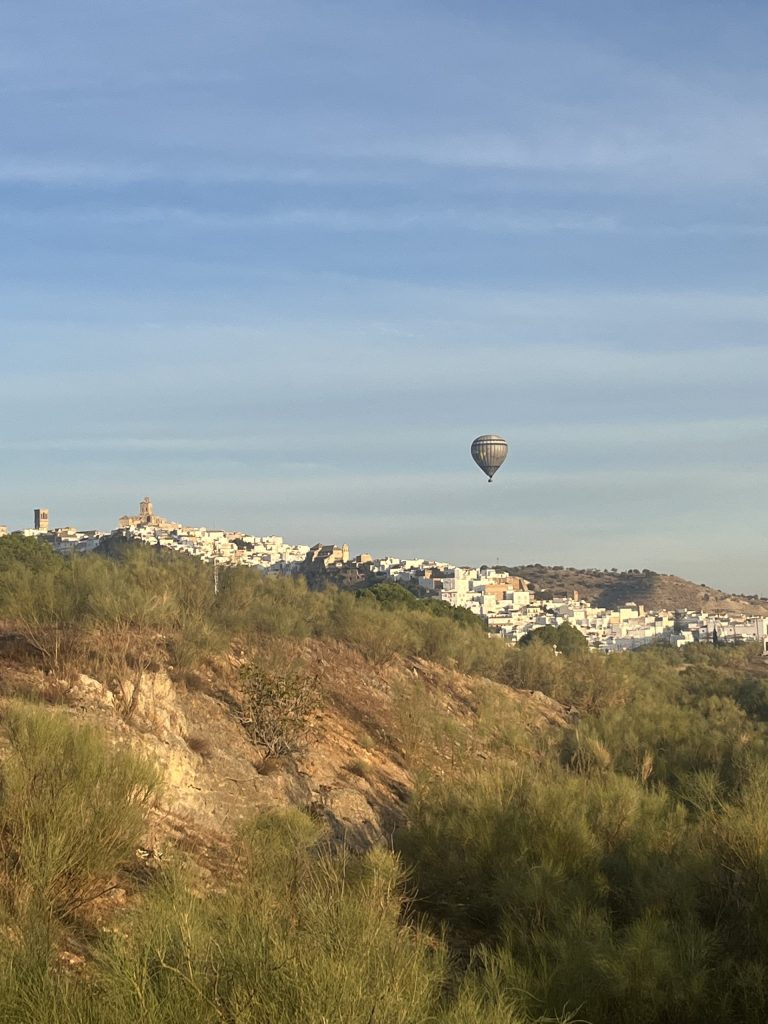
Sure enough, the forecast proved right and the last 100 kilometres to the port saw some of the hardest riding of the trip so far.
For once, the hills actually became something of a relief, their rising slopes offering enough shelter from the wind that the constant whistling around my helmet would occasionally subside, allowing me to hear the birds again. It was a strange reversal of the usual arrangement, where the climbs are generally the difficult part and the flatter roads offer an opportunity to rest the legs and make some easier progress.
Now it was the flat sections that were causing most of the problems.
Every pedal stroke seemed to require more effort than I’d needed for months, and even in my lowest gear the bike sometimes barely moved against the stronger gusts. At times the wind pushed me sideways, at others it felt as though it was trying to send me backwards, and there were moments when simply keeping the bike travelling in something resembling a straight line required almost as much concentration as when learning to ride as a child.
Even the descents offered little respite. Normally, reaching the top of a hill comes with the rather satisfying prospect of allowing gravity to take over for a while, but now, unless the descent was particularly steep, stopping pedalling simply meant watching the speedo rapidly fall and the bike gradually slow to a halt.
Having spent the previous few weeks wishing there were fewer hills, I was now finding myself grateful whenever one appeared in front of me.
By Saturday evening I’d managed to reach a recreational ground around forty kilometres from Tarifa, where I found a quiet corner beneath an old, twisted cork oak tree and settled down for what I hoped would be a reasonably peaceful night.
Again I decided against putting up the tent, choosing instead to sleep beneath the tree with just my sleeping bag, although I was becoming increasingly aware that the weather was no longer quite as cooperative as it had been earlier in the week. The cooler winds whipped around the hood of my bag whilst a constant stream of leaves fluttered around me. At least it kept the mosquitoes away.
Lying there, it occurred to me that, assuming everything went to plan the following day, this would be my last night in Europe for a very long time.
After more than a year of dreaming about Africa, months of planning and weeks of riding to reach this point, I was now within a day’s cycling and a short ferry crossing of beginning the next stage of the journey.
Africa would become the sixth continent on which I’d travelled by bicycle, and although there was still an enormous distance between Tarifa and Cape Town, it was difficult not to feel excited about finally reaching the place that had occupied so much of my thoughts over the previous year.
There was still one last day of riding to get through, however, and judging by the creaking of the cork oak’s branches high above me, it wasn’t going to be particularly easy.
I was awake and packing away before the morning had properly broken, partly because I wanted to be gone before anyone arrived for an early visit to the swings and slides, and partly because the wind had picked up sufficiently during the final pre-dawn hours to send acorns the size of my thumb raining down around me, landing with enough force to bruise. Not quite the peaceful woodland awakening I’d become accustomed to.
The wind, if anything, seemed even stronger than the previous day as I began making my way southeast towards Algeciras. I hoped that the change in direction would mean it would strike me more from the side rather than directly in front.
Occasionally it did, but the roads twisted and turned enough that any advantage was generally short-lived, and I soon found myself once again in a leg-straining fight for every kilometre.
Even taking the wind into account, I felt everything had to go to plan if I was to make the ferry in time. But as usual, the road ahead was never as straightforward as the map suggested and the first bump in the plan didn’t take long to appear.
I’d intended to turn southwest before reaching Algeciras and follow a series of smaller roads and trails towards Tarifa, avoiding the busy main road that links the two towns. It looked like a reasonable route on the map, but when I arrived at the turning I discovered that the road had been completely fenced off, ripped up and was undergoing major construction.
Normally, when I encounter roadworks, I’m inclined to at least investigate whether there’s a way through. Unless there’s a missing bridge or something equally inconvenient, I can usually find a way to push the bike around whatever work is taking place, opting for more of an ‘ask for forgiveness rather than permission’ approach in order to avoid lengthy detours.
This time, however, there was clearly no chance.
I was left with two options. I could turn around, retrace around ten kilometres and attempt to link together a series of farm tracks and trails, or I could head out onto the N-340, the busy main road between Algeciras and Tarifa.
Neither was particularly appealing.
I hate backtracking, especially when I’ve already spent several hours battling strong winds, but I’m also no great admirer of riding alongside fast-moving traffic on major roads, particularly when they steadily climb uphill and the lack of hard shoulders leaves little room to escape the traffic.
For a while I sheltered from the wind at a bus stop on the edge of an industrial area, studying the alternatives and trying to decide which would be the least unpleasant.
Eventually, with the ferry departure getting closer and the prospect of another ten kilometres riding in the wrong direction becoming increasingly unattractive, I chose the main road. It wasn’t quite how I’d imagined finishing my ride through Europe.
In the end, despite the volume of traffic and the steady stream of fast-moving cars and lorries, the road itself wasn’t as bad as I’d feared. The wind, however, had now shifted to my left shoulder and seemed determined to introduce both me and the bike to the metal barriers running alongside the road.
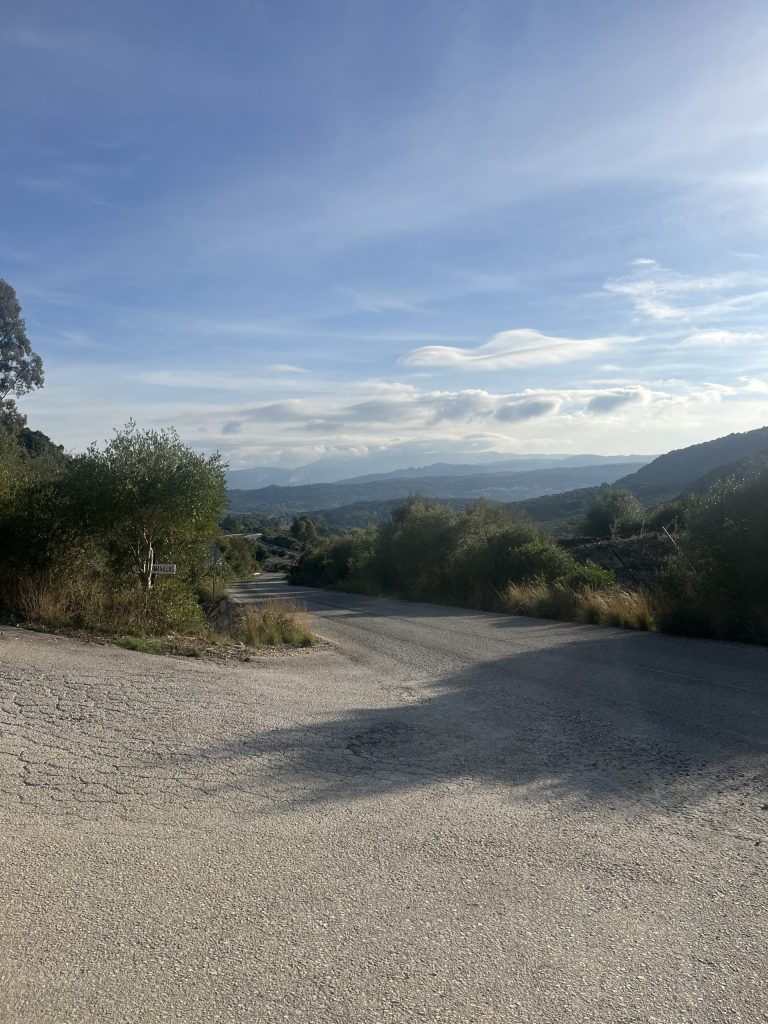
The N-340 initially climbs to around 340 metres before dropping back towards the coast, and I can say without much hesitation that it was one of the longest and hardest climbs of that height I’d experienced for some time.
The gradient itself wasn’t particularly remarkable, but with the wind constantly pushing against me and the loaded bike requiring continual corrections to keep it moving in the right direction, every metre seemed to demand considerably more effort than it should have done.
Reaching the top should have been a welcome relief, but the descent proved little better.
One moment the bike would be travelling reasonably comfortably, and the next a powerful gust would catch me from the side, forcing me to wrestle the bike away from the railings. My forearms were beginning to ache from the constant corrections, and any hope of enjoying the downhill had long since disappeared.
All I really wanted by this point was to reach Tarifa with the bike, myself and everything attached to it still in one piece.
Eventually, after what felt like a considerably longer ride than the distance suggested, I arrived, somewhat sideways, into town, thoroughly wind-battered but enormously relieved to have made it in time.
There was excitement too, of course. After more than a year of planning, Africa was now just across the water, and the prospect of finally setting foot on the continent I’d spent so long preparing for was difficult to ignore.
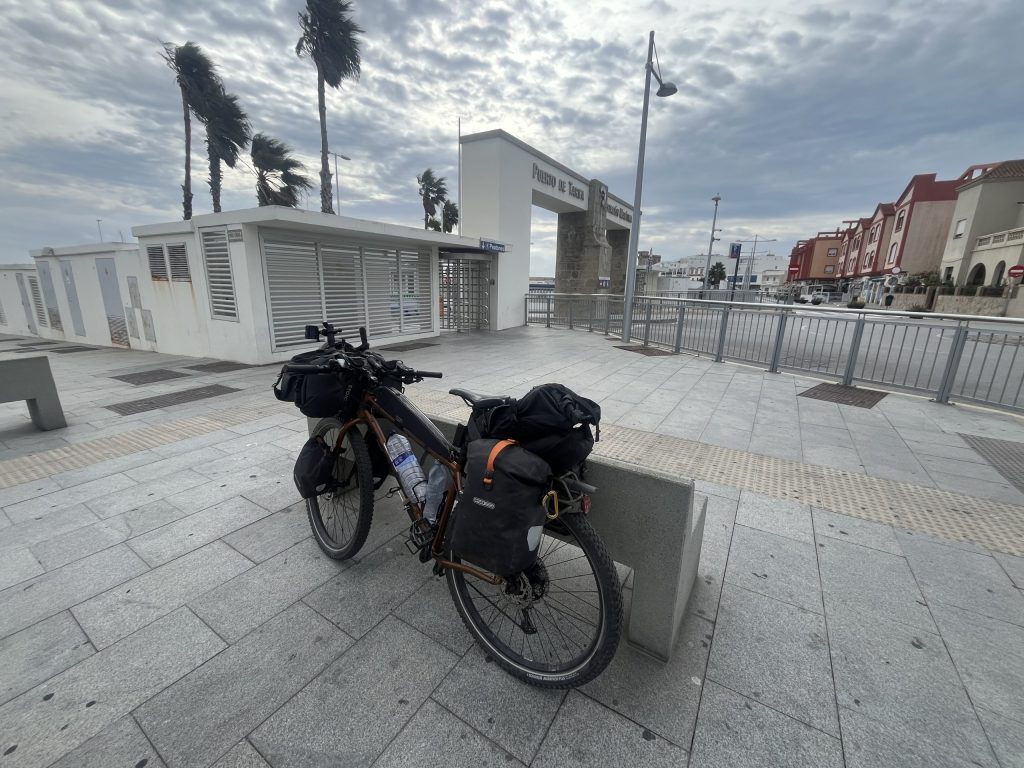
But as is so often the case with this way of travelling, there were still practical matters demanding attention. I had a ferry to catch, a loaded bicycle to get aboard and the small matter of whether the boat would actually sail in winds that had spent the previous two days doing their best to prevent me from reaching it.
Europe had provided plenty of challenges over the previous few weeks, and the final kilometres had been a useful reminder that even familiar places can make life remarkably difficult when the conditions turn against you.
Still, the difficult days eventually come to an end, just as the easier ones do, and despite the wind, the road closure and a rather uncomfortable introduction to the N-340, I was exactly where I’d hoped to be, at the port in Tarifa where I write these final lines, with Europe behind me and Africa waiting on the other side of the Strait of Gibraltar.
All I need now is for the ferry to sail.