One of the questions I get asked most often is how I afford to live and travel full-time on my bike. People often assume that travelling full-time by bicycle must get expensive and ultimately, with an unstable income, unsustainable. The reality is, by following a few simple rules and a little discipline, it can be far cheaper than you may think.
One of the main reasons I’m able to stay on the road is that my day-to-day costs are usually very low. I try to operate on a small budget, regardless of where I may be in the world, typically just £5 a day.

A Little Clarification
Firstly, when I say I live on £5 a day, I don’t mean that every single expense associated with full-time travel somehow fits inside a fiver. Visas, ferries, bike repairs, insurance, replacement equipment and other bigger one-off costs sit outside that figure, but by keeping my daily on-the-road expenses low, the bigger expenses become far more manageable.
If you aren’t careful, it’s amazing how the small things — food, water, that cold drink you absolutely needed — quickly start to add up over a year-long trip and quietly drain your funds. I’m not saying you can’t treat yourself every now and again, but being a little disciplined can go a long way.
The £5 a day is my target, not a hard ceiling. Some days I’ll spend less. Some days I’ll spend more. The aim is simply to keep the average over a year to around £5 a day without making myself miserable or compromising on safety. Spending £20 on food in one go because I’ve found a cheap shop is perfectly acceptable if that food is going to last four or five days.
Food, though, is just one expense in any given day. For the other aspects of daily life, a little discipline coupled with a few other tips and tricks I’ve learnt over the years go a long way.
The Geography Trick
There is no pretending that £5 has the same buying power everywhere; it simply doesn’t. Your destination is ultimately going to play a big part in your daily budget, but I’ve rarely been anywhere where my £5 target hasn’t still allowed for a successful and enjoyable adventure.
Choosing pretty much anywhere in Western Europe is going to test that budget fairly hard, as will bikepacking in parts of North America and Australasia. Head over to parts of Asia and South America, however, and living very cheaply can be relatively easy.
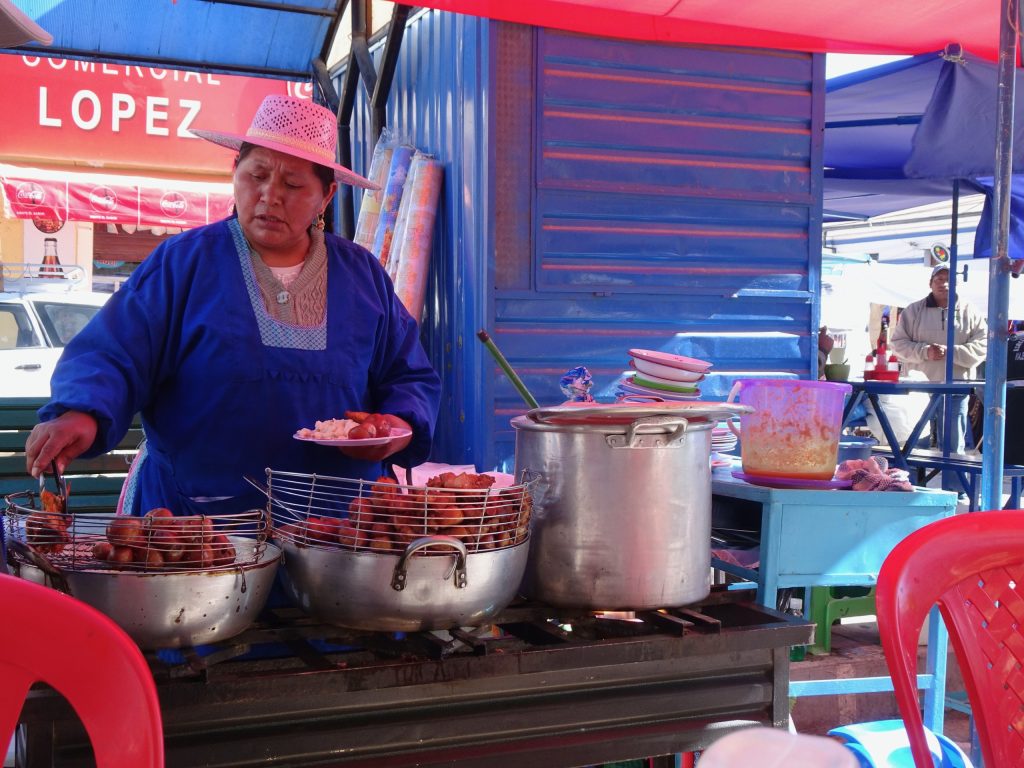
In 2018, I toured Southeast Asia on a budget of around £3 a day and ate exceptionally well, primarily because I always chose to buy street food rather than eat in restaurants. In fact, I worked out that by eating from the street vendors, it was actually cheaper than cooking for myself, normally my go-to option, once you factored in buying ingredients and stove fuel.
Doing so comes with its own risks, of course, but I found that by avoiding items such as meat and salads and eating from the same busy vendors the locals used, I avoided the problems people tend to associate with street food. Even in India, I ate at the roadside every day and never once experienced the infamous Delhi belly.
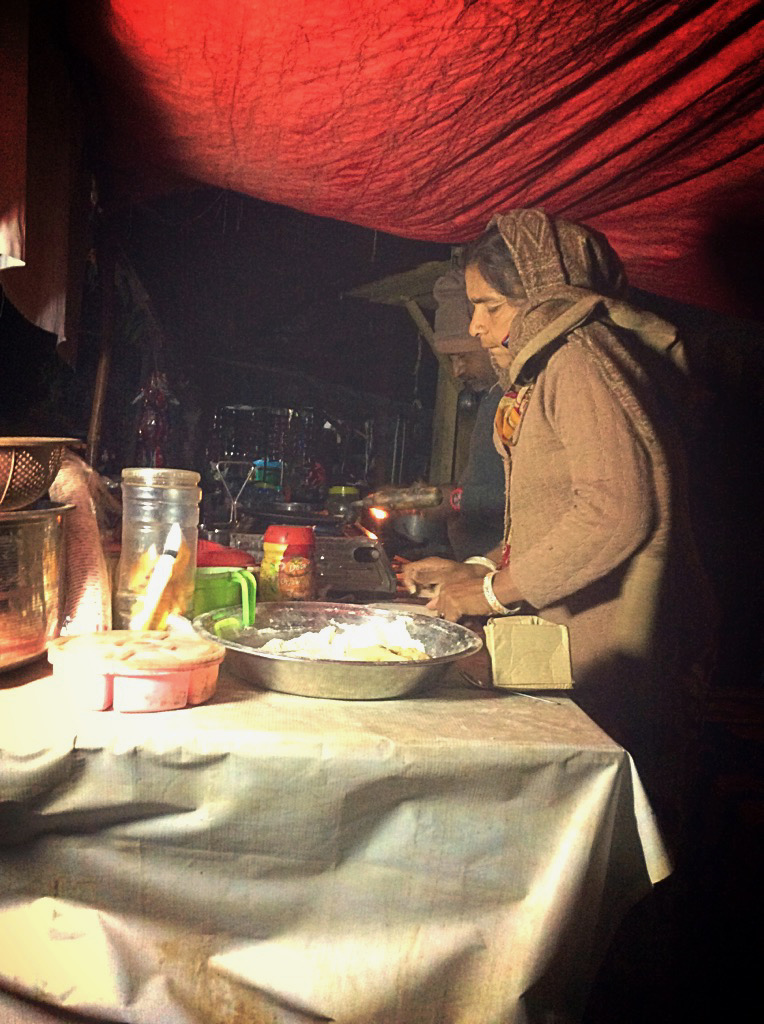
That same tactic worked well in South America too, but it isn’t really possible in places such as North America or Australasia. Vendors like those simply don’t exist to the same extent in my experience, and what street food there is tends to be comparable in price to a cheap restaurant meal. Cooking for yourself there is, by far, the cheaper option.
So whereas I’m often confident £5 is enough to tour pretty much anywhere, what it actually provides me in any given day is very much location dependent. If I feel future funds are looking tight, I’ll head somewhere I know my budget goes a long way. If I know I’ve got money coming in, primarily through the work I do with FTtouring, then I can be a little more flexible with my destination.
There are times I need to stay still for a while, usually in order to write articles or produce guides. When that’s the case, I always try to do so somewhere in the world where life from the bike is cheap. A month spent in Laos or Bolivia is going to be considerably cheaper for me than a month spent in Australia or the UK.
Rarely Paying for Accommodation
One of the biggest expenses on any bikepacking trip is going to be accommodation. However, this is probably the area where I’m able to save the most.
Even the cheapest campsite quickly destroys a £5-a-day budget. Pay £15 or £20 every night for somewhere to sleep and, over the course of just a few weeks, you’ve already spent hundreds before you’ve eaten anything.
Do the same with budget hotels, regardless of where in the world you are, and you can easily blow months of travel money in a very short period.
Spending the occasional night at a campsite or hotel does have benefits that can outweigh the cost: a shower, a chance to charge electronics, somewhere to wash clothes and perhaps a bit of socialising. But with the right setup and a little knowledge of where to look, most of those things are more than doable without paying for accommodation every night.
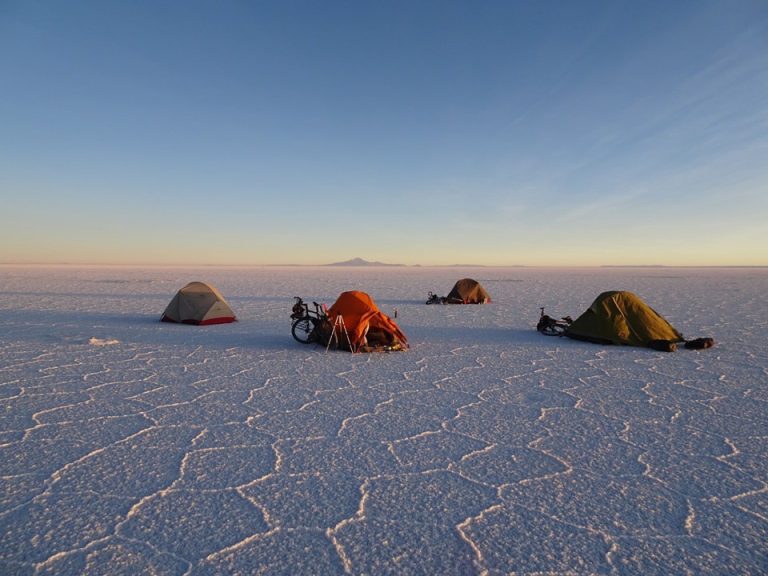
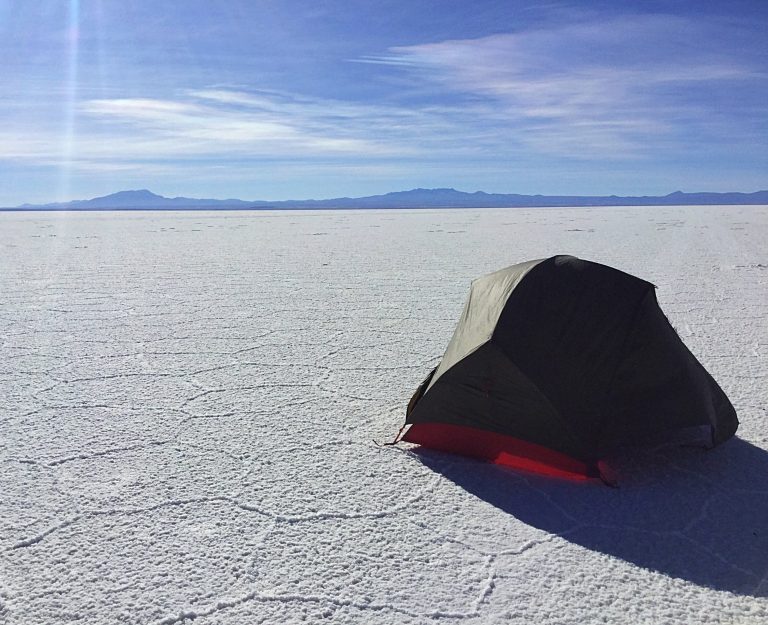
So if I try never to pay for accommodation, where do I spend the nights? Well, I wild camp.
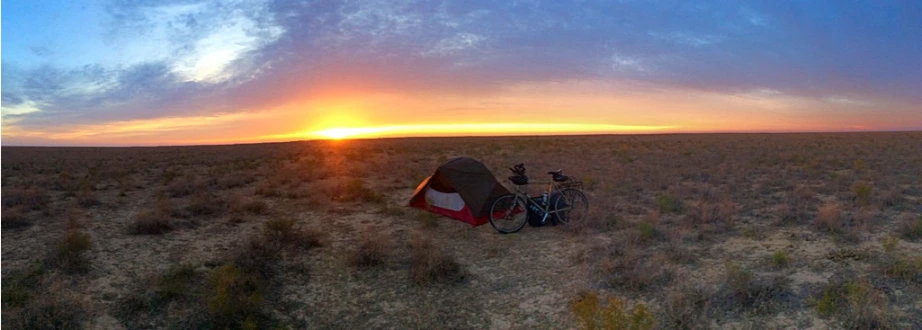
Now, I know wild camping — or even camping in general — isn’t for everyone, but for me it is probably one of the most enjoyable aspects of bikepacking. I’d even go as far as saying it’s an integral part of every plan I make.
Being able to wake up to the sun filtering through a European woodland on a crisp autumn morning, or taking your morning shower as a dip in the sea from a camp on a remote Australian beach, is a huge part of what bikepacking means to me. The bike allows me to get there; wild camping allows me to experience it. And, as a bonus, you never have to deal with someone snoring through the wall in the room next door.
Wild camping also brings flexibility. It takes away the stress of knowing you have to arrive at a certain destination every night. I don’t like having to decide first thing in the morning exactly where I’ll end up that evening. It removes the opportunity for spontaneous detours and puts pressure on each day having to go to plan. Often it won’t.
Some days I ride further than expected. Other days, by early afternoon I’m ready to stop. Sometimes the weather changes everything. Wind can make the kilometres drag. When it’s hot, spending a lazy few hours snoozing in the shade might not be possible when you’ve still got hours of riding to your hotel room. Being set up and happy to wild camp pretty much anywhere I can gives me a flexibility that a campsite booking simply doesn’t.
Some of my most memorable wild camps have come from spontaneous decisions to stop early because I’ve stumbled across the perfect secluded spot. The downside, of course, is that wild camping doesn’t always go to plan.
For as many wonderful experiences as I’ve had, I’ve had just as many that I’d sooner forget. There have been nights where trying to find somewhere has been near impossible. In India, for instance, I spent hours one night searching for somewhere to camp and ultimately failed, eventually spending the night slumped on a pile of sand at roadworks. Other times I’ve slept behind blocks of public toilets or crawled inside drainage pipes under roads. If I’ve found myself in a town or city as darkness falls, and I try not to, then a corner of a graveyard is often the first place I’d investigate. I’ve found that, perhaps unsurprisingly, not many people tend to wander around such areas once the sun sets.
The spots aren’t always idyllic or particularly conducive to a good night’s sleep, but they are free and, good or bad, the nights eventually give way to mornings and the experience becomes just another memory and a good story to tell.
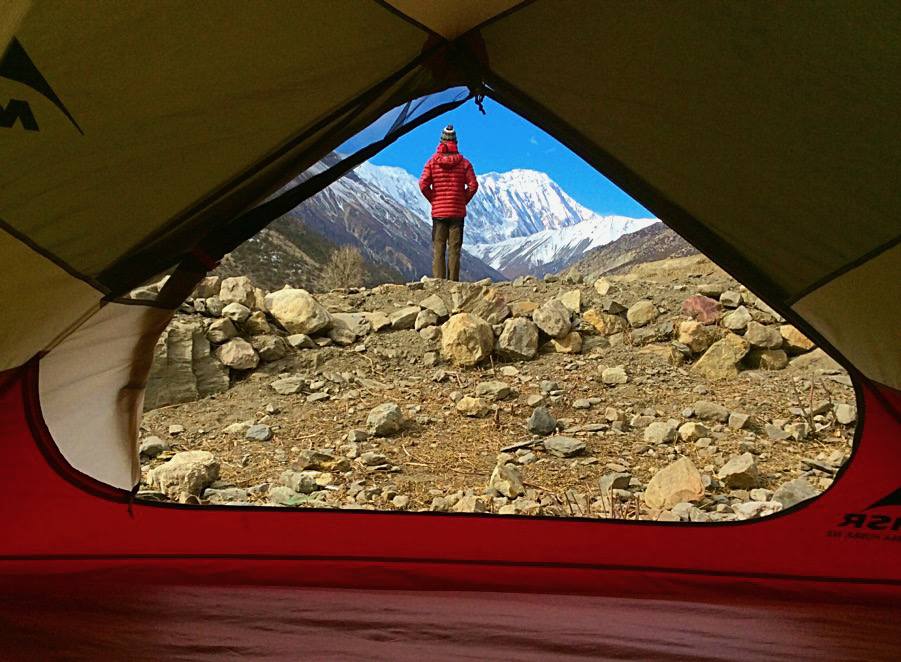
There are additional drawbacks too. The laws governing it change from country to country and there will always be safety concerns around doing it. Having said that, I have spent more than 1,300 nights wild camping in some form or another across more than 40 countries around the world and have only once been discovered by law enforcement, in Romania, and even then they really only wanted to make sure I was okay and take a photo with me.
I’ve written a whole other series about wild camping, from choosing a suitable spot to understanding the laws and how to go about reducing the risks, so I won’t go into all of that here.
The important point here is that by rarely paying for accommodation, it removes what would otherwise be one of the biggest expenses of the trip and keeps me on track to maintain this lifestyle for very little.
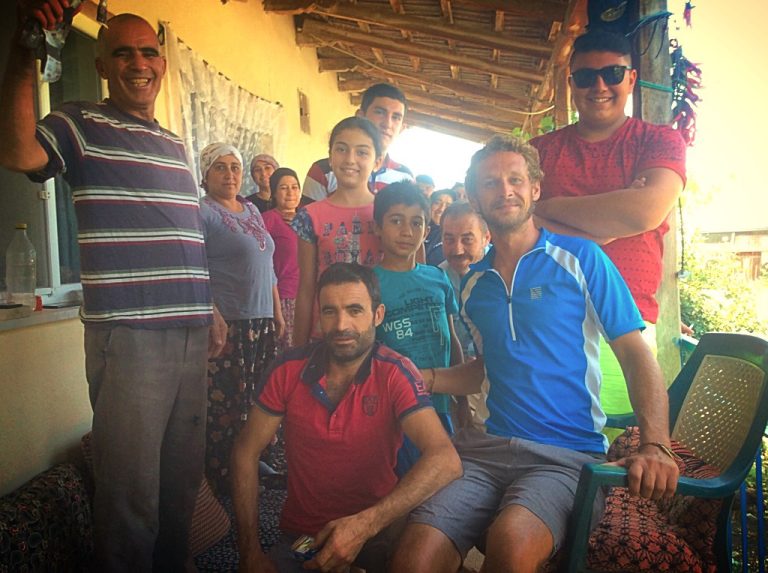
Wild camping isn’t the only way I keep accommodation costs down either. Another option I use from time to time is Warmshowers, a hospitality network created specifically for touring cyclists. Hosts offer travelling cyclists somewhere to stay, which might be anything from a patch of garden for the tent to a spare room, shower, washing machine or simply somewhere safe to leave the bike for the night.
I don’t use it as a replacement for wild camping, but every now and again it can be incredibly useful, particularly when I need a proper shower would be nice or a chance to dry clothes, charge electronics or just spend an evening around other people. I’ve written more about how Warmshowers works and my own experiences using it here.
I Try Never to Pay for Water
Another big saving comes from water. If safe drinking water is available for free, I see very little reason to buy it. The amount you can save by doing so is really quite startling. Allow me to show you.
Take the UK, where I’m currently touring, for example. You can buy two litres of water from some discount retailers for as little as 39p. Now, I know what you’re thinking. 39p is ridiculously cheap, and I agree, it is.
But imagine you are planning a year-long tour in the UK. At the very least, I’ve found I need around four litres of water a day to cover all my needs, from drinking to cooking and washing up.
People’s individual needs are going to be hugely different, but let’s say, for argument’s sake, that you too need four litres a day and intend on getting that each day from one of those discount retailers. That’s 78p a day. Still cheap, I hear you say.
Now multiply that by seven and, for a week, you’re spending £5.46. Multiply that by 52 weeks of the year and you’ve now spent £283.92 of your trip’s budget on water alone.
Put another way, that is more than eight weeks of my £5-a-day travel budget spent on water. Suddenly 39p doesn’t seem quite so cheap.
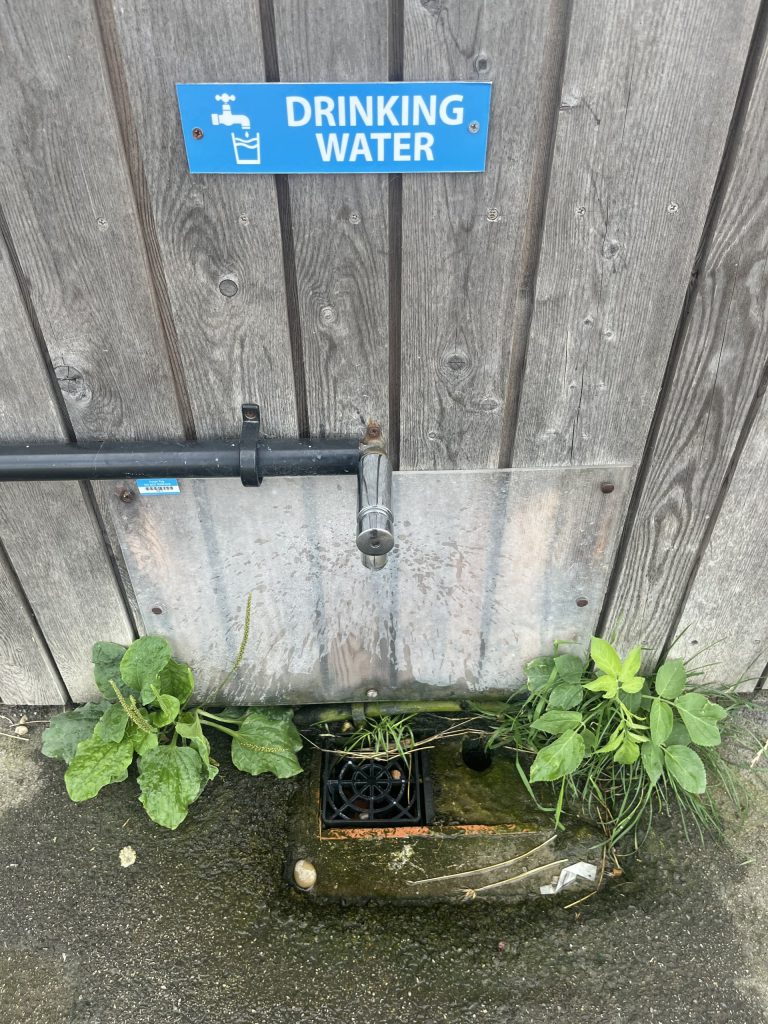
In countries where tap water is safe, I’ll refill wherever I can: public toilets, drinking fountains, taps and anywhere else where I can legitimately fill my bottles. If I’m passing a café or shop, asking politely for a refill often works too. I would much rather fill my bottles from the tap in a public toilet than spend money on bottled water simply because buying it feels more normal.
Of course, this changes enormously from country to country. There are places where tap water isn’t safe to drink, and there is no point saving a pound if the end result is making yourself ill. The cost of a week or a month recuperating in a hotel bed, no matter where you are in the world, is going to far exceed the cost of bottled water.
Water safety should always come before the budget. In countries where I know I may have trouble finding clean water, I always carry a water filter and proper treatment as backup and follow a set of simple principles. I’ve written about that process separately here.
The Reduced Section Is Usually My First Stop
Supermarkets can be either very cheap or surprisingly expensive depending on how you use them. My best advice here is to never become too fixed on what you’re going to eat before you’ve actually seen what is available.
I rarely walk into a shop with an exact meal in mind. Instead, the reduced section is usually one of the first places I look.
Not all supermarkets around the world will discount products in the same way, or even at all, but those that do can be very useful when it comes to providing what you need for very little.
Timing can also help. Going later in the day often gives me a better chance of finding food that has been marked down. Sometimes that means tonight’s dinner. Sometimes I’ll buy tomorrow’s lunch the evening before because a sandwich or something similar has been heavily reduced.
The important thing is being flexible. If I walk into a supermarket thinking, “Tonight I’m having this exact meal,” I’ll undoubtedly end up buying five ingredients at full price. If I walk in thinking, “What can I find reduced today?” then I can build a meal around whatever is cheapest.
Being happy to eat whatever has been marked down and avoiding too many treat items helps, but it’s also worth remembering that food tends to spoil quickly once it has been crammed into panniers.
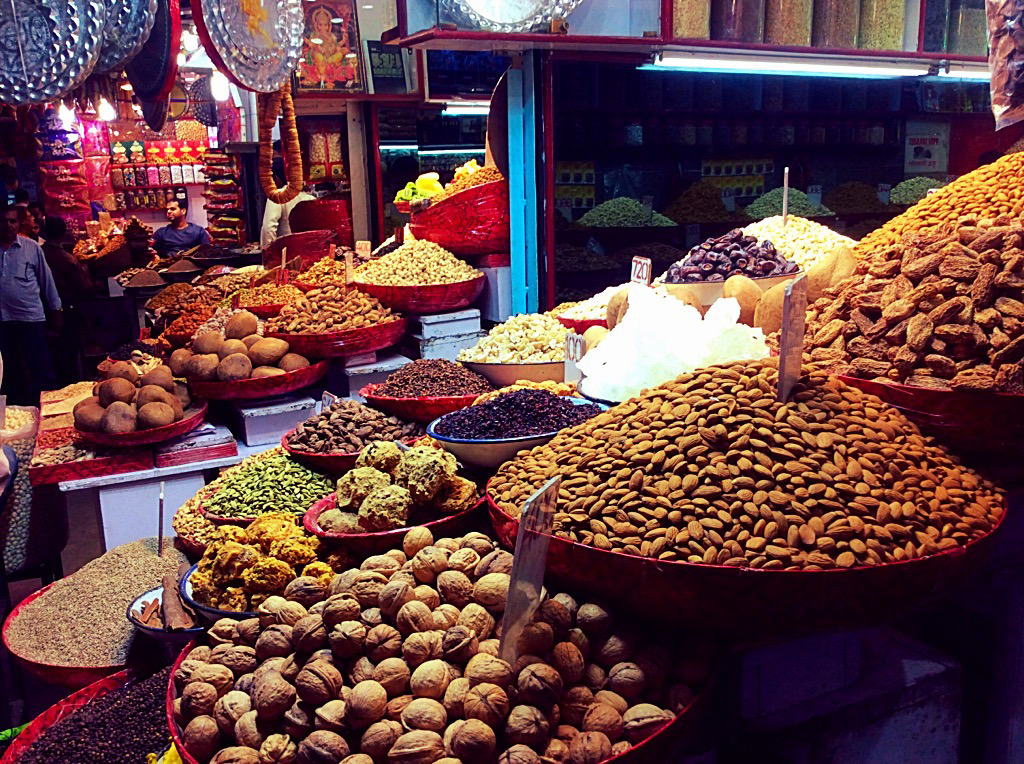
Fruit and vegetables bruise easily and can spoil surprisingly fast. For that reason, whenever possible, I try not to buy more fresh food than I’ll need for the next couple of days or so.
Anything that spoils is money wasted. On a bike it is even more annoying, because you’ve paid for it, carried it around for a day or two and then ended up throwing it away anyway.
There are exceptions to this. If you’re about to head somewhere remote or know that the next resupply point is uncertain, then you’ll obviously need to stock up more. In those cases I’ll often forgo the fresh products and use the space to make sure I have enough dry and simple items to form basic meals: porridge, honey, noodles, nuts, pasta, rice, soups and similar.
Food is heavy stuff too, so overpacking for your needs will just serve to slow you down. I always avoid tinned food where possible and carry a bunch of zip-lock bags to repackage things such as coffee and powdered milk. Ditching bulky jars and packaging saves both space and weight.
It helps too that I’m not a fussy eater. I know other cyclists who are and who prefer a decent, flavoursome meal each night, and that’s absolutely fine. But for me, eating has always come across as a bit of a chore. It’s something I need to do, obviously, but not something I get particularly excited about.
I don’t need a completely different meal every day. Most mornings are some variation of porridge. If I haven’t found anything to go with it over the previous few days, then I’m perfectly happy with plain porridge. It’s a bonus if I’ve got some fruit or a handful of nuts. It is cheap, filling, easy to carry and gives me a decent start to the day.
Lunch is normally equally basic. A packet soup that just needs water, some bread and a piece of fruit does me just fine. So does a simple discounted sandwich from the day before. One of my favourites is nothing more complicated than bread and sliced tomatoes.
Dinner is often pasta with mixed vegetables. A jar of pesto is always welcome. Another of my go-to meals is pasta with a mixture of mayonnaise and tuna and whatever vegetables I managed to pick up the night before. In South America, I ate mainly plain pasta in the evening for many nights.
None of this is particularly glamorous, but that isn’t really the point. It works, it fuels the riding and it doesn’t cost much. I am more than happy to have the same meal night after night, and doing so has the added advantage that when you do eventually get a chance to mix things up, even a basic meal can taste incredible.
The challenge with eating cheaply while bike touring is that you cannot simply eat less. You are using a lot of energy. On long riding days, especially when the bike is heavily loaded or the terrain is difficult, saving money by not eating enough is a false economy.
Eventually you slow down, become exhausted and feel terrible, and the joy of bikepacking suddenly disappears very quickly. Slowing down because you don’t have the energy can also mean you need more time to complete the trip, which in turn stretches your budget further to compensate for the extra days.
So the real calculation is not simply finding the cheapest food. It is finding the best balance between cost and energy. I’m constantly thinking about how many calories I’m getting for the money, but also how much the food weighs, how easy it is to carry and how much fuel it will take to cook.
Sometimes the cheapest food isn’t particularly useful. Which foods give you the energy you need and how much of them you need are personal questions and will differ from cyclist to cyclist, but finding that balance is going to be important if you want to keep a low budget sustainable.
Foraging Can Help
Depending on where I am, foraging can also be useful. I’ve just spent the summer months here in the UK and, each evening on my way back to my woodland wild camp, I would forage a few handfuls of blackberries from the bushes alongside the path and add them to my morning porridge. Buying the same amount locally could easily have set me back around £2 a day.
But this is one area where you need to know what you’re doing. What is available changes enormously from country to country and from season to season. Something common in one place might not exist at all somewhere else.
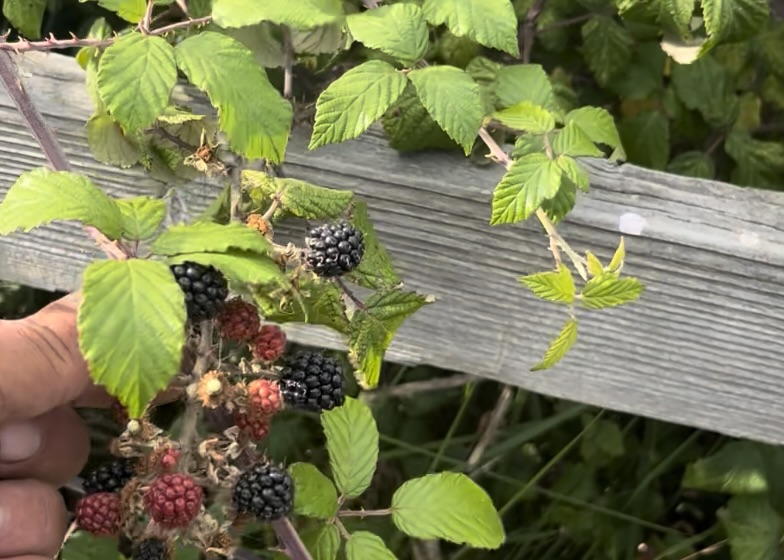
There are also obvious risks in eating something you cannot confidently identify, so I would never suggest wandering into the countryside and eating whatever looks vaguely edible. Learning what nature can and can’t safely provide you with in the area you are travelling through can be incredibly valuable.
If I know what I’m looking at, then free fruit, berries and other food found along the way can be a useful addition to what I’m carrying, but I always treat it more as a bonus than something I rely on.
I Make My Own Coffee
Coffee is another easy place for money to disappear. I will freely admit that inside me lives a heavily addicted caffeine monster that more or less refuses to let me do anything until it has been fed, so making coffee is normally the first thing that happens in the morning.
Granted, instant coffee is rarely a thing of flavoursome beauty, but it does the trick.
As much as I’d love a decent coffee made properly from freshly ground beans in a café, it is a very rare day indeed that I actually buy one. There are two reasons for that. Firstly, the price is normally equal to, or not far off, my full daily budget and, secondly, for the money, I’m usually left disappointed.
Just doing a quick calculation on cost is enough for me to forgo a shop-bought coffee. In the UK, I’d be lucky to get one for much under £3; it’s more likely to set me back closer to £4. Do that every day and suddenly you’re spending almost £30 a week on something you could have made yourself given a quiet corner of a park or a secluded country lay-by.
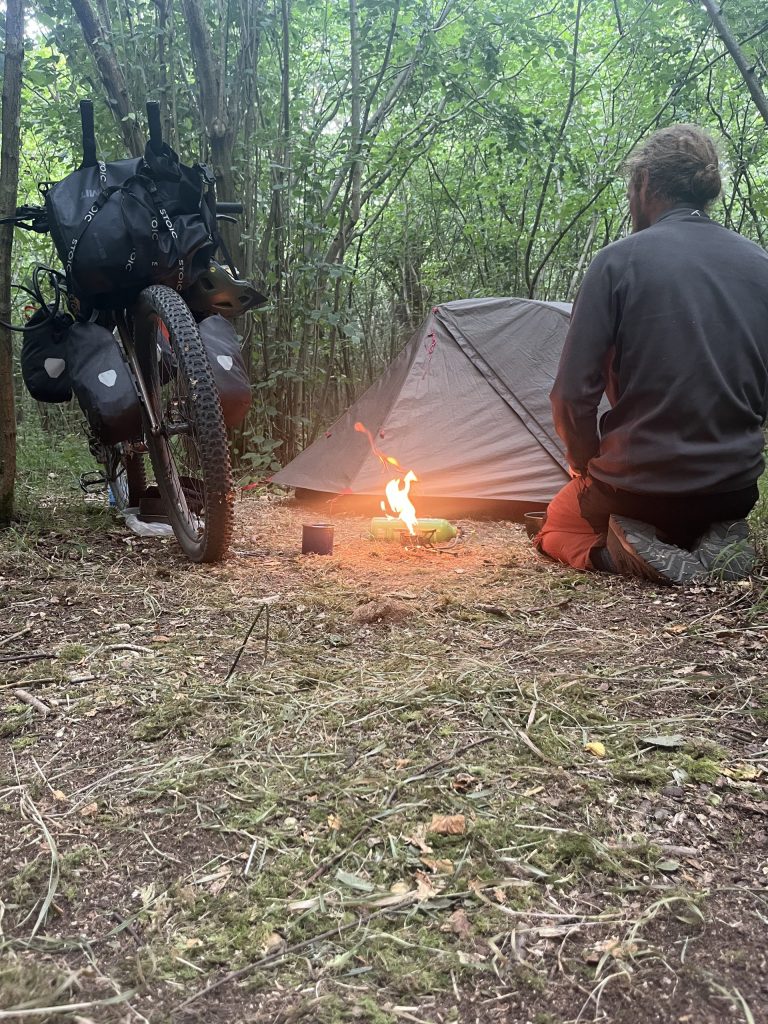
The same principle applies to a lot of small purchases. A cold drink on a hot day can be great, but that bottle of lukewarm water sitting on your frame that you filled up for free will ultimately do the same job, just maybe not in quite such a refreshing way. You’ll be amazed at the savings over a year if, even half of the time, you grab that water rather than opening the convenience-store fridge door.
Individually, these things don’t look expensive. Repeated every day for months, they soon add up.
Convenience Is Expensive
Service stations, tourist shops and small convenience stores are dangerous places for a low budget. Not because there is anything wrong with them, but because you are paying for convenience. The easiest way to avoid that is to plan ahead whenever possible.
If I know I’m heading into a particularly touristy area, a national park or a popular seaside resort area, say, then I’ll try to buy the basics beforehand. Pasta, oats, bread, soups, coffee and whatever else I know I’m likely to need.
Running completely out of food and then discovering the only shops around sell everything at tourist prices is not particularly helpful. At the same time, though, there is no point carrying five days of extra food just to save 50p. As with everything, there is a balance.
Knowing roughly what something should cost is important too. I once ended up in a disagreement with a shopkeeper in a small village in Peru over the price of bottled water. It was clearly labelled as being sold at the equivalent of around 40p, but he wanted something closer to £6 from me.
Now, I get it. He was taking what was probably a rare opportunity in a village like his to earn a little more from someone he perceived as having money to spend, and if I’m honest, I’m normally not against paying a bit more in situations like that. But there is paying a little more and there is being charged fifteen times the advertised price.
Eventually I walked out, only for him to follow me halfway down the road shouting a succession of ever-decreasing prices after me. Sometimes the best budgeting decision is simply to keep moving.
Treats Are Treats
This is probably where discipline matters most.
After riding all day, it is incredibly easy to walk into a shop and convince yourself that you need a Coke, a chocolate bar, a coffee and something from the bakery. The occasional treat can be welcome, but doing it every day would soon evaporate the £5 budget.
The trick is not never having treats. It is not allowing them to become automatic. Being tired, hungry and standing beside a bakery is not always the best environment for making sensible financial decisions.
What I try to do is make sure the treats feel deserved. For me, I use them almost as a reward system. They are to be earned.
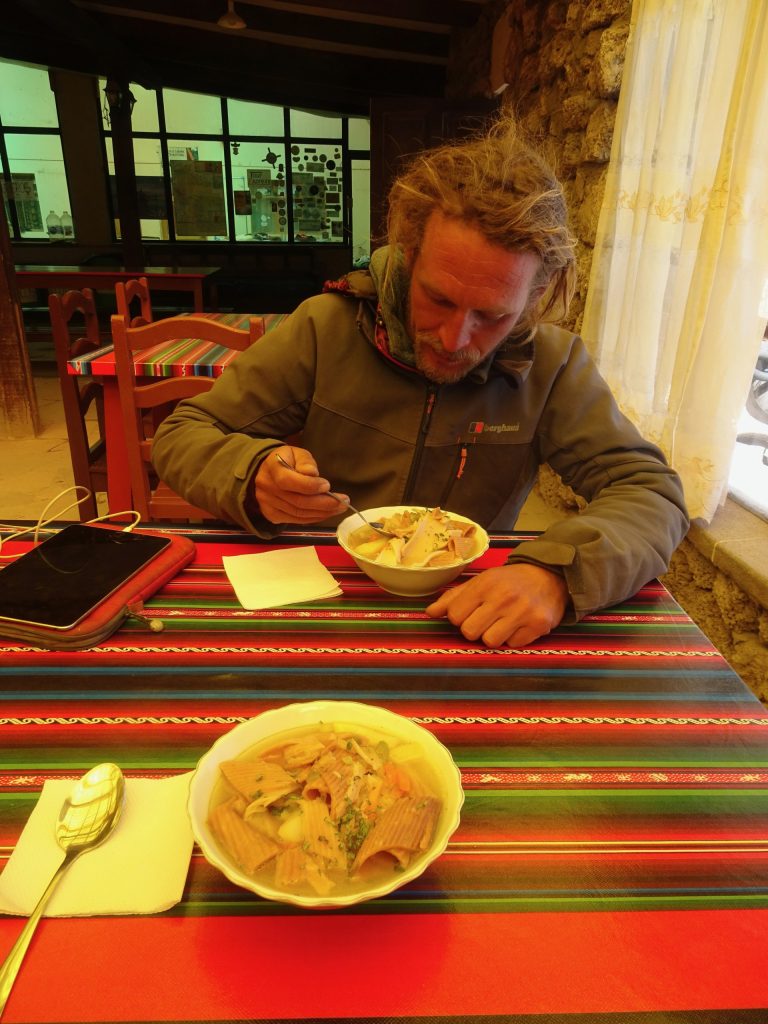
For instance, after I spent two weeks crossing the Himalayas on the Annapurna Circuit and finally arrived back in Pokhara, I figured I deserved to give myself a pat on the back. After all, I’d just spent night after night trying to sleep in temperatures down to around -20°C and had been battling altitude sickness, so the thought of maintaining my budget soon disappeared once I found myself back in civilisation. Rightly so, I figured.
My treat was to be a meal in a local restaurant, a rare experience indeed. That evening I found myself sitting there eating dish after dish of Nepalese food while I thought about the previous few weeks, all washed down with a beer or two. It was one of those rare occasions in life where food was actually enjoyable for me.
The next day I came down with a case of food poisoning that left me in bed for three days and weak as a baby. That treat gave me the only serious bout of food-related illness I experienced in three and a half years of cycling around the world and rather ironically reinforced my preference for street food.
From then on, future treats were more likely to come in the form of chocolate or beer.
I Don’t Build My Travel Around Paid Attractions
Another reason my costs stay low is that I am not travelling from one paid attraction to another. A lot of what I enjoy about travelling is free: remote roads, mountains, uninhabited coastlines, quaint villages, meeting people and simply seeing how life changes as I move through a country.
I know bikepackers who have separate funds for “experiences” along the road, and that’s absolutely fine. For me, though, I’ve learnt that I often don’t need to pay to get an experience.
My time in Cambodia is a good example. Angkor Wat is one of the country’s most famous attractions, but visiting it can be expensive. Ride out into rural Cambodia, however, and temple remains are everywhere and come without the crowds or entry price.
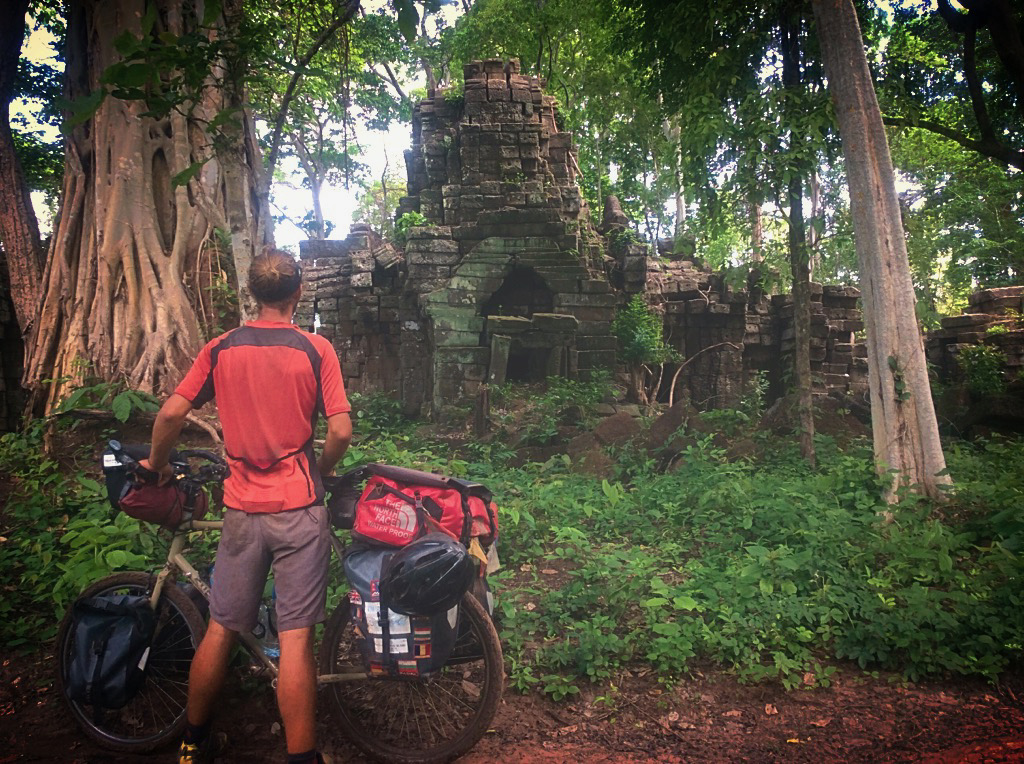
They might not be as famous, polished or heavily promoted, but many are just as fascinating. I spent over a week traversing inland Cambodia and nearly every day I seemed to stumble across the ruins of another temple hidden in the jungle. Not once were they behind fences or ticket kiosks.
It wasn’t just the fact they were free that appealed to me; it was that they were rarely visited. I wasn’t sharing the experience with thousands of others and, for as long as I wanted, I could wander around and explore. I even spent one night camped inside the remains of one. Just me, history and the jungle. Try doing that at Angkor Wat.
That does not mean I refuse to pay for attractions. Some are simply too wonderful and present too much of a genuine once-in-a-lifetime moment to pass by. I happened to be in Agra, India, for my birthday one year and happily paid to spend the day wandering around the Taj Mahal. After all, I wasn’t likely to find another Taj Mahal anywhere else, and I certainly wasn’t about to come back and cycle India’s roads again anytime soon. Once is more than enough for me.
The Real Trick Is the Habit
There is no single secret behind living on £5 a day. I don’t have a magical cheap meal that suddenly makes long-term travel affordable. It is simply a collection of small decisions that add up to spending less and remaining on the road for longer.
Everyone is different. Not everyone is going to be comfortable sleeping behind a public toilet or in a bus shelter just to save the price of a campsite. Not everyone is going to be happy eating the same thing over and over again.
But for me, by following these steps, I’m able to live on my bike full-time, happily, healthily and adventurously, while spending relatively little.
Being disciplined helps. But being flexible is probably just as important. None of those decisions saves a fortune on its own, but repeat them every day for weeks, months and years and the numbers become very different.