Wild camping is a fundamental part of not just why I bikepack, but also one of the main reasons I’m able to do so for extended periods of time. I’m often asked how I can live off a bike full-time with an income that can not only vary dramatically from month to month, but can dry up completely for months at a time. There isn’t one single answer, but one of the biggest reasons is that I wild camp whenever I can.
Accommodation can very quickly become one of the largest expenses on any trip, whether you’re travelling for a week or several years. Remove most of that cost and the numbers suddenly start looking very different. Prices for accommodation will obviously vary from country to country and season to season. A hotel room in Perth, Australia, is going to be considerably more than one in Siem Reap, Cambodia, regardless of the standard.
On my round-the-world journey alone, I spent well over a thousand nights wild camping, and there wasn’t a single country I travelled through where I wasn’t eventually able to find somewhere to spend the night. Some countries were easier than others, of course. Sometimes the spots I chose weren’t glamorous or even advisable; other times I’d wake to the same views that nearby residents had paid millions for. No matter the spot, they all served the same fundamental purpose. They didn’t cost a penny.
When I tell people this is the way I choose to spend my nights, I’m often met with a reply of “I couldn’t do that,” followed by any number of reasons. “I’d be too scared” is something I hear a lot, but a lot of people also tell me they simply wouldn’t know how to go about it. So I thought, after many years of living this way, it was about time I shared my process behind wild camping.
Wild camping should always be a personal choice and, in doing so, you should be happy evaluating the risks and understanding the consequences if things don’t go to plan. No amount of experience can guarantee a safe night when wild camping, but it can reduce the risks involved. Weather, wildlife and bumping into the village nutter are all variables that cannot be totally controlled but must always be assessed beforehand.
This series of articles aims to give you an understanding of wild camping, from what to look for when picking a suitable spot to understanding the laws behind doing so. It provides a framework for wild camping but does not guarantee a peaceful and uneventful night. For me personally, that’s part of the appeal of wild camping. The challenge is just as important as saving the money or waking up to nature at its finest.
A note before we start: Everything in this series is based on my own experiences of wild camping while travelling by bicycle. Conditions, laws and risks vary enormously between locations and seasons and can change over time. What has worked for me may not be appropriate or safe for you. Always check current local rules, assess the conditions for yourself and make your own decision about whether and where to camp.
What Is Wild Camping?
Mention wild camping and most people immediately picture an idyllic countryside scene: a tent beside a mountain lake perhaps, a woodland camp deep in the forest or a tent door that opens out onto hundreds of miles of featureless desert. And sometimes that image is pretty close. More often than not, though, it can look a little different.
For me, put simply, wild camping means sleeping somewhere that hasn’t been specifically set up as accommodation. A secluded corner of a city park is just as much wild camping as setting up the tent on the steppe of Kazakhstan, hundreds of kilometres from anywhere. As is an abandoned building on the outskirts of a town or the end of a fishing jetty in an Indonesian village.
It’s not even a requirement, in my opinion, to have a tent. Many a night I’ve spent curled up on a beach, warmed through the night by the sand’s radiant heat, or laid out my sleeping mat on the floor of a half-built building, its raw concrete walls all the protection from the elements I needed.
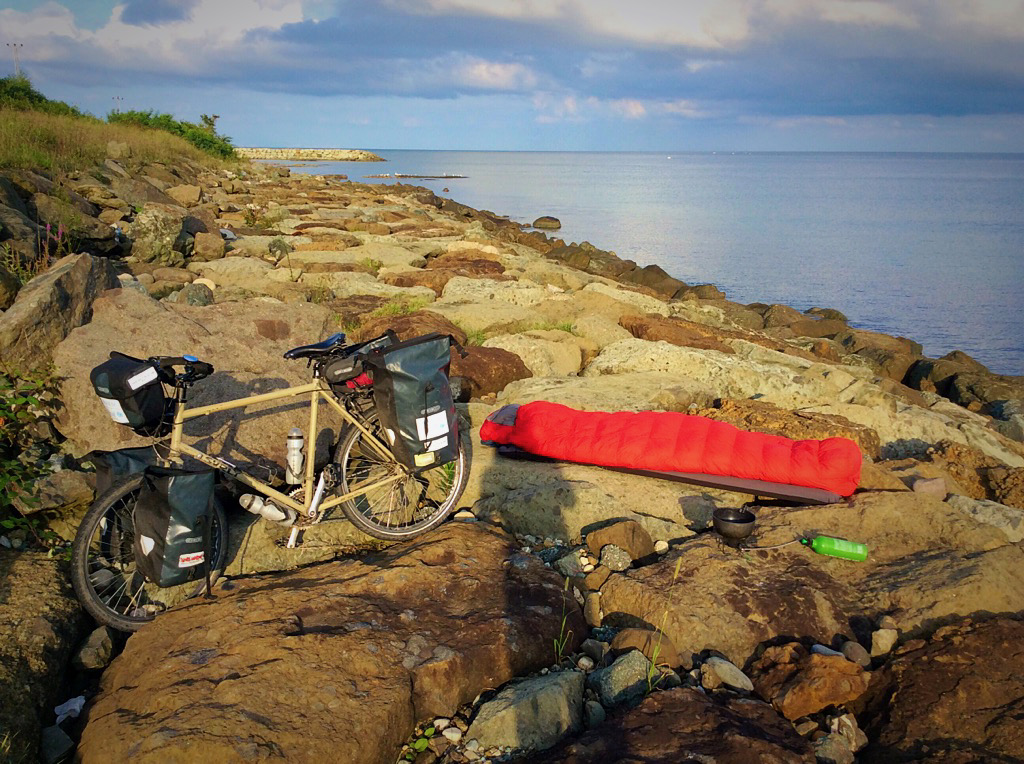
Sometimes finding a spot is easy; other times it involves long and uncertain searches that can lead deep into the night itself. I vividly remember cycling through Kazakhstan and the Australian outback and, when evening started to draw in, I simply picked either the left or right side of the road, pushed the bike 100 metres into the surrounding terrain and pitched up. There was never a need to think ahead or plan. Other times, finding somewhere proved much harder. In India, just finding somewhere where I wasn’t found proved nigh on impossible, and in New Zealand, discovering somewhere that wasn’t surrounded by fencing proved difficult.
So that is probably the first thing worth understanding about wild camping. It doesn’t necessarily mean you need to be miles from anywhere.
Wild Camping, Stealth Camping and Bivouacking
There are a few different terms that tend to get mixed together, and although the exact definitions change depending on who you ask, I think it is useful to make a rough distinction between them.
Wild camping is the broad term I use for sleeping somewhere outside an established campsite or conventional accommodation, as discussed above.
Stealth camping is really just an extension of that idea and comes into play where remaining unnoticed becomes a more important part of the process. If I’m camping close to a town, beside a busy road or somewhere that I would rather not draw attention to myself, I’ll deliberately try to keep a much lower profile than I would if I was pitching up in a remote woodland.
Then there is bivouacking. A bivouac is generally a simple overnight stop rather than setting up a more established camp. That might mean sleeping under a tarp, rolling out a sleeping bag or building a shelter from what’s around you. In my mind, this is really just wild camping.
The distinction can sound slightly academic until you reach somewhere where the law treats bivouacking differently from camping. In some places that difference can actually matter.
For the most part, though, when I talk about wild camping throughout this series, I’m talking about spending the night outside formal accommodation, regardless of whether you choose to do so in a tent, under a tarp, lying on a sleeping mat or building a lean-to shelter from branches.
Why I Wild Camp
Saving money is obviously a big part of it. If I had to pay for accommodation every night, I simply wouldn’t be able to travel in the way I do for as long as I do. But the longer I’ve travelled this way, the less wild camping has felt like something I do purely to save money.
For me, it has now become a major part of the experience itself. The challenge of finding somewhere to sleep each night adds to my experience. Sure, it can be stressful at times if, with darkness falling, you haven’t found anywhere, but as I’m never really fussy about where I end up (I’d take a beautiful scenic spot over a crappy one any day, but needs must sometimes), I’m yet to fail completely.
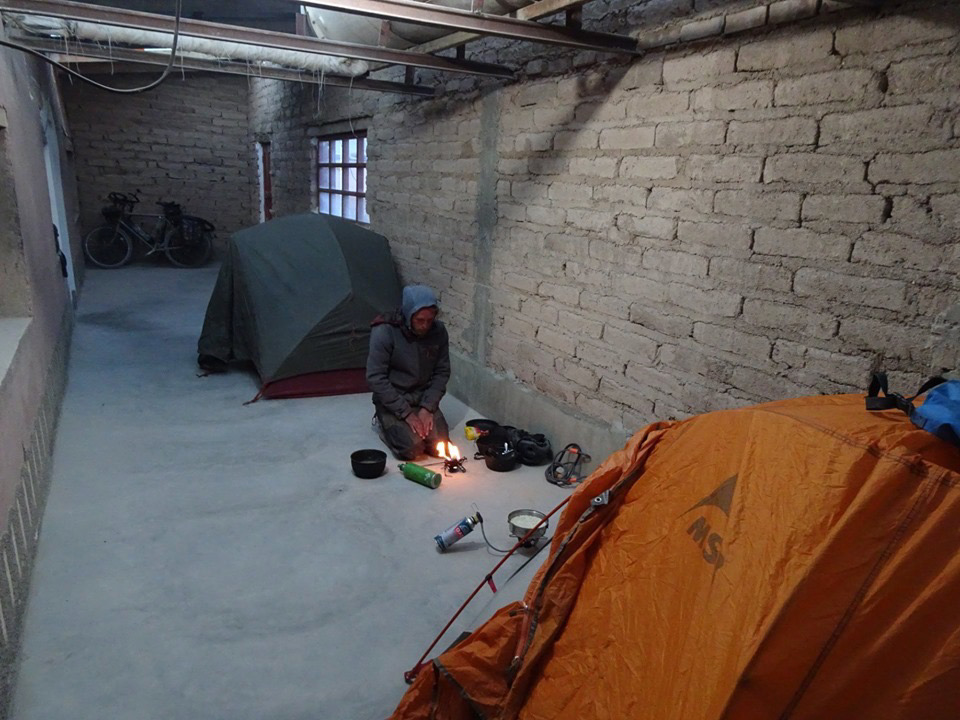
I don’t particularly like setting off in the morning already knowing that I have to reach one certain town or campsite by the evening. Bike travel is unpredictable. Sometimes the road is easier than expected and I ride much further. Sometimes a dirt track turns into six hours of pushing a loaded bike through mud and I barely cover any distance at all. Similarly, weather can disrupt plans, as can mechanical problems. Often I find somewhere beautiful and decide I’ve had enough for the day. Wild camping allows me to respond to all of that and change my plans in a way a hotel booking wouldn’t.
That freedom is probably more important to me now than the money or a comfy bed.
The Good Camps Are Very Good
When things go right, when that idyllic spot is found, wild camping adds a wonderful experience to a bikepacking trip that a hotel room or campground could never compete with.
Camping in a beautiful woodland and watching as the morning sun slowly creeps through the trees, or falling asleep to the sound of gentle waves lapping the shore metres from the tent, are experiences I will never tire of.
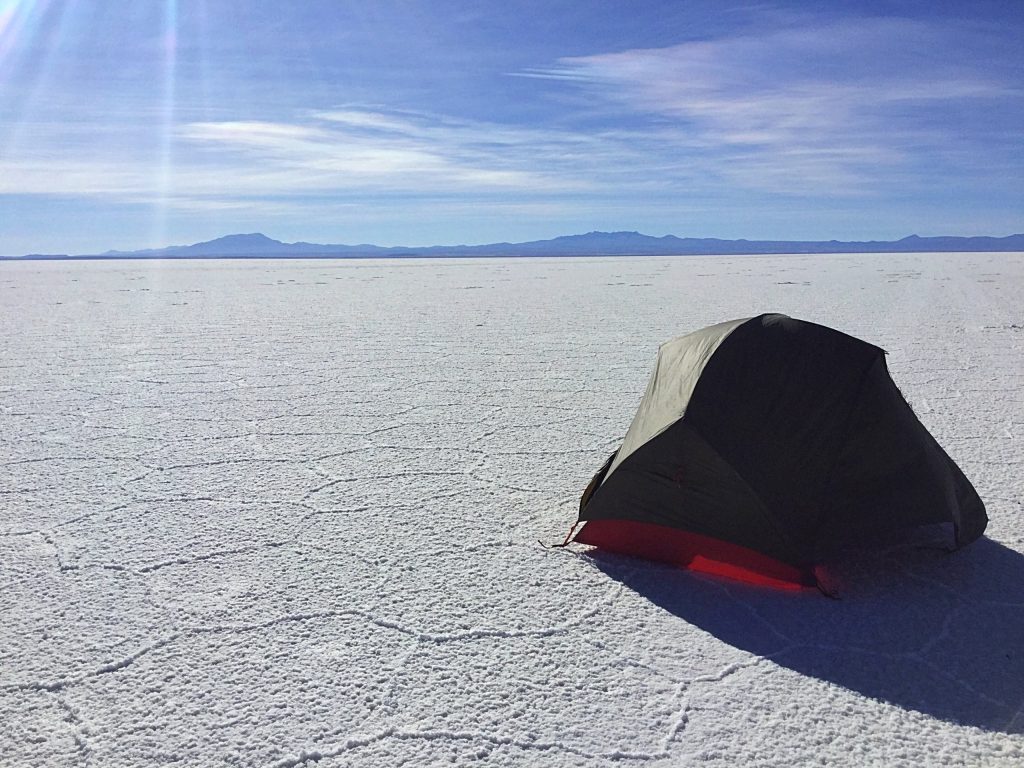
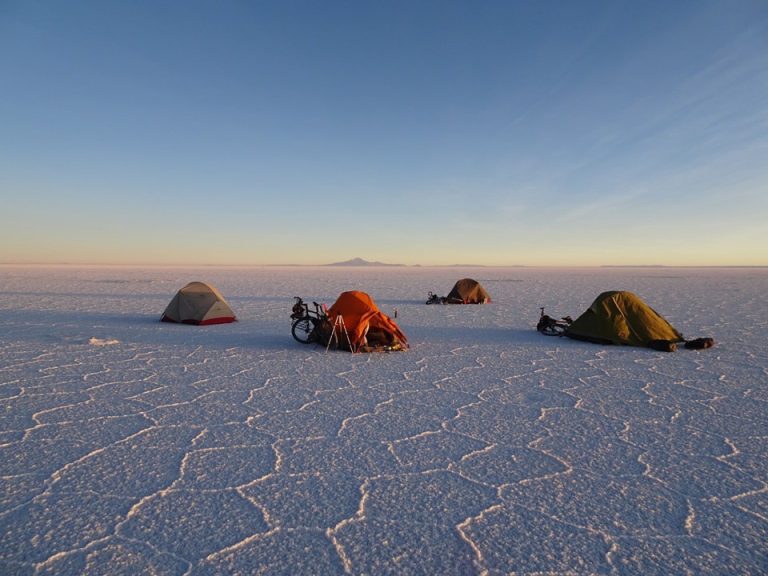
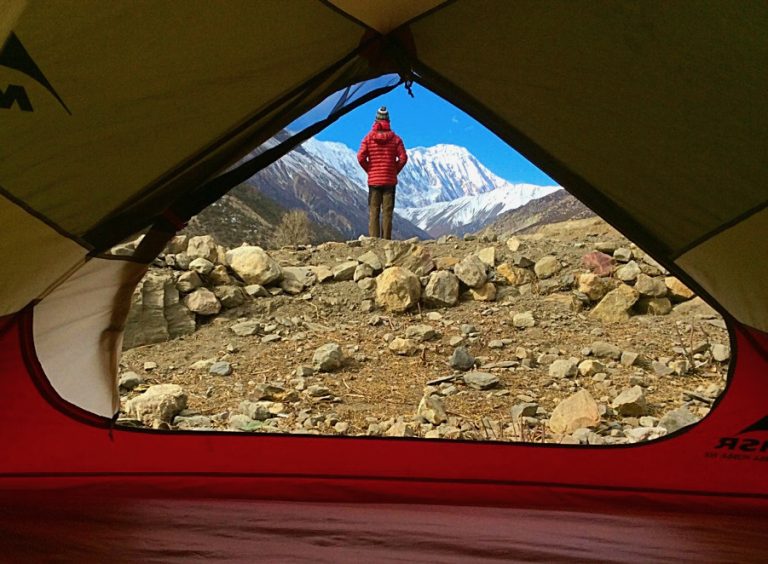
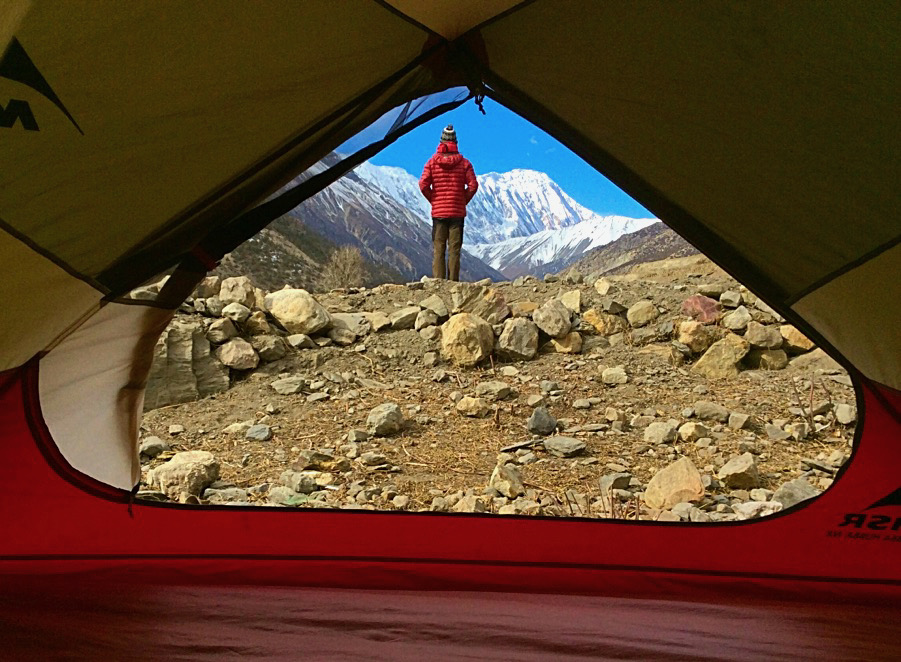
In Nepal, I slept amongst the 8,000-metre giants of the Annapurna range and awoke to the dawn’s first rays illuminating their lofty peaks, a sight no hotel room could ever provide me. In Bolivia, experiencing the sight of an uncountable number of stars glistening high above the Salar de Uyuni salt flats is something I’ll never forget, along with the countless other special places I’ve called home for the night over the years.
In Australia, I had whole beaches to myself. In other countries, like Cambodia, I awoke deep in the jungle to the sounds of animals I couldn’t picture. The best nights, though, are those where I can leave the rain cover off the tent and lie in bed staring straight up into the night sky whilst a cool evening breeze flows over me. I get to lie there listening as the day comes to an end and drift off to the nocturnal sounds of the environment around me.
When things go well, wild camping is hard to beat.
The Bad Camps Are Still Part of It
For every beautiful camp I’ve had, there have been plenty where the priority was simply finding somewhere to lie down and ultimately ending in me spending the night questioning my sanity and willing the sun to rise.
I’ve slept behind public toilet blocks, crawled inside drainage pipes, spent nights at the backs of graveyards and slumped on piles of sand at roadworks because darkness had arrived and there was nothing better nearby. Sometimes the ground is awful and I’m constantly worried tonight is the night my air mat punctures.
Other times traffic keeps going until long after you thought it surely had to stop. In Bolivia, I once camped in an abandoned shack halfway up a mountainside road. It had gotten dark and, being a mountain road, there wasn’t a single piece of flat ground. Steep cliffs rose on one side and a sheer drop on the other. All night, one after the other, a succession of trucks laboured up the hill at not much more than walking pace. The shack was close enough to the road that it would shake violently with each one that passed. I barely slept at all.
In Turkey I underestimated the time it would take to leave Samsun on the Black Sea coast and was still pedalling through as darkness fell. I eventually settled on setting up at the end of a small jetty only to lie there all night with the smell of stale urine wafting on the warm sea breeze. As I say, it’s not always glamorous.
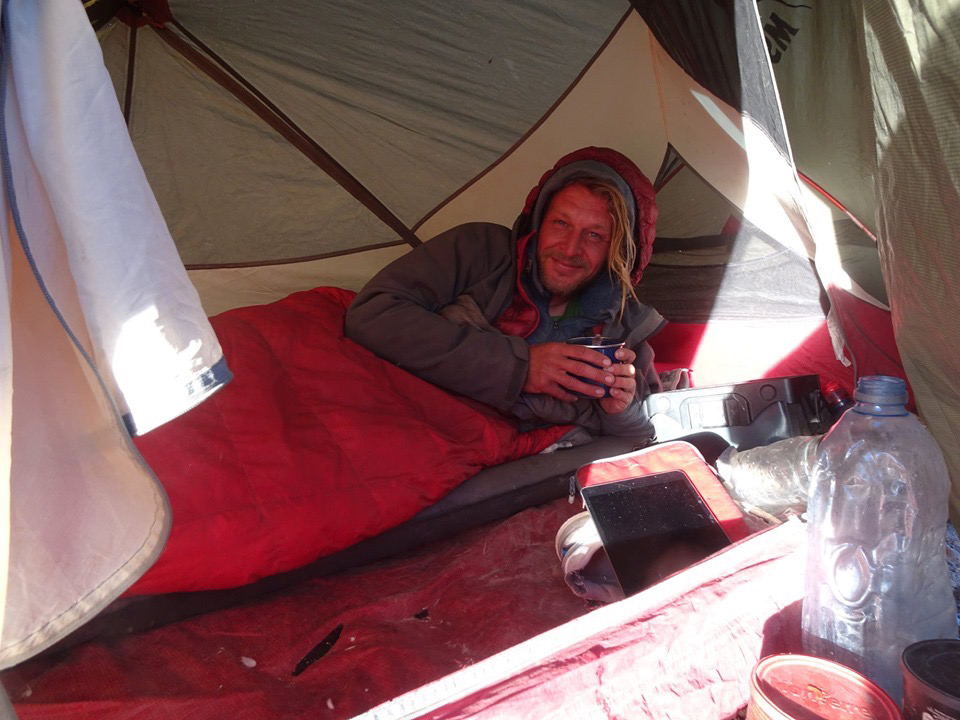
The strange thing is that even the bad ones normally become good stories eventually, and if things don’t go to plan, then I just remind myself that the situation is only temporary and the night always gives way to morning. Nothing lasts forever, good or bad, and the camp spot that felt miserable at 2am becomes just another memory somewhere down the road.
Wild Camping in Cities
Wild camping in cities is probably my least favourite environment to be in. I’m not a city or town fan as it is. They tend to be confusing and noisy and I quickly start to yearn for nature, remoteness and solitude. I will always do everything I can to avoid spending a night in one but there will always be times when this is unavoidable.
The chances of being found are obviously going to go up in a city compared to a remote woodland; sharing a small space with thousands, if not millions, of people will do that. Safety factors change for the same reason, so urban wild camping requires a different approach.
You’re normally not looking for beauty. You’re looking for somewhere forgotten. A patch of woodland between developments. Scrub beside an industrial estate. An unused corner of land that hundreds of people pass every day without ever having a reason to enter. The goal is simply to be somewhere nobody has a reason to look.
A favourite place of mine to look is churchyards. I’ve discovered that, unsurprisingly, not many people tend to walk around a graveyard at night and there’s normally an overgrown corner somewhere. Usually, they also have water taps, which is handy.
Urban camps are very different from pitching beside a mountain lake, but I still consider them to be wild camping.
Is It Safe?
This is where things become more complicated. Wild camping obviously introduces risks that you don’t face in quite the same way on an established campsite. A woodland is a beautiful place on a still night, but if the wind picks up, lying beneath the trees with less than a millimetre of fabric as protection from falling branches changes everything. A secluded beach is ideal with the sun out, but did you pitch above the high-tide mark?
There are people to think about, but there are also animals, traffic, weather, unstable ground and a long list of other dangers that can turn a seemingly perfect spot into a very bad one.
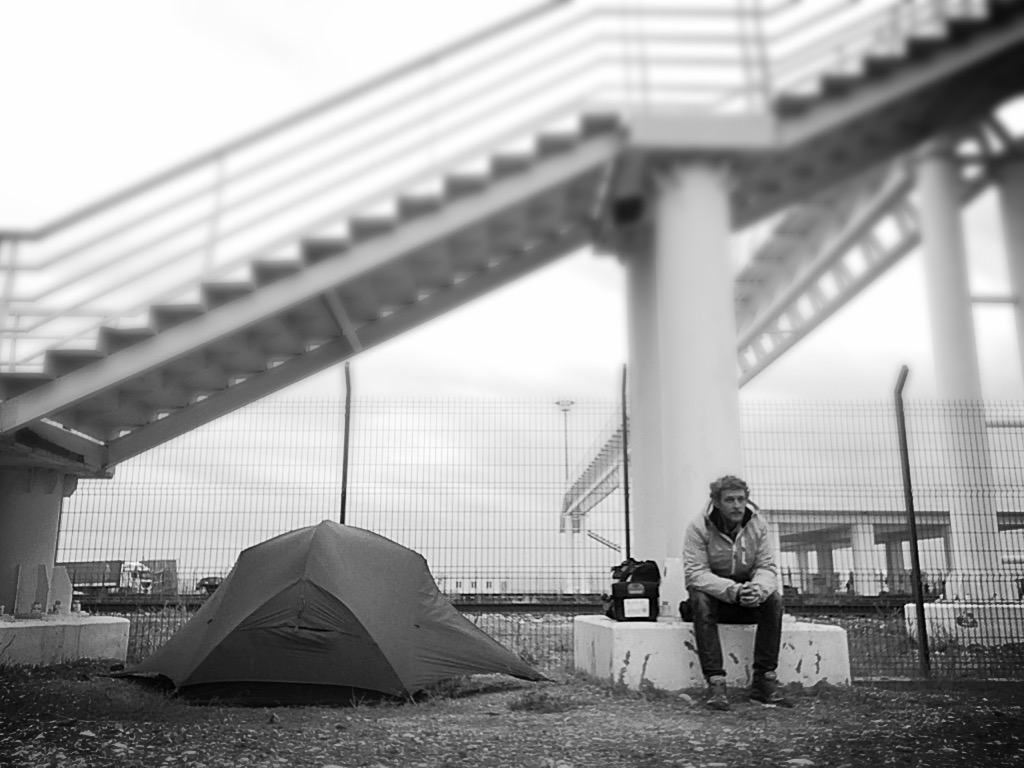
The further I am from civilisation, the safer I often feel from people, but that doesn’t automatically mean the camp itself is safer. Safety is a big subject and what is and what isn’t acceptable is always going to come down to the individual. What one person perceives as safe, another may not. In some countries, whether you’re male or female may very well, unfortunately, change how safe somewhere is.
I’ll go into detail on this subject later in the series, but I’ll leave you with one observation. In my experience of wild camping around the world, it’s the animals that prove far more problematic than the people.
What About the Law?
Then there is the other big, obvious question. Are you actually allowed to do it?
There is no simple worldwide answer to this, and wild camping laws can vary enormously from one country to another, and sometimes from one region to another within the same country. National parks, beaches, forests, farmland and municipal land can all have completely different rules.
There is also a big difference between something being legal, something being tolerated and something simply being possible without anybody noticing, and they are not the same thing. The reality is that it’s a huge subject to try and cover in depth and one that constantly evolves as new laws are enacted and repealed.
I’ll take you through a deeper dive into this subject in Part 2, beginning with the surprisingly different rules across England, Scotland, Wales and Northern Ireland before looking more widely at Europe and the rest of the world.
What This Series Will Cover
Over the rest of this series I’ll go through how I actually approach wild camping after years of travelling this way: understanding the law, finding somewhere to stop, attempting to stay unnoticed when necessary, assessing whether a place feels safe, dealing with water and washing, coping with bad weather and all the mistakes that have taught me what not to do.
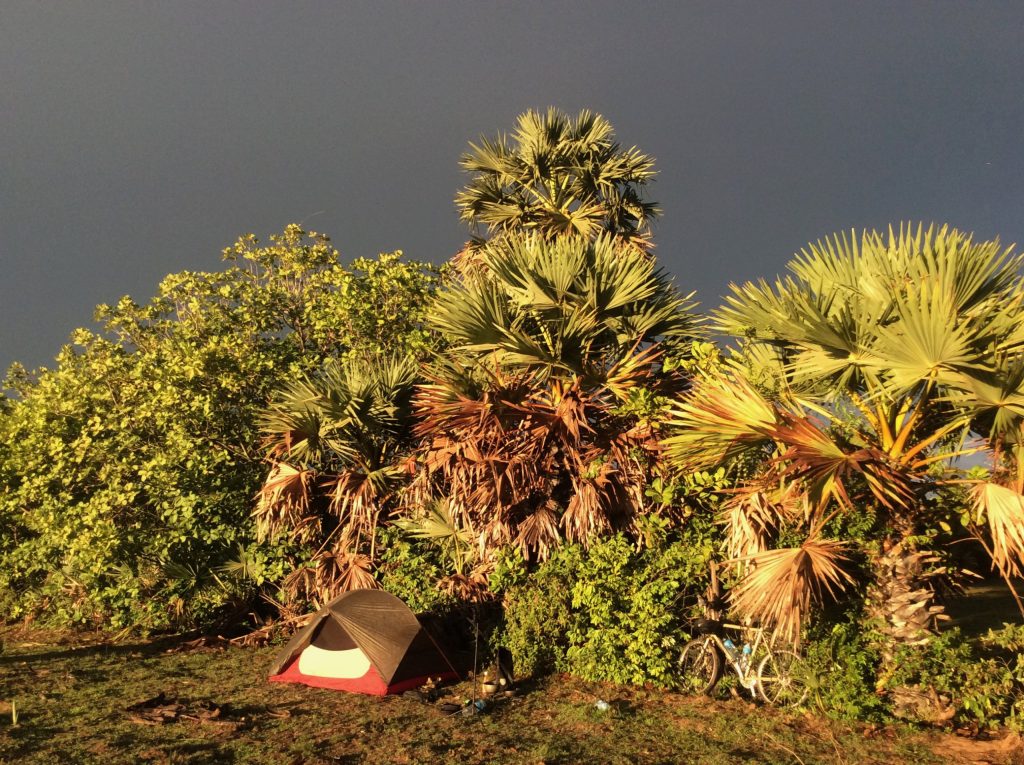
I don’t think there is one perfect way to wild camp; people’s needs and standards are always going to vary. What works for me will not suit everybody, and what works in Scotland may be completely inappropriate in Cambodia, Australia or the middle of a South American city.
But after enough nights outside, certain principles start working almost everywhere. It is those principles I’ve learnt that I aim to share. The series is intended to provide the information you need from experience to base your own decision on whether wild camping’s right for you.
For those who choose to do so, my advice may not suit you in its entirety, but the core principles will serve you well.