Okay, bear with me on this one. I know what I’m about to say is very likely to irritate some people, for which I am almost apologetic, but as an Englishman I feel I have something close to a sense of duty to bring it up. It is in my DNA to do so. I am talking, of course, about the weather, although more precisely I am doing what we Brits do so very well: moaning about it.
Now, I know my home country has recently been battered by two storms that have brought strong winds and enough rain to upset even the ducks, but here, in central Portugal, it ain’t half been bloody hot!
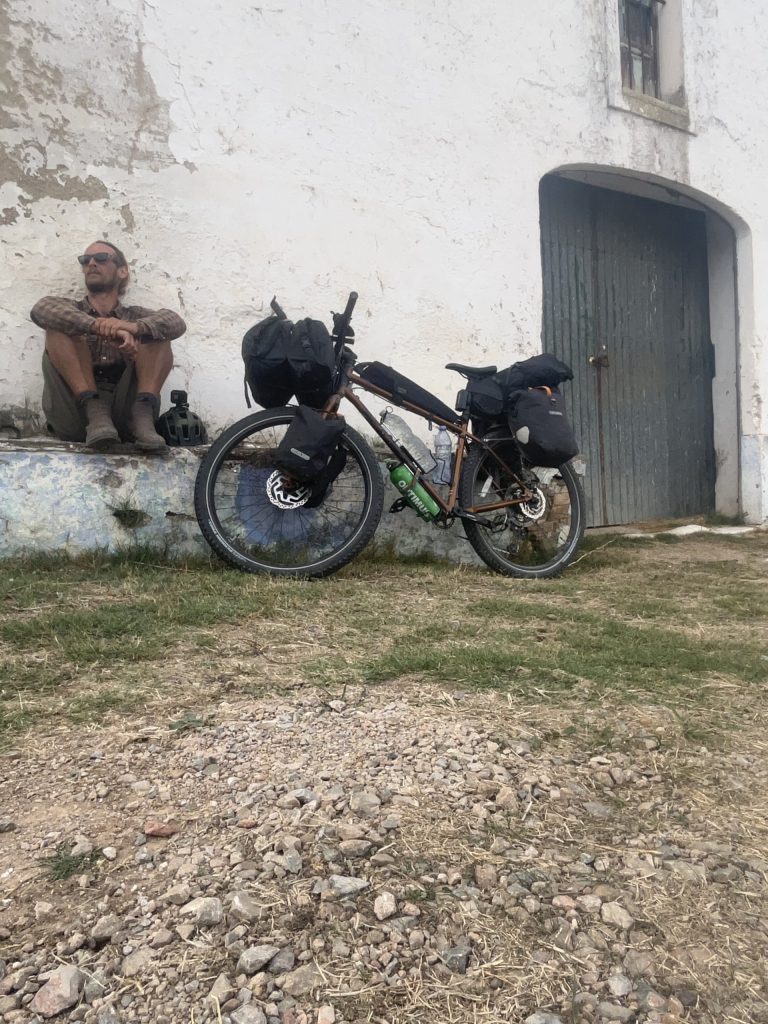
Now yes, I can hear your tiny violins and puffs of indignation from here, but it really has been the central theme of this last week.
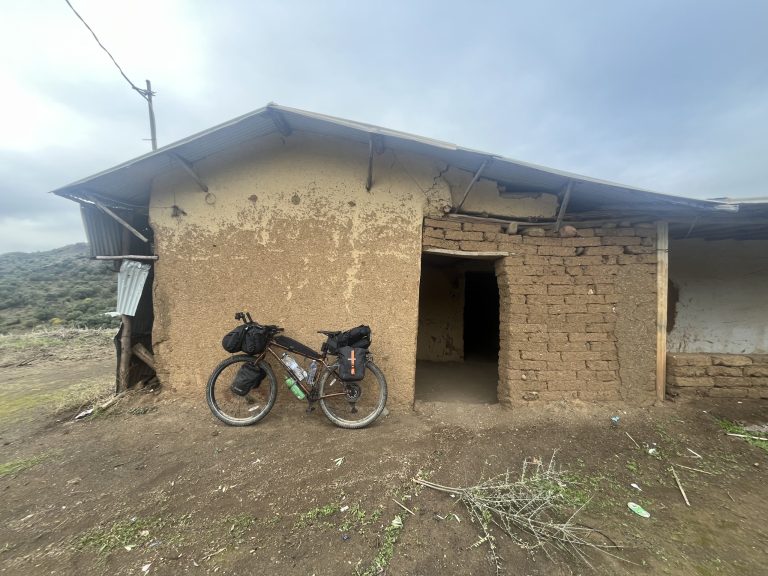
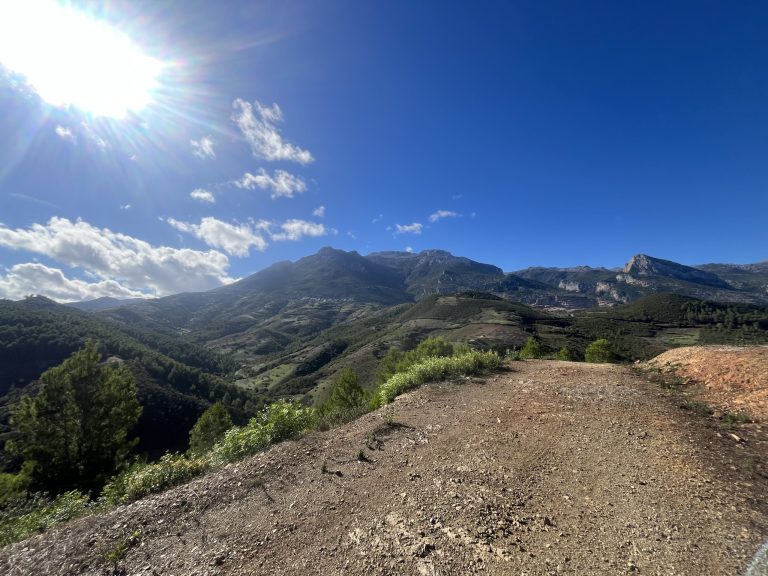
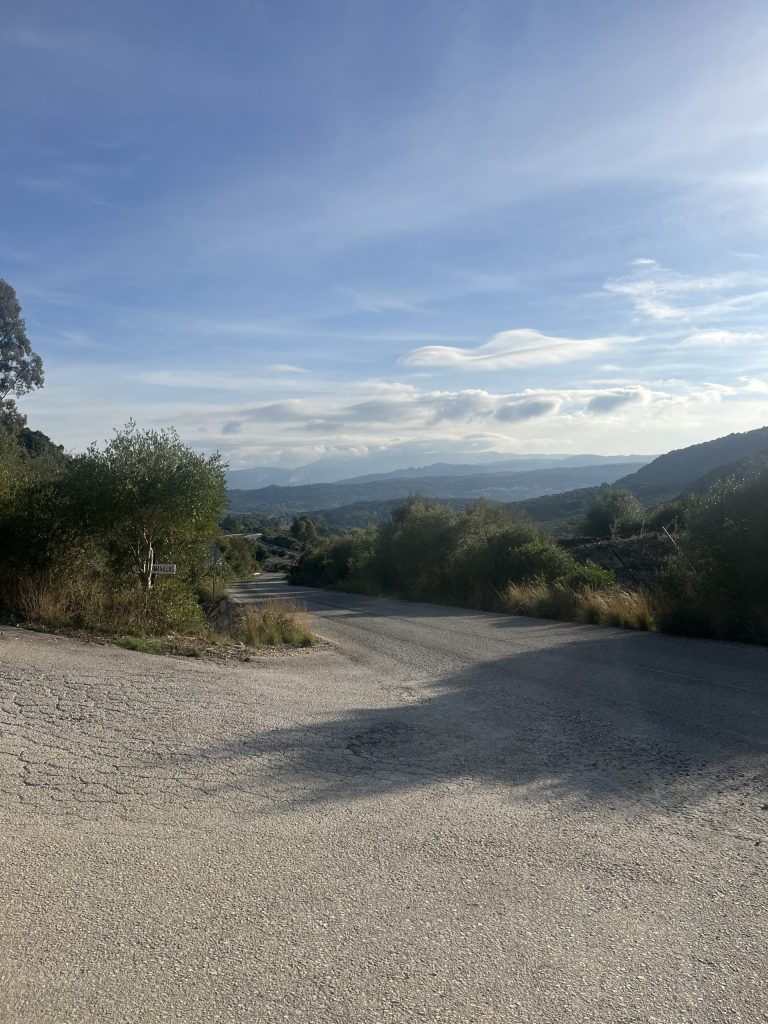
On multiple days the thermometer has climbed into the high twenties, which I’m sure, to those now enduring the ever-present grey skies and damp, gloomy days synonymous with the British winter, may seem very appealing. I would just like to politely remind you that my bike weighs in excess of 40 kg and this past week has seen me drag, heave, push and occasionally cycle it over a combined elevation gain of slightly more than 5,000 metres.
I can assure you, 27 degrees is far more pleasant while sitting around a pool than it is when faced with your third 500-metre-plus climb of the day, a near-empty water bottle and a shirt that has been welded to your back with sweat since eight that morning.
‘But it is of your own making,’ I hear you cry.
Well, yes, it is, and there is a peculiar little part of me that actually enjoys the discomfort and challenge, but that doesn’t stop me wanting a good old moan every now and again. As I say, it’s in the DNA.
However, aside from ending my days smelling only slightly more appealing than roadkill, this week really has been exceptionally beautiful.
The Douro Valley was every bit as spectacular as I had hoped it would be. Photographs had prepared me for the vineyards, but not really for the scale of them. They seemed to cover almost every slope that could conceivably support a vine and quite a few that, to my eyes at least, looked as though gravity should have ruled them out entirely.
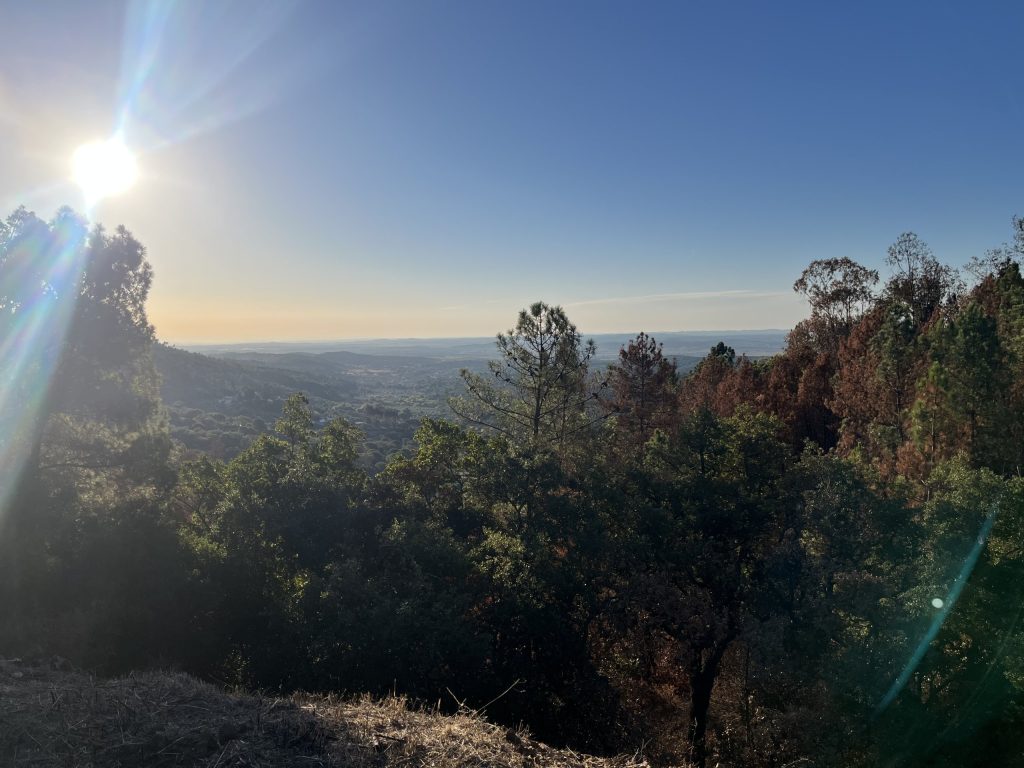
For days I would climb out of a valley so spectacular, so incredibly impressive, that I was sure I’d seen the very best of the region, only to drop back into another one that somehow seemed even more beautiful. In every direction, from the valley floor to practically the very top of the surrounding hills, terraces of vines shimmered in deep reds, yellows and oranges in the dazzling sun as the plants began their annual process of shedding their foliage in preparation for winter dormancy.
Occasionally, terraces were unplanted, presumably because they had been recently created. These freshly cut lines of giant steps that swept around the hillsides made the terrain look exactly like contour lines on a map.
Some of the oldest terraces, known as socalcos, are held in place by walls built from the local schist, the dark stone that gives much of the valley its rugged appearance. Building and maintaining them on slopes this steep must have required an extraordinary amount of work, something that became increasingly obvious from the saddle as I slowly gained height beside them.
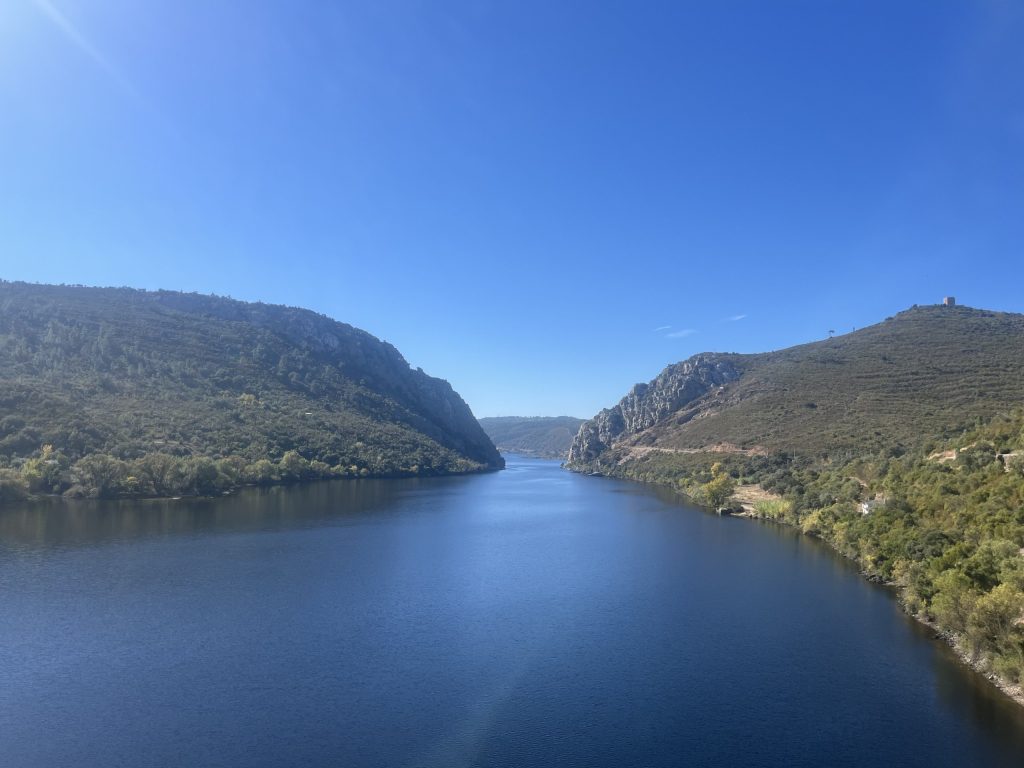
Between the vines sat scattered quintas, small villages and the occasional whitewashed church, while far below the Douro wound through the bottom of the valley. It was down here, close to the river, that I could see neatly laid-out orchards of orange trees and plots of olive trees. It was a landscape that looked almost designed rather than farmed, the natural shape of the mountains and centuries of human effort becoming difficult to separate from one another.
Beautiful, certainly. Flat, absolutely not.
The price of every long descent seemed to be another climb immediately afterwards. I would lose hundreds of metres in what felt like minutes, feeling the temperature rise as I dropped towards a river, only to see the road on the opposite hillside zigzagging upwards and realise, with mild bewilderment, that there were yet more valleys ahead.
There are moments on climbs like these, when the sweat pours freely and the legs complain endlessly, that I realise planning a trip in the comfort of a library is very different from actually undertaking it. The truth is I know this. I’ve learnt it plenty of times over the years, yet I still find myself drawn towards routes I know I’ll find challenging. Library me has a habit of dreaming big, he has a desire for suffering, believing that doing so is somehow rewarding. He’s normally right, but it doesn’t stop present-day me thinking he’s a prick at times!
Further south, however, Portugal slowly began to change.
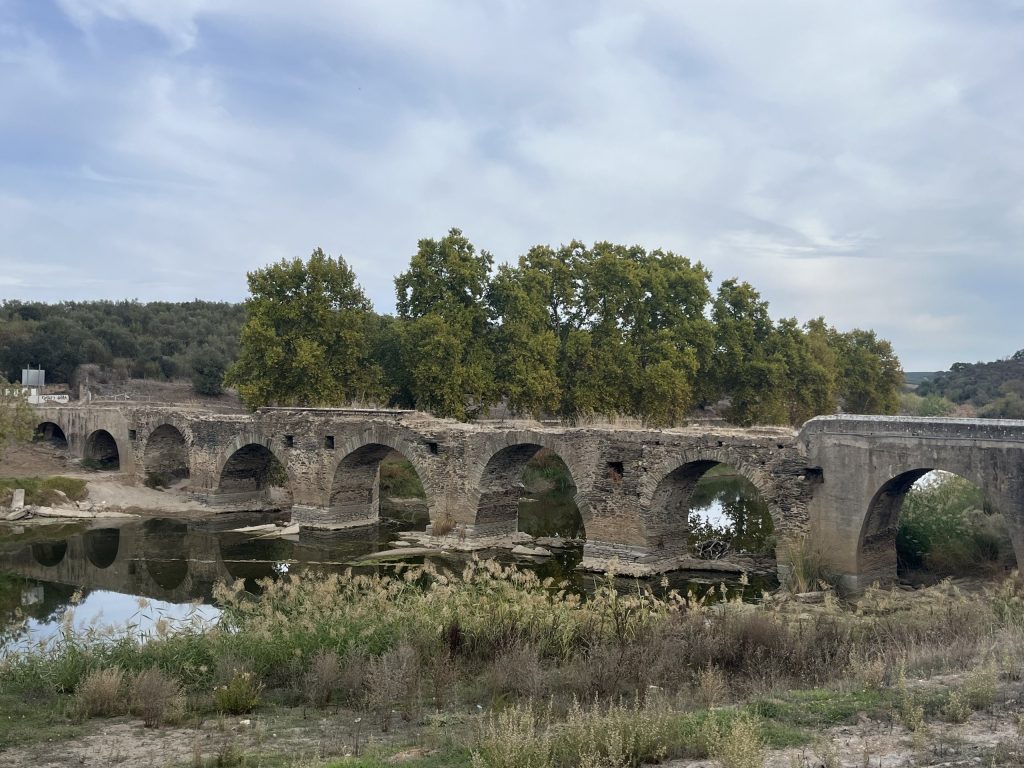
The tight valleys and steep vineyard-covered slopes of the north gradually loosened their grip on the landscape and the views began to open as the enclosed feeling of the northern valleys began to be replaced by long horizons, huge skies and roads disappearing towards distant ridges. The mountains became gentler hills, forests gave way more often to agricultural land and my surroundings started taking on the distinctive appearance of the Alentejo.
There is a spaciousness to this part of Portugal that I hadn’t experienced further north. Great areas of land seemed to stretch away almost uninterrupted, broken by stands of cork oaks, olive groves and the occasional cluster of whitewashed buildings nestled on gentler hillsides. The roads could remain empty for long stretches, just the occasional passing car or tractor, battered by generations of hard toil, would pass me. Villages often seemed to arrive suddenly, a church tower or remnants of a castle appearing above the horizon before a maze of quiet, always cobbled streets lined with weather-beaten homes and farmyards surrounded me and then disappeared just as quickly behind.
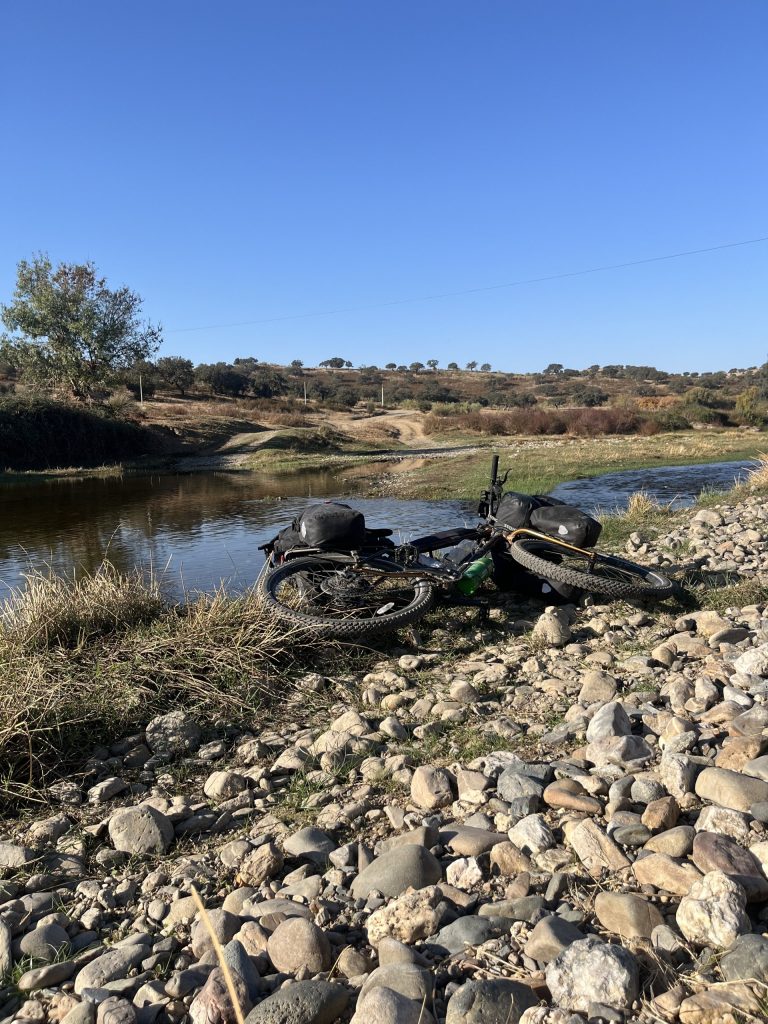
Cork oaks and olives are two of the defining features of the Alentejo landscape, scattered across broad plains that became increasingly dry and sun-baked the further south I rode. After the relentless climbing of the Douro, the riding felt almost suspiciously easy.
Portugal still seemed determined to remind me that even here, on these vast plains, completely flat roads are a rare luxury, and the increasing heat made even the gentler gradients harder than they looked on the map. But it was undeniable that, by the middle of the week, I’d left the mountains of the north behind.
Estremoz was one of the places that stood out along the way. Even approaching it, there was something noticeably pale about the town and the surrounding landscape. The reason is beneath the ground. Estremoz sits in one of Portugal’s great marble-producing regions and has become particularly associated with its high-quality white stone, much of which has been quarried here for centuries. Above the newer town sits the old medieval centre, enclosed by walls and dominated by its castle and former 13th-century citadel.
The further south I went, the more the landscape seemed to simplify, dominated by a constant assortment of cultivated fields, dry grass, olive trees and cork oaks. White villages glimmered beneath a sun that still seemed unaware it was now almost November, while roads stretched, almost dead straight, through countryside that often felt empty. As if I had Portugal all to myself.
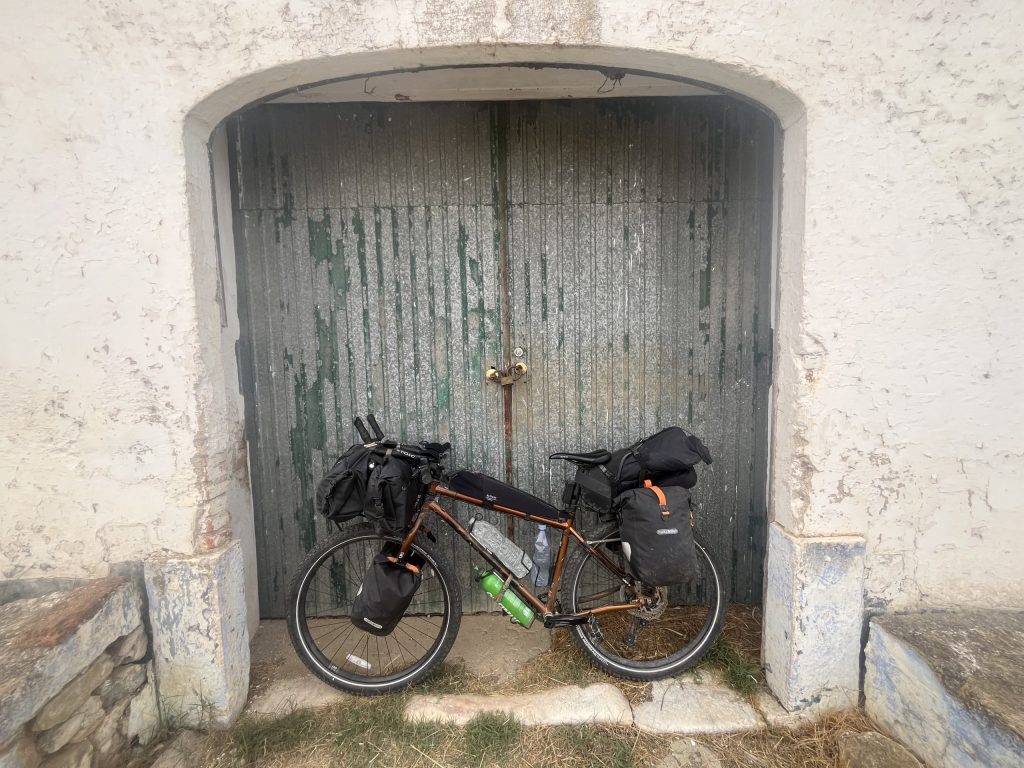
It’s Sunday 1st November as I write these final paragraphs from a campsite in the historic town of Serpa. For the past six days I’ve wild camped my way across Portugal and, at €5 a night, the draw of a shower proved too much. But there is a bigger reason for being here. If all goes to plan, in a little over a week’s time I should be crossing the Strait of Gibraltar and stepping foot — or should that be tyre? — in Africa.
Before I do so, however, there is a little planning to be done, ferry tickets to be bought and accommodation for my arrival to be sorted, so I’ll be spending the next 24 hours getting everything in order for my arrival on my second-to-last continent to explore by bike. Only Antarctica remains.
A destination that Library me thinks might one day be possible.