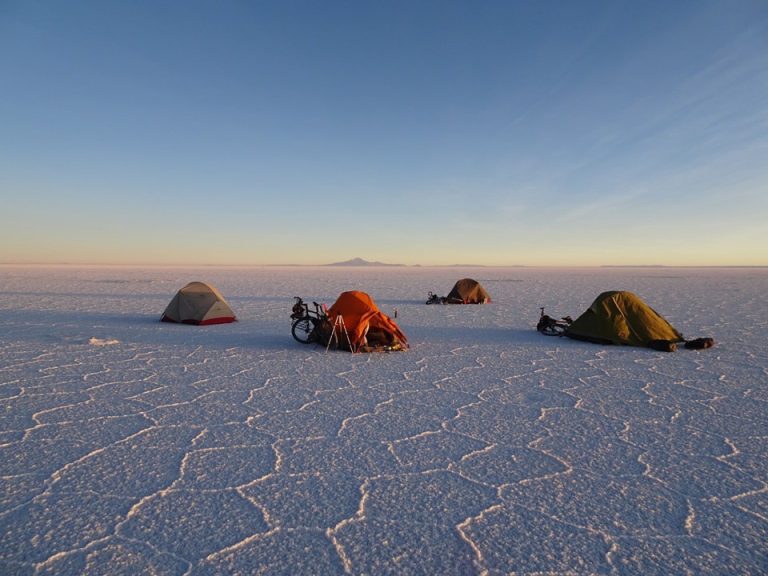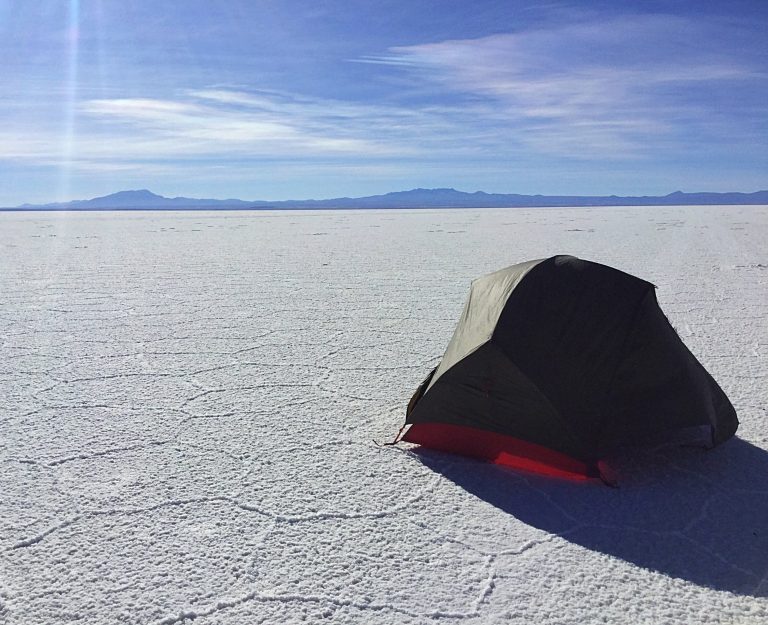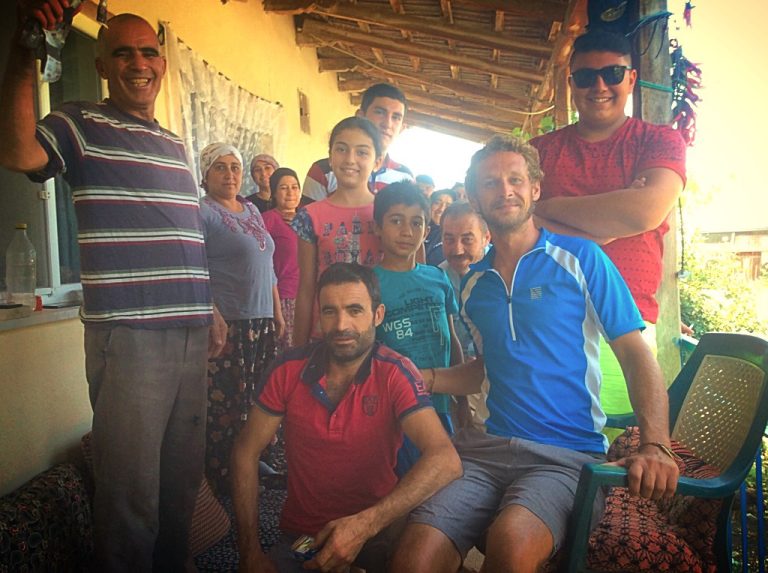
Years of bikepacking have allowed me to refine my setup and ensure I’m carrying the bike touring essentials. Every trip I do, I seem to always discover items I either don’t need or wish I had.
What I pack, though, does change depending on destination and time of year. There is no need for a -10°C-rated sleeping bag on a summertime trip to Spain and likewise, taking a lightweight one for a winter exploration of Norway isn’t really recommended. So small changes are nearly always made, but the core of the list generally stays the same. Four items in particular never leave my panniers, regardless of destination or season: gaffer tape, wire, cable ties and wet wipes.
None of these take up much space, nor are any of them all that exciting, but each has, at one time or another, made a difficult situation considerably easier — and some have genuinely been the difference between carrying on and a trip-ending problem.
What they all have in common is versatility. They don’t have one specific job. Instead, they sit quietly in my panniers until something either goes wrong, comes loose, breaks, needs attaching, needs cleaning or simply needs to survive long enough for me to find a better solution. When you spend enough time travelling by bicycle, especially in remote places, having options becomes incredibly valuable.
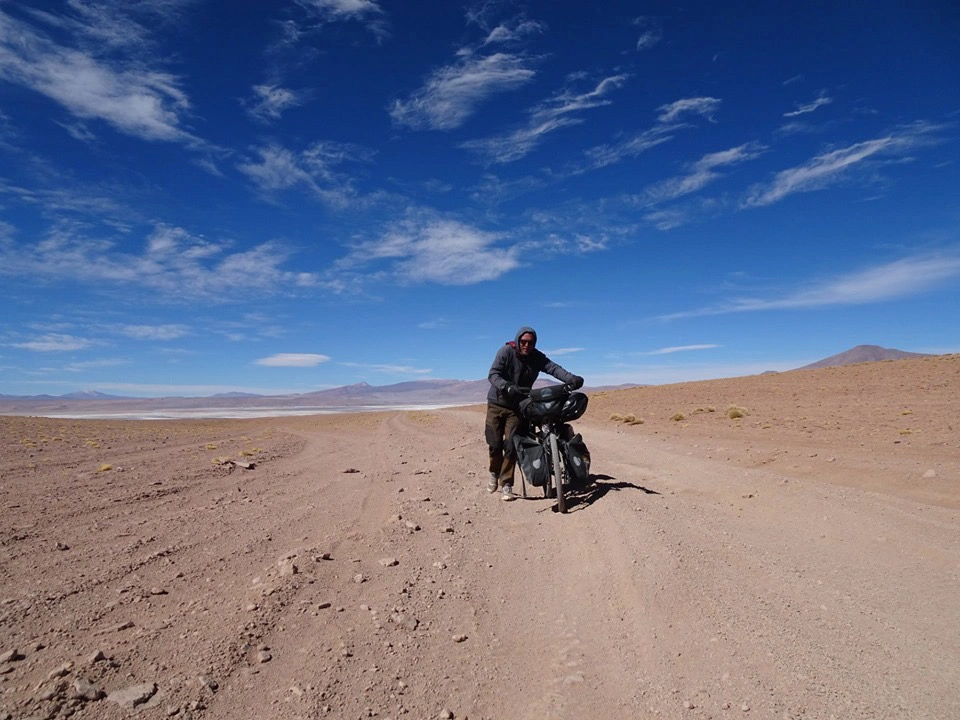
Gaffer Tape
There’s a good reason this stuff has become synonymous with improvised repairs. Modern gaffer tape was developed for the film industry in the late 1950s, where crews needed something strong enough to secure cables and equipment but easy enough to remove afterwards.
Its close relative, duct tape, has an even more impressive history, starting life as a wartime solution for sealing ammunition boxes before soldiers began using it to repair just about everything else.
And today, for a bikepacker, it still does pretty much exactly that.
There is very little I can think of on a bikepacking setup that, at the very least, couldn’t be bodged back together with gaffer tape. Holes and tears in panniers can be patched, as can rips in tents and down jackets. Bike frames can be protected from rubbing cables, loose bolts can be held in place and I’ve even used it to keep the soles of shoes attached.
When your bar tape starts to unravel, as it almost certainly will at some point, gaffer tape will once again be your friend. It might not be as comfortable as the real thing, and it certainly won’t look as pretty, but when you’re standing 100 miles from the nearest settlement with your bar tape flapping around in the wind, appearances suddenly become a lot less important. If it works, it works.
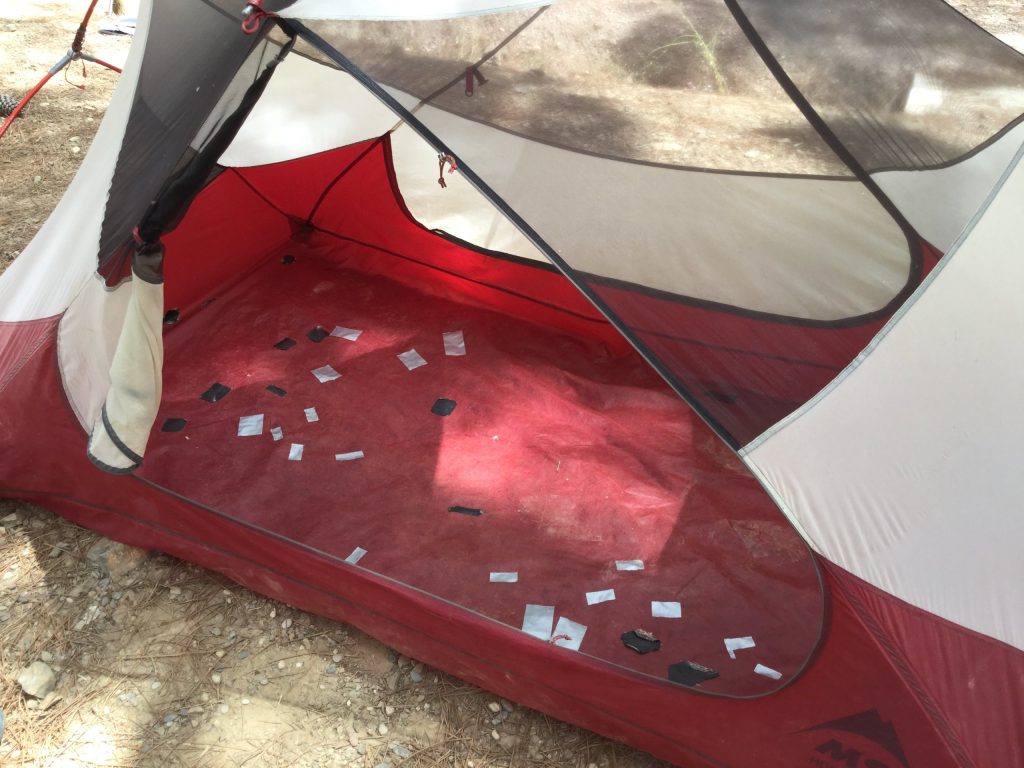
On my round-the-world trip, gaffer tape very quickly became a staple part of my kit. By the time I was on the home stretch, my tent had provided somewhere for me to sleep for more than 1,200 nights. Unsurprisingly, all those nights, along with the weather and the inquisitive nature of some irksome little creatures, had started to take their toll on my trusted home.
Tent poles had begun to crack. Holes had appeared in the groundsheet where ants and other creatures had eaten their way through, and a large tear had formed in the outer fabric. Once again, gaffer tape came to the rescue.
Cracks in the poles were tightly wrapped, holes in the groundsheet were patched and tears in the fabric were carefully covered. None of these were repairs I’d recommend as permanent solutions, but that wasn’t really the point. They were good enough to keep the tent functioning and, most importantly, keep providing me with shelter for the remaining few months of the journey.
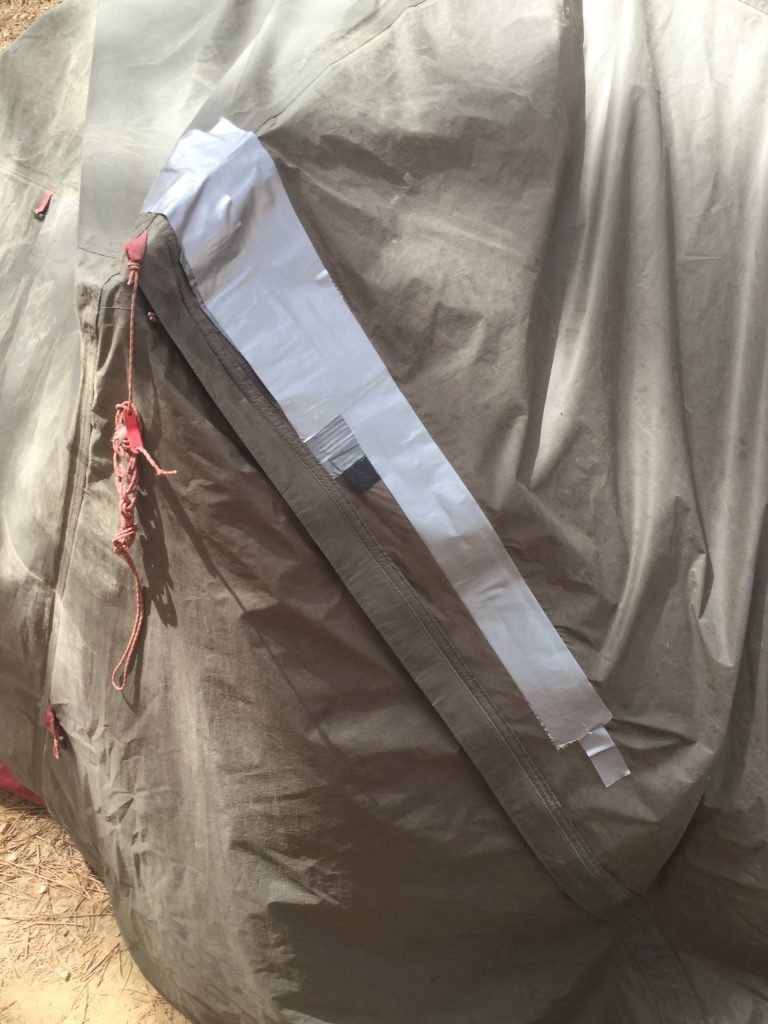
That, for me, is the real value of gaffer tape. It isn’t necessarily there to fix something forever. It’s there to turn a potentially serious problem (no one likes being rained on whilst inside a tent!) into something you can live with until a better repair becomes possible.
I rarely carry a full roll with me. That’s unnecessary weight and bulk. Instead, I normally wrap around five or six metres of it around one of my tyre levers and simply replace it when needed.
It takes up virtually no additional space, weighs very little, and means there is always a decent length of one of the most versatile repair materials out there sitting inside my tool kit.
Wire
A length of wire is one of those things I’d never really thought about needing until the day I desperately needed some.
Shortly before reaching the Cambodia–Thailand border on my round-the-world trip, the freehub in my rear wheel decided to give up. With the cassette now essentially spinning free of the wheel, no matter how hard I pedalled, the drivetrain simply spun and spun without actually driving the back wheel.
Effectively, I was going nowhere.
My first attempt at a repair involved cable-tying a couple of the spokes directly to the cassette, hoping that would force the cassette and rear wheel to turn together. It worked — very briefly. The cable ties snapped within seconds, nowhere near strong enough to withstand the strain of trying to move a heavily loaded bike plus rider.
I vividly remember standing at the side of the road, frantically racking my brain for another solution. I needed something stronger. Something like a piece of wire.
As luck would have it, an old wire fence was lying on the ground not far from where I’d stopped. It had clearly been there for a long time and was well past the point of being much use to anyone.
Most of it had rusted away, but after searching through the twisted remains I managed to find a few short lengths that looked as though they might still have some strength left in them.
Repeatedly bending the pieces backwards and forwards eventually allowed me to snap a couple free. I wrapped one end around a spoke and threaded the other through the cassette. It wasn’t pretty, but suddenly I had managed to create some sort of drive to the rear wheel again.
There was, however, a slight complication. By effectively tying the cassette to the wheel, I had also managed to turn the bike into something resembling a very heavily loaded fixed-wheel bicycle. Once I was moving, I couldn’t simply stop pedalling and coast as normal. If I did, the turning rear wheel would immediately put strain through the wire as the cassette fought against the stationary drivetrain and the wire would snap. Something I discovered more than once.
It meant riding required a little more concentration than usual, particularly whenever I was slowing down or coming to a stop, but somehow the bodge held together well enough for me to cover more than 60 kilometres before I eventually found a bike shop capable of repairing the problem properly.
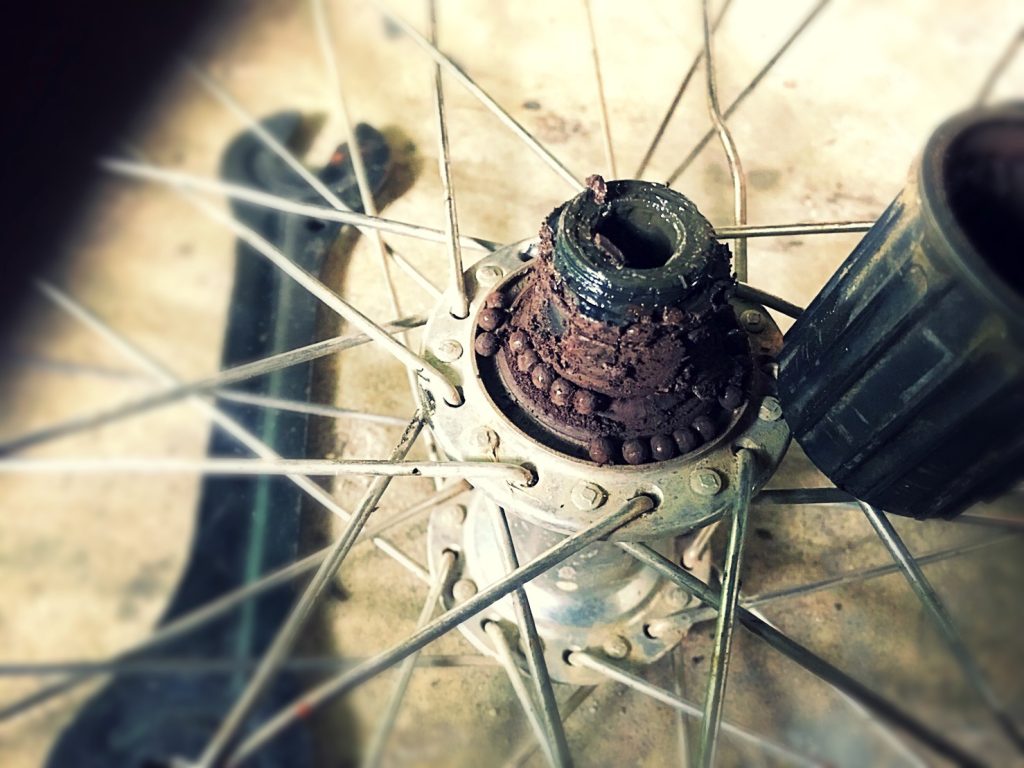
Much later in the same journey, I was riding through Chile when exactly the same thing happened again. The difference this time was that I was prepared. I already had a length of wire sitting in my toolkit.
I fashioned essentially the same repair, tying the cassette to the rear wheel and once again accepting that coasting was temporarily going to become something of a luxury.
This time the repair lasted for more than 150 kilometres before I was able to get the bike fixed properly. Ever since those two incidents, a small length of wire has had a permanent place in my toolkit.
And broken freehubs aren’t its only use. I’ve used wire to attach panniers to a bike rack after their original connectors snapped clean off, and to improvise repairs to a failing handlebar bag when its latch finally gave up the ghost.
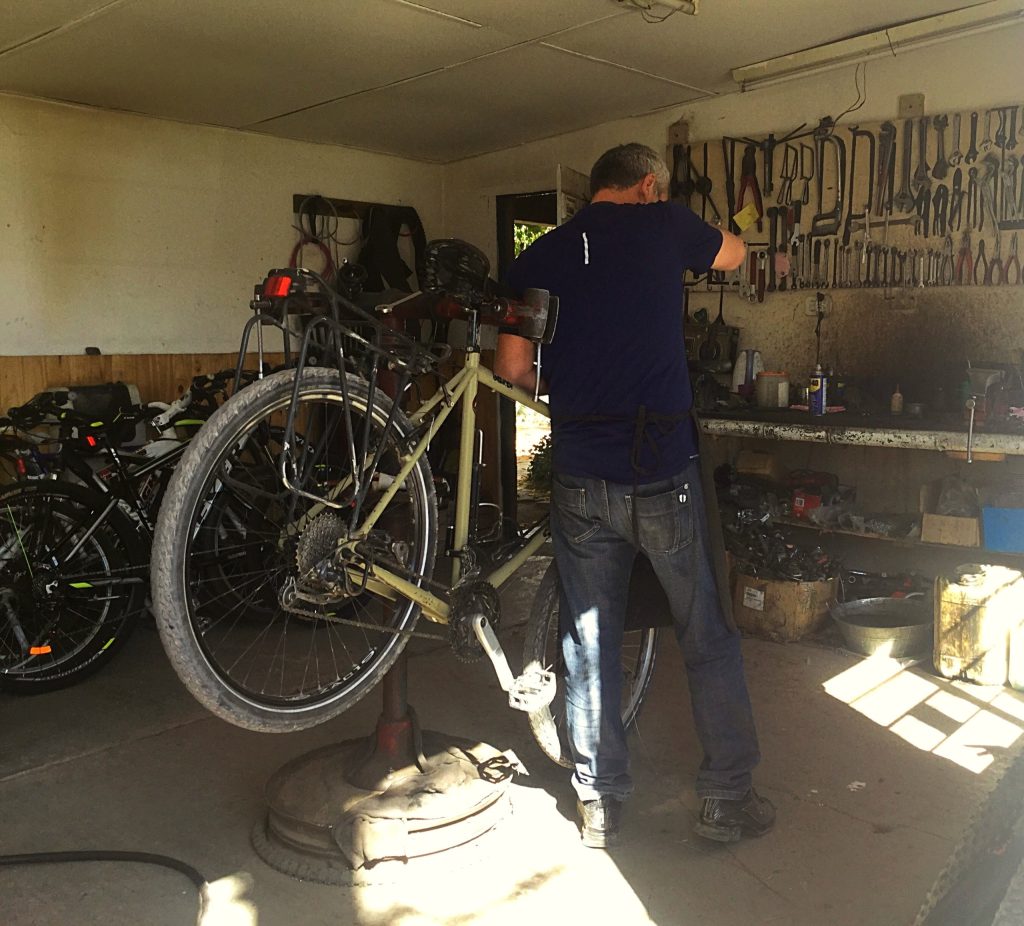
Like gaffer tape, the attraction is that wire doesn’t really have one specific job. It is simply strong, bendable and capable of holding things together when the original solution no longer can. A small length weighs virtually nothing, takes up almost no room and may sit unused in the bottom of my toolkit for months, but knowing it’s there once again gives me options in a situation where, without it, I might not have any.
Cable Ties
Cable ties sit somewhere between gaffer tape and wire in my repair kit. They aren’t as strong as either, but what they are exceptionally good at is attaching one thing to another. And doing it very quickly.
That makes them incredibly useful on a loaded touring bike, where there always seems to be something that needs holding in place, stopping from rattling, keeping away from a wheel or temporarily attaching until I can come up with a better solution.
A light mount breaks. A cable starts moving around where it shouldn’t. Something strapped to the outside of a pannier refuses to stay where I put it. A buckle or fixing point fails and I need another way of securing the load. A cable tie can often solve the problem in seconds.
That is probably their biggest advantage over gaffer tape and wire. Wire can be stronger and gaffer tape can cover or reinforce things, but neither is quite as quick and simple.
They are also incredibly useful when the problem isn’t a breakdown at all. Bike touring setups change constantly. Food gets strapped on temporarily, wet clothes need carrying somewhere they can dry, an extra bottle suddenly needs a home, or something I’ve picked up along the way needs attaching to the bike for a few kilometres.
A handful of cable ties gives me an easy way of improvising without permanently changing the setup.
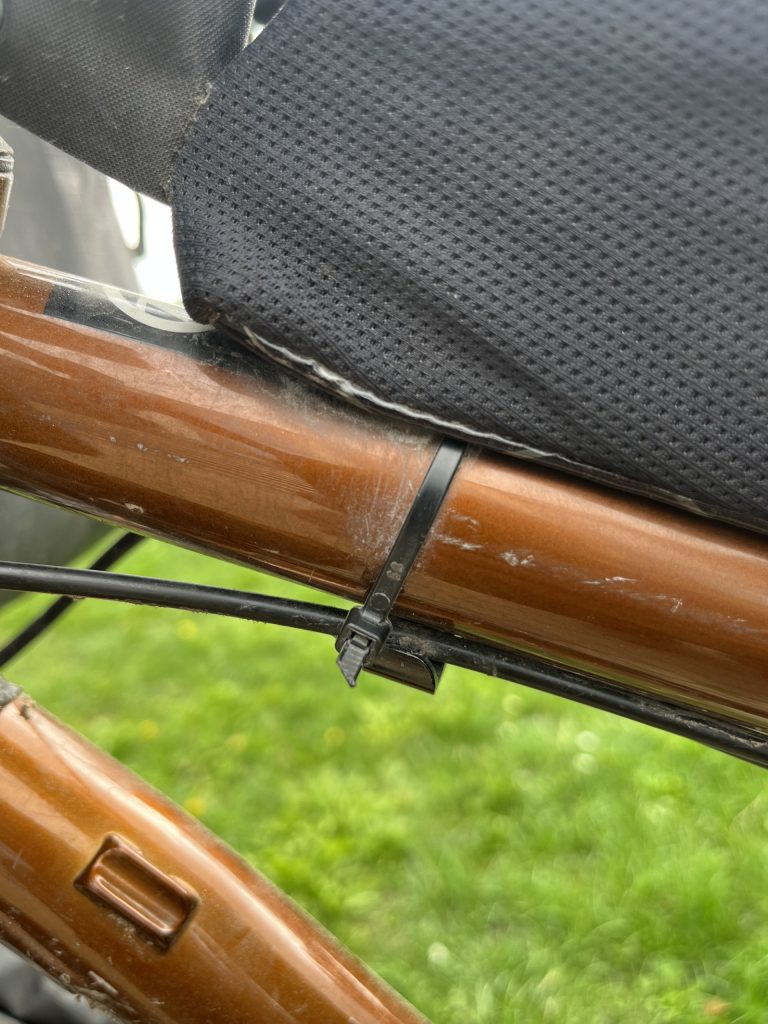
They can also replace small plastic clips and fixings surprisingly well when those inevitably fail. They won’t necessarily make the repair pretty, but pretty stops mattering very quickly when the alternative is having something swinging around and rubbing against the back wheel for the rest of the day.
I normally carry a small selection rather than a huge bundle. A few short ones deal with cables and smaller items, while several longer, heavier-duty ties give me a little more scope when something substantial needs securing.
The reusable ones tend to be first choice, but finding these can be difficult in a lot of places; however, I’ve rarely failed to find the basic type.
And unlike gaffer tape, they don’t really deteriorate while sitting unused in the toolkit. They weigh next to nothing, lie flat and are easy enough to forget about until the moment one is needed.
There is one lesson worth remembering, though. Cable ties are good fasteners. They are not structural repairs. The freehub incident in Cambodia demonstrated that fairly spectacularly. That was a job for wire, not plastic.
Knowing what these improvised repair materials can’t do is probably just as useful as knowing what they can. For all the smaller jobs, though, cable ties remain difficult to beat.
Wet Wipes
The first three items on this list are mainly there to keep the bike and equipment going. Wet wipes are mostly there to keep me going.
Long-term bike travel can be filthy. There are plenty of days when a shower simply isn’t available. Sweat, dust, sunscreen, road grime and whatever else the day has thrown at me are all going to come into the tent with me unless I can clean up.
Over the years, I’ve perfected a full evening wash using just four wet wipes. It is obviously no substitute for a proper shower, but it is enough to clean off the worst of the day before climbing into my sleeping bag. That matters more than it sounds.
The cleaner I can keep myself before getting into bed, the less dirt and grime ends up being transferred into the sleeping system night after night. When you live from a tent for long periods, keeping the inside reasonably clean becomes a job in itself.
I always use fragrance-free wipes for this. I also buy biodegradable versions wherever possible and avoid wipes that are plastic-based. They still need to be packed out and disposed of properly, but if I’m using them regularly, I’d rather choose the least wasteful option I can.
They also replaced another bit of kit I used to carry: sponges and cloths for washing up.
The problem I found with those was that, over time, they stayed damp, started to smell and eventually went mouldy. Wet wipes are much simpler. A single wipe washes up a full evening’s meal worth of pans and utensils. It easily removes the grease and food residue off items and is then disposed of rather than carrying a permanently damp sponge around in a pannier.
But they remain a staple of my setup for other reasons too. Not only do they clean me and the cooking equipment, they clean the bike, sunglasses, food dripped down T-shirts, chain oil from shoes and essentially keep the endless small bits of grime that come with life on the road under some sort of control.
A cloth can do some of those jobs, of course, but then I’m left carrying the dirty cloth afterwards, which will no doubt end up transferring it all back to something else in a pannier. A wet wipe does the job and is done.
They’re cheap, easy to replace and useful almost every day. Of the four items on this list, they are probably the least likely to save a trip. But they might be the one I notice missing first.
The Boring Things Are Often the Useful Things
There are plenty of exciting pieces of equipment involved in bike touring. I love good kit as much as anyone, and when I’m preparing for a big trip there will always be decisions about tents, sleeping systems, tyres, electronics and all the other expensive things that make travelling by bike possible.
But experience has taught me not to overlook the boring stuff. Gaffer tape, wire and cable ties give me three different ways of repairing or securing something when it goes wrong. Wet wipes deal with an entirely different problem but are useful almost every day.
Together, they occupy almost no space and cost very little. More importantly, they solve problems. And after years of travelling by bicycle, I’ve learned that the best piece of equipment isn’t always the lightest, newest or most technical, it’s those basic little items that are easily overlooked.