
Overview

Best Time
May–June / September

Duration
3 – 7 Days

Terrain
Road / Gravel

Difficulty
Beginner to Advanced

Challenges
Wind

Best Bike
Gravel / Mountain Bike
Guide Contents
Bikepacking around the Isle of Arran feels like a condensed version of the Scottish Highlands, all packed into a relatively small island. It’s an island that rewards exploration. In a single day you can move from rugged mountain passes and empty moorland to white-sand beaches, forest gravel tracks, fishing villages, and wild coastal camps. Because of that, it really is one of the best beginner-to-intermediate bikepacking destinations in the UK. This Arran bikepacking guide aims to help you get the most from your adventure on the island.
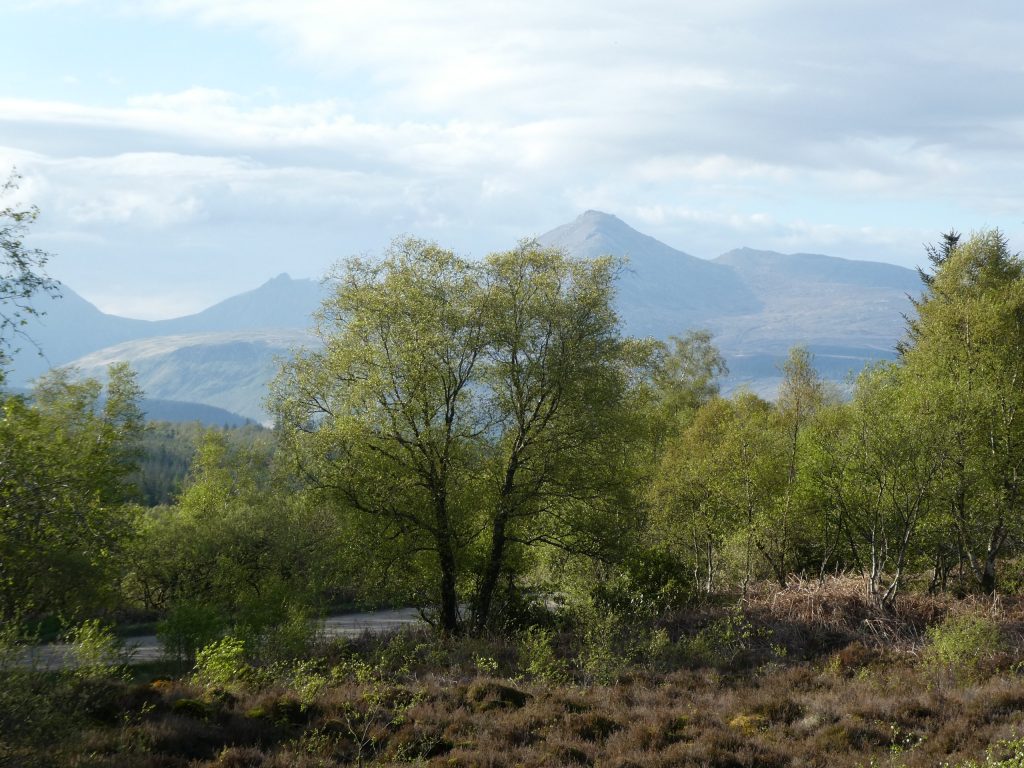
The dramatic scenery, relatively short distances, fantastic wild camping options and a strong sense of remoteness all combine to make it a must-visit destination for bikepackers. Even those looking for something a little more challenging will find the forestry tracks, estate roads and remote coastal pathways provide more than enough of an adventure.
The North
The North of the island feels more mountainous and wild with its steep ridges, rocky glens, exposed moorland and dramatic weather. Similar to the Highlands of mainland Scotland, this area feels wilder and more remote. Expect to encounter sharp granite peaks, misty ridges, waterfalls and the chance of seeing deer on the moorland and golden eagles circling above.

The South
The South becomes softer and greener, its rolling coastal roads, conifer forests, hidden beaches and all-round gentler riding providing a relaxing contrast to the North. It lends itself to a slower, calmer pace of riding with bikepackers often ending up preferring the south because of its peaceful atmosphere.
Arran is often one of the first destinations I recommend to novice riders looking at getting into more adventurous bikepacking thanks to its wide range of routes, breathtaking scenery and the fact it’s ideal for those wanting to explore the idea of wild camping.
So whether you’re visiting Arran to ride around the scenic quiet coastal road or coming over for a gravel adventure, this guide aims to give you all the information you’ll need to plan your visit and get the most from one of the UK’s premier bikepacking destinations.
About this guide
This guide is built from first-hand experience. Most of it comes directly from notes I made while riding and camping around Arran — often late at night in the tent, after experiencing the routes, weather and logistics described below.
Where information didn’t come directly from me, it came from other bikepackers I met on the island or from later first-hand contributions. This isn’t generic destination information copied together from around the web. Where practical details needed updating — such as ferry information, opening times or current services — I’ve checked them against current operator or business information.
Details such as prices, ferry timetables and opening times can change. Everything was accurate to the best of my knowledge when published, but if you spot a mistake, have an update or think something is missing, please get in touch.
Affiliate disclosure: Some links on this page are affiliate links. If you make a booking or purchase through one of them, FTtouring may earn a small commission at no extra cost to you. I only include links where they are relevant and useful to planning the trip.
When to go
Generally speaking, the best time to go bikepacking in Arran is from late April through to early September with the sweet spot being from May to mid-June. At this time of year you’ll get long daylight hours, cooler riding temperatures and quieter roads as peak summer tourism has yet to hit.
Spring also brings some of the island’s best scenery, with gorse in bloom, woodland wildflowers, the smell of wild garlic and fresh green hillsides. Campsites begin reopening after winter and ferry services operate more frequently.
Temperatures can still drop close to freezing overnight though, particularly inland or higher up the glens, so decent layers and a warm sleeping setup remain important.
If you like it a little warmer, then heading to the island from late June through to August will give you the warmest temperatures and will make wild swimming in the rivers and sea a little more appealing. However, this is also peak midge season and campsites will become noticeably busier.
If travelling during summer weekends or holidays, booking ferries in advance is recommended. You’ll also likely be sharing the best of the wild camp spots around the island, especially around the coastline where the winds keep the midges to a more manageable level.
September would be my next preferred time to visit if I couldn’t make a spring trip. Arran becomes quieter again, the midges ease off and the autumn colours start spreading across the island. It’ll mean shorter daylight hours, a return to much cooler evenings and the chance of an Atlantic storm later in the season but September can often be a rewarding time to visit.
Winter riding on the island is best left for those that like their touring tough and are happy riding in wet and cold conditions. Daylight hours are short, many campsites close and trails will be muddy and harder to pass on a fully loaded bike.
Winds tend to be at their strongest, rain more frequent and temperatures can drop below freezing. The reward though is near-empty roads, dramatic weather and a strong sense of solitude.
Bike & Packing Recommendations
A gravel or touring-style bike will work well on Arran. I’ve toured the island using both a 26-inch Surly Long Haul Trucker and my current 29-inch Kona Unit X. Both worked well, although the Kona definitely felt better on the gravel thanks to its bigger, wider tyres.
Your pannier or bag setup will depend on what you intend to carry, but as always, the lighter you are, the more enjoyable the riding tends to be. Pack, repack and then pack again. You’ll be surprised at what you don’t need.
If you’d like to see what I carry whilst living full-time on my Kona Unit X, then head over to my packing article here (link)
Recommended for Arran:
- Waterproofs
- Midge repellent
- Tick remover
- Tool kit and spare tubes
- Water filter
- Warm insulated jacket
- GPS/GPX navigation
- And don’t forget your camera!
Getting To/From The Island
Arran has no airport so the only way on and off the island is by ferry.
From Mainland Scotland:
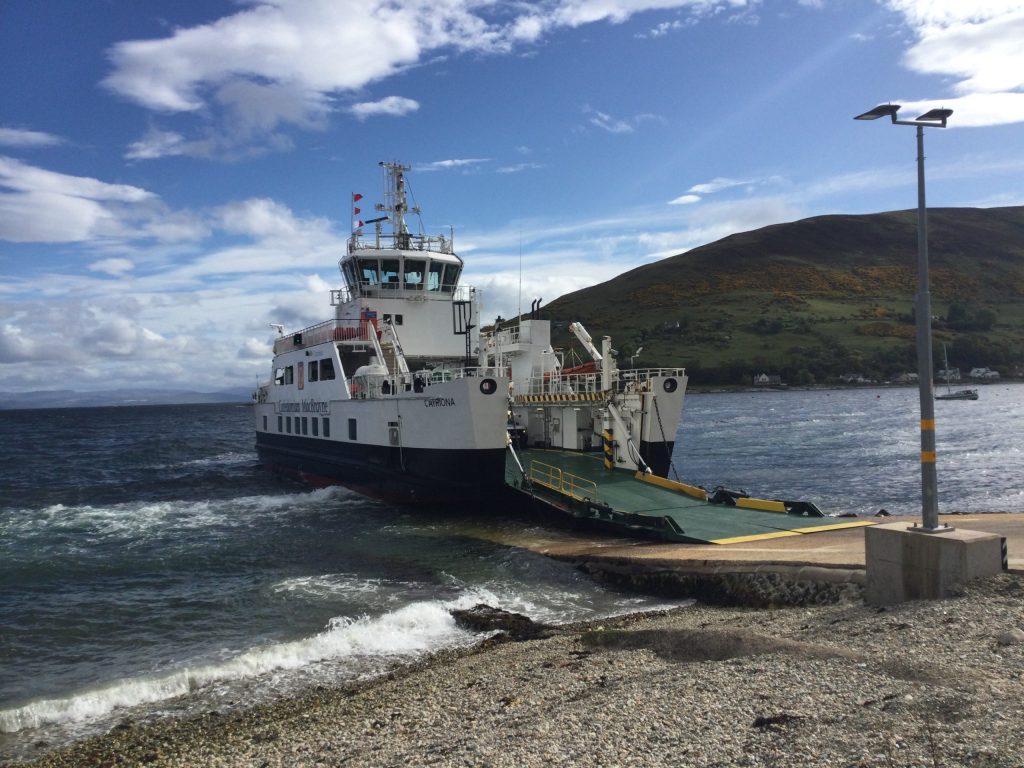
There are two ports from mainland Scotland that run routes to Arran. The bigger of the two is located in the town of Ardrossan and a smaller port is at Troon. Both routes can cater for cyclists and both arrive on Arran at the port in Brodick.
The route from Ardrossan has a crossing time of around one hour whereas it takes around one hour and twenty minutes from Troon.
Both routes are run by Caledonian MacBrayne. Tickets are available online at www.calmac.co.uk or by phone on 0800 066 5000. You can also buy tickets for your crossing from the terminal buildings at each of the ports.
For cyclists, tickets are priced at £5.30 one way (as of May 2026) from the operator themselves. Expect to pay around £6 if you get your tickets through third-party sellers such as directferries.com. Check Arran ferry times & prices
There are a number of crossings each day from either of the ports but it’s worth noting that the service can be interrupted due to bad weather and some crossings cancelled at short notice. Summer sailings are more frequent but can book out for bikes during peak weekends. To check for crossing times, delays or cancellations, check out Caledonian MacBrayne Ferries website here.
Leaving The Island
Again, the ferry is your only option to leave the island.
Back to the mainland
- You can reverse the route back to the mainland from Brodick with tickets again available online, by phone or at the port itself. One-way tickets are priced at £5.30 for cyclists (as of May 2026) if bought directly from Caledonian MacBrayne Ferries website available here: www.calmac.co.uk or Check Arran ferry times & prices
Onwards to Kintyre
If you’re looking to carry on island hopping, then you can head over to the Kintyre Peninsula (link to guide) from the north of Arran.
From Lochranza
- A ferry operates year-round from Lochranza to Kintyre. During the main season it runs to Claonaig, while winter services may operate to Tarbert instead. Cyclists will pay just £4 one way for the 30-minute journey. Tickets are available via Caledonian MacBrayne ferries website (www.calmac.co.uk) by phone (0800 066 5000) or can be bought on board. It’s worth noting that this is a small ferry that can book up quickly and although booking isn’t essential, it could be a good idea during peak season. Caledonian MacBrayne advises that groups of six or more cyclists should phone ahead. Check Arran ferry times & prices
From Brodick
- There is currently no direct ferry from Brodick to Campbeltown. If continuing towards Kintyre, use the Lochranza ferry instead.
Weather
Weather plays a major role in the Arran bikepacking experience. Sitting in the Firth of Clyde off Scotland’s west coast, the island experiences rapidly changing Atlantic conditions throughout the year. For bikepackers, the weather matters less in terms of absolute temperature — Arran rarely experiences extreme heat or extreme cold — and more in terms of wind, rainfall frequency, humidity and ground conditions.
The island’s weather can change fast and you can experience bright sunshine, mist, heavy rain and strong winds all within a single day. The mountainous north often creates harsher inland conditions while coastal areas remain relatively calm.
Seasonal Breakdown
Spring (March → May)
Typical spring conditions bring cool mornings, crisp clear evenings and frequent sunshine, although expect some rain and the occasional cold Atlantic wind. The days are becoming longer, trails begin drying out and riding temperatures are more comfortable. It’s my preferred time to visit the island.
Spring also brings some of Arran’s best scenery, with gorse coming into flower, wild garlic appearing along woodland edges and the hills gradually turning green after winter. Visitor numbers are generally lower than in summer and midges are usually less troublesome, making it a particularly good time for quieter riding and wild camping.
Approximate coastal average low/high temperatures:
March: 4–10°C
April: 5–12°C
May: 8–16°C
Summer (June → August)
Summer offers the warmest and most stable riding temperatures with mild mornings and evenings but it’ll mean some riding days can be hot and sweaty. Arran rarely becomes excessively hot though and the daylight hours are also incredibly long and the evenings remain light remarkably late around midsummer.
However, despite being “summer,” you should still expect rain showers, Atlantic fronts and periods of strong winds and bear in mind that the weather can still change for the worse quickly.
Approximate coastal average low/high temperatures:
June: 11-18°C
July: 13–20°C
August: 12–19°C
Autumn (September → November)
Early autumn is arguably the most underrated bikepacking season on Arran. September especially can be outstanding. With a calmer atmosphere, soft golden light and often surprisingly stable weather it’s well worth considering if you can’t make a spring trip.
As autumn progresses, expect storms to become more frequent, winds strengthening, a drop in daylight hours and trails becoming wetter. By November, many gravel sections become heavy and boggy again.
Approximate coastal average low/high temperatures:
September: 10–16°C
October: 7–13°C
November: 5–10°C
Winter (December → February)
Winter bikepacking on Arran becomes a much more serious undertaking. Expect to encounter heavy rain, strong Atlantic storms, saturated ground, very short daylight and freezing wind chill. Snow rarely settles for long on the coast but can affect inland routes and higher passes.
Winter also brings Arran at its quietest, with near-empty roads, fewer visitors and a much stronger sense of isolation. Many seasonal businesses and campsites close or reduce their hours, so food, accommodation and resupply need a little more forward planning than at other times of year.
Approximate coastal average low/high temperatures:
December: 3-9°C
January: 3-8°C
February: 3-8°C
Camping & Accommodation
Hotels/B&Bs/Hostels
Arran has a wide range of accommodation options for riders who prefer a solid roof over their head. Brodick, Lochranza, Lamlash, Whiting Bay and Blackwaterfoot all offer hotels, guesthouses, hostels and self-catering cottages.
For most bikepackers though, camping is a major part of the experience.

Campsites.
For a small island, Arran is surprisingly well catered for when it comes to campsites, and they can make a welcome break from wild camping when the time comes for a shower, laundry or a catch-up with other bikepackers.
Opening periods vary considerably between sites: some operate seasonally while others remain open throughout the year, so it’s worth checking directly before travelling outside the main season.
(All quoted prices are correct as of May 2026)
Brodick
Glen Rosa – £7pp per night.
A basic campsite that’s about as close to wild camping as it gets but with flushing toilets. Facilities are very basic: a toilet block and a tap. There are no showers or Wi-Fi. Rubbish bins are located just outside. It is, however, very conveniently located just outside Brodick.
The campsite is surrounded on one side by the very pretty Glen Rosa that flows down from the valley above. Expect to see tame pheasants wandering around and great sunset views of Goat Fell.
No need to book: just turn up and select a pitch. Nico will come and find you at some point, or you can pay via the honesty box attached to the toilet block.
Contact Details:
Address:
Unnamed Road, Isle of Arran, KA27 8DF, United Kingdom
Website:
N/A
Phone number:
+447985 566004
Lochranza
Lochranza Caravan and Camping – £12pp per night (small tent)
One of the best-equipped and most bikepacker-friendly campsites on Arran. You’ll find a fast Wi-Fi connection, hot showers, heated toilet block, dishwashing area, laundry facilities and drying room, cooking shelter, plenty of drinking water taps and a small onsite shop. Staff are very friendly and helpful.
Most of the camping areas are on flat grass and you even have a good chance of seeing red deer walking through the site. The village itself is incredibly pretty, especially at sunset. No requirement to book for solo or small groups of cyclists requiring tent pitches, although I’d probably ring ahead and check during peak season.
Contact Details:
Address:
Lochranza, Isle of Arran, KA27 8HL, United Kingdom
Website:
Phone number:
+441770 830273
Shiskine
Bridgend Campsite – £10pp per night (small tent)
Bridgend is a quiet, well-located campsite close to the hamlet of Shiskine and the western end of the String road. You’ll find hot showers, toilets, a washing-up area, Wi-Fi, and drinking water. It’s a perfect stop-off if you’re after a quiet stay in a relaxed atmosphere and an ideal place to celebrate your completion of The String road.
Contact Details:
Address:
The String, Bridgend, Shiskine, Isle of Arran KA27 8EN
Website:
Phone number:
+441770 860597
Kildonan
Seal Shore Campsite – £14pp per night (small tent)
A firm favourite amongst bikepackers and arguably the most scenic campsite on Arran, situated directly beside the sea at Kildonan in the south. Communal facilities include fridge/freezers, a microwave, washing-up facilities and Wi-Fi, along with direct access to the beach
Contact Details:
Address:
Kildonan, Isle of Arran, KA27 8SE, United Kingdom
Website:
Phone number:
+441770 820320
Lamlash
Middletons Camping – £14pp per night (small tent)
A good-sized and well-established campsite located in beautiful Lamlash. Facilities do range a bit depending on the pitch type you select, but generally you’ll get access to hot showers, toilets, Wi-Fi and the laundry room.
Contact Details:
Address:
Cuddy Dook, Lamlash, Isle of Arran KA27 8NQ
Website:
www.middletonsarran.co.uk
Phone number:
+441770 600251
Wild Camping
No bikepacking adventure to Arran feels complete without experiencing a night or two camping in the wild. Having wild camped in over 50 countries worldwide, I can honestly say Arran really does have some of the most scenic and accessible wild camp spots I’ve ever found.
Almost around every corner of the coastal route you’ll find picture-perfect camps with far-reaching sea views, whilst inland you’ll find some of the best mountain and moorland camps these isles offer. Your biggest problem will be leaving in the morning!

Some of my personal favourite spots include the areas around the villages of Sannox and Catacol, the valley of Glen Rosa and the stretch of the west coast around Pirnmill. The south coast around Whiting Bay shouldn’t be missed either. Coastal spots often make the best camps during summer as the breeze helps keep midges under control.
Scotland’s access rights generally allow responsible lightweight wild camping wherever access rights apply. Keep groups small, camp well away from buildings and roads, avoid enclosed fields containing crops or livestock, and leave no trace when you go.
Food & Resupply
Villages are spaced well enough that you’ll rarely find yourself completely stranded. However, once on remote gravel sections, services will disappear quickly. Thankfully stocking up on food for your trip, no matter your budget, isn’t a problem on the island. Arran has a number of supermarkets, shops, bakeries and village stores with the main resupply hubs being at Brodick, Lamlash, Whiting Bay, Lochranza and Blackwaterfoot.
Here’s a breakdown of what you’ll find and where:
Supermarkets
Arran has one supermarket on the island. This is a Co-op located on the seafront along the A841 (Shore Street) in Brodick. Open daily between 6am-10pm it stocks pretty much everything you’d expect from a supermarket on the mainland.
Convenience Stores
Brodick
- Co-op – Along with the supermarket, Brodick has a smaller Co-op convenience store located a few hundred meters further to the north of the supermarket by the Invercloy car park. Open daily between 7am-10pm with a smaller range of produce and products than the supermarket.
- Brodick also has a bakery, butcher and farm shop, all located along the main A841 road.
Lamlash
- Co-op – A Co-op convenience store is located on Main Street in Lamlash, again right on the seafront. Open daily between 7am-10pm and stocking pretty much all you’d need on a bikepacking trip.
Whiting Bay
- Bay Kitchen & Stores provides useful food and basic supplies, with several cafés and places to eat also available in the village.
Blackwaterfoot
- Here you’ll find a butcher and bakery along with a small village store located at the post office. There’s also a sandwich shop which sells hot and cold meals.
Machrie
- A small shop can be found at the golf clubhouse just to the north of Machrie. Tea and coffee are also available. The clubhouse is open to all.
Pirnmill
- A small village store is located in the post office building.
Lochranza
- There is no full village grocery store, so it’s worth arriving with supplies if you’re staying locally. The Sandwich Station near the ferry is an excellent option for freshly made sandwiches, snacks and drinks, while the campsite also stocks a small selection of essentials.
Top Tip – On a budget? Pop into a Co-op late in the day for the best chance to grab some reduced bargains. Sundays are especially good.
Eating out
You’ll find a number of restaurants throughout the island if you fancy eating out. Takeaway food such as pizza, fish and chips and Chinese meals are available from larger villages like Brodick, Lamlash and Whiting Bay.
Water
Water is generally easy to find around Arran, although it’s worth filling up before heading onto longer gravel tracks or more remote inland sections.
Shops and cafés — Bottled water is available from shops around the island, and many cafés, accommodation providers and other businesses will also refill a reusable bottle if asked.
Public refill points — A free Scottish Water refill station is located on Brodick Promenade opposite the main Co-op. I also found a refill point outside Pirnmill Stores during my May 2026 visit. VisitArran maintains a wider list of businesses around the island offering free bottle refills.
Taps — You’ll occasionally find outdoor taps around village halls, campsites and other buildings. Unless they are clearly marked as public drinking-water taps, ask permission before using them.
Streams and burns — Arran has plenty of natural water sources in the hills, but untreated water should never automatically be assumed safe. Water from streams and burns can contain organisms such as E. coli, Cryptosporidium and Leptospira, so I filter or otherwise treat it before drinking.
Bikepacking Routes on Arran
Arran has bikepacking routes to suit all abilities. Whether you’re just starting out and looking for an easy(ish) route on good quality tarmac or a seasoned pro looking for an out-of-the-way gravel adventure, Arran has something for you.
The island can be physically demanding, certainly enough to make any trip feel adventurous, but benefits from the fact it’s compact enough that mistakes rarely become catastrophic.
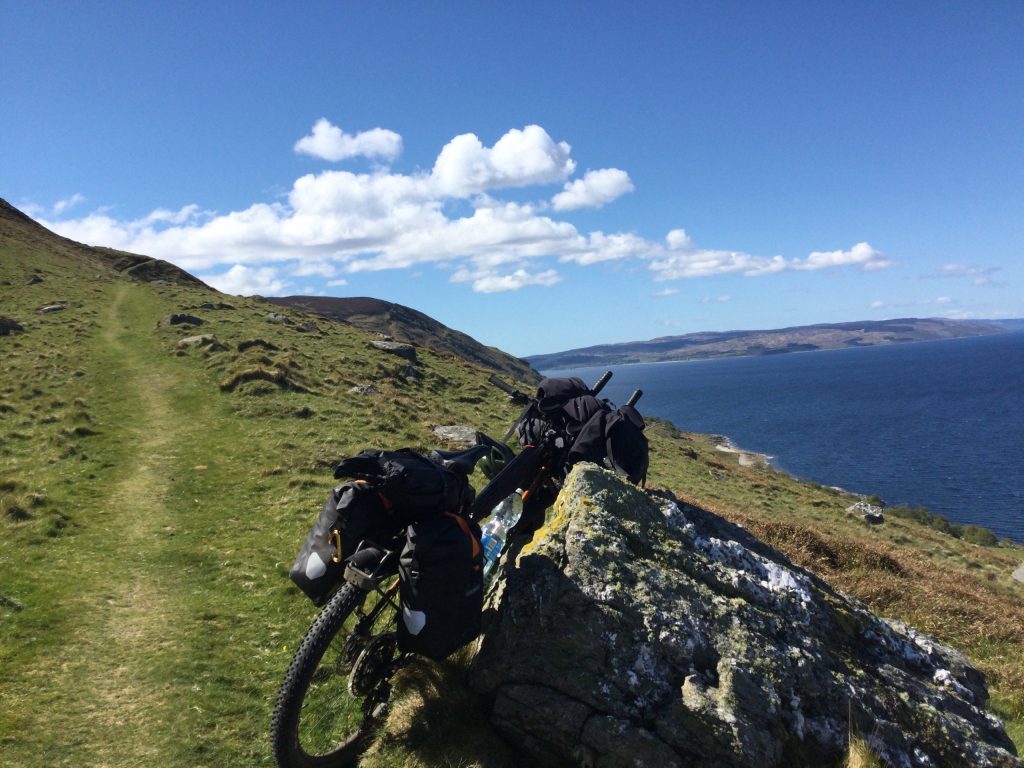
A few quick notes about riding on Arran….
Other motorists
In my experience, local drivers are generally very patient and are clearly used to cyclists sharing the island’s roads. Most gave me plenty of room and passed at sensible speeds, and I found the same generally true of visiting motorists.
Wind
Wind is likely to be one of the biggest variables when riding around Arran. The west coast can be particularly exposed during Atlantic weather systems and, with south-westerly winds common, riding clockwise from Brodick can often work well: you tackle the hillier south first and may pick up a tailwind heading north along the west coast. Conditions can change quickly though, so check the forecast rather than choosing your direction purely on prevailing winds.
Rather than duplicate the individual routes here, FTtouring has put together a dedicated Best of Arran Route Guide covering my recommended rides, including route descriptions, difficulty, terrain and downloadable GPX files.

Cycle Shops & Repairs
Despite its small size, Arran has a surprisingly good network of bike shops and DIY repair stations. Here’s a comprehensive rundown of the main options currently operating on the island.
Cycle Shops & Repair Services
Brodick
Brodick Cycles
Address: Roselynn, Isle of Arran, KA27 8DL, United Kingdom
Phone: 01770 302460
One of the island’s main dedicated cycle shops, offering repairs along with a useful range of spare parts and accessories. For a touring cyclist needing anything from an inner tube or chain to assistance with a more serious mechanical problem, this would be my first stop on the island.
Whiting Bay
Bay Services
Address: Montrose Terrace, Whiting Bay, Isle of Arran KA27 8QN, United Kingdom
Phone: +447984029286
A repair-focused workshop offering bicycle servicing and mechanical repairs. A useful option if you run into trouble while riding around the south of the island.
Public Bike Repair Stations
Arran also has free public repair stations with pumps and tools for basic maintenance and emergencies.
Lagg
Public repair station with basic tools and an air pump.
Lochranza
Public repair station beside the Sandwich Station, with basic tools and an air pump.
Cycling Clubs on Arran
Arran Bike Club
Arran Bike Club has been part of the island’s cycling scene since 2002 and remains heavily involved in developing and maintaining Arran’s off-road trails, as well as campaigning for better cycling infrastructure. The club runs regular mountain-bike rides, normally on Thursday evenings and Sunday mornings from different locations around the island, and visitors are welcome to check current ride details online.
The club also organises trail-building and maintenance days throughout the year, with volunteers welcome to get involved. It’s a useful source of local knowledge if you’re looking for current information on off-road riding and trail conditions.
You can find more information about them here: www.arranbikeclub.com
Other groups active on the island are:
* Isle of Arran Cycling Club (IOACC) – Website
* Arran Gravel Riders – Website
* Arran eBike Club – Website
* Isle of Arran Belles (women’s rides) – Website
Bikepacking Highlights on Arran
Just getting out and cycling the island will arguably provide lifelong memories and be a highlight of anyone’s bikepacking year. That said, there are absolutely some standout destinations and sections that define an Arran bikepacking trip.
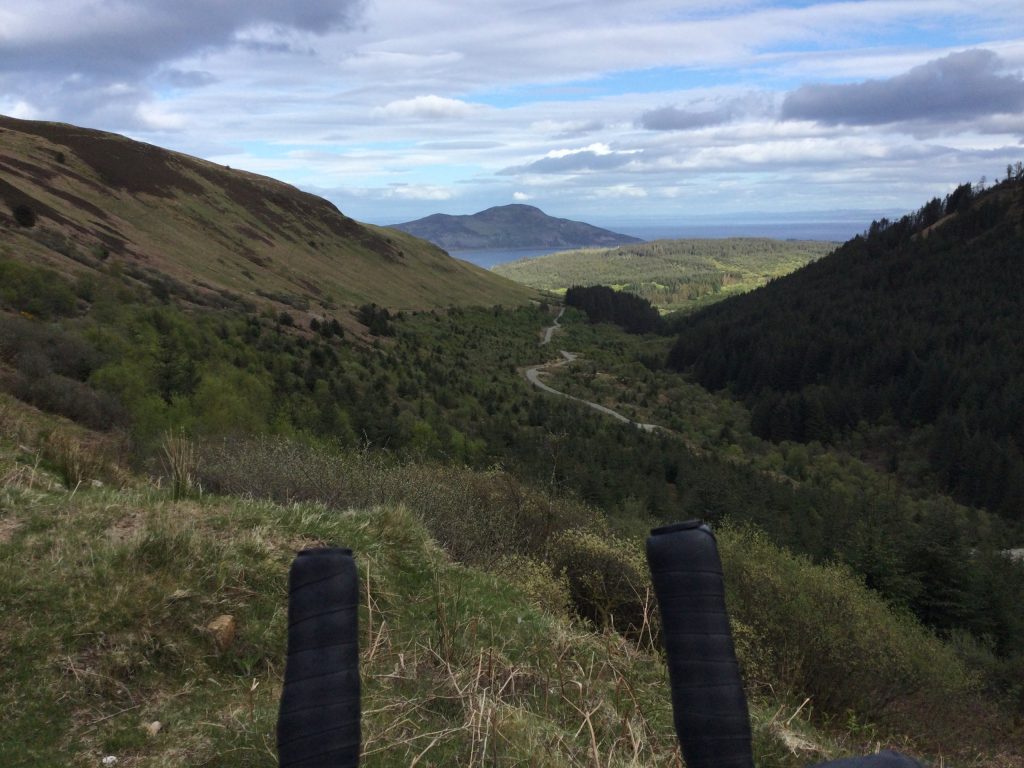
My recommendations would include:
1. Glen Rosa
Undoubtedly one of the iconic landscapes of Arran. Leaving Brodick you gradually ride into a vast glacial valley surrounded by steep granite peaks with the island’s highest mountain, Goat Fell, as its centrepiece. This is where Arran suddenly feels wild and Highland-like. With rivers, waterfalls, deer and huge open mountain scenery this is one not to miss for those who like their bikepacking adventurous. The track is rideable initially for some time but does become rougher and for most, especially those with a full load, it’ll almost certainly turn into a bit of a hike-a-bike. But that just adds to the fun. A wild camp near the upper glen in stable weather is an unforgettable experience.
2. Lochranza
Lochranza is one of the most atmospheric villages on Arran, sitting beneath mountains and situated beside a sheltered sea loch. It feels almost Nordic in poor weather. Take time out to explore the castle, watch for deer and enjoy the dramatic evening light as it falls over the calm loch waters.
This place feels remote without being inaccessible and there are some great camp possibilities nearby along with scenic riding for all abilities in every direction.
3. Machrie Moor Standing Stones
One of Arran’s most distinctive historic sites, where six prehistoric stone circles sit out on open moorland beneath the surrounding hills. Some of the standing stones date to around 2000 BC, while the site itself has even earlier origins. It’s an atmospheric place at any time, but especially around dawn or dusk when the moor can feel wonderfully empty.
4. King’s Cave
King’s Cave is part of a rugged cave system on Arran’s west coast and is traditionally linked to the story of Robert the Bruce and the spider, although the historical connection is uncertain. The caves are reached through woodland and coastal tracks, and the surrounding shoreline alone makes the detour worthwhile.
5. Whisky Distilleries
Is any visit to Arran complete without a visit to one of its two whisky distilleries? Probably not. Lochranza in the north and Lagg in the south both make easy stops on a ride and offer visitor experiences, cafés and tastings depending on the season.
Bikepacking Arran on a Budget
As with any destination, what you spend on Arran will depend almost entirely on how you choose to travel. Hotels, guesthouses and eating out will quickly increase the cost of a trip, but if you’re happy wild camping and cooking most of your own food, Arran can be surprisingly inexpensive.
A week on the island is possible on a very tight budget of around £10 a day if you wild camp most nights, buy food from supermarkets and village shops, and only use campsites occasionally. Allow more if you want regular showers, cafés, pub meals or accommodation under a roof.
On my last visit in May 2026, I spent eight days exploring Arran, wild camping on all but one night, and still had change from £70. That included my ferry travel and day-to-day food, but I was deliberately travelling cheaply and cooking for myself.
Safety
Arran has always felt like a very safe place to travel by bike. People are generally friendly, and during my own trips I’ve never had any concerns about personal security. I’ve even gone long periods without locking the bike, although whether you choose to do the same is entirely up to you.
The bigger risks on Arran are environmental rather than human. Weather can change quickly, especially in the north and on higher or more exposed routes, while strong winds and wet road surfaces can make descents and exposed coastal sections more difficult than expected. Mobile phone signal can also be unreliable in more remote areas, so don’t rely on having reception everywhere.
Arran’s roads are often narrow, winding and bordered by blind bends or summits. Take particular care on fast descents, especially in wet weather, and watch for changing road surfaces, drainage, sheep and deer. Ferry arrivals can also create short bursts of heavier traffic around Brodick, so waiting a few minutes for vehicles and buses to clear can make the start of a ride much more relaxed.
5 Things I Wish I’d Known Before Bikepacking Arran
- Finding food and water is far easier than I’d initially thought
- Drivers are very patient and give plenty of room when passing. This is no India!
- Midges really can be brutal, especially inland
- The rolling hills of the south are short-lived and even the inland climbs are very manageable on a full setup. Go for it!
- Wild camping is both world-class and easy to find.
Additional Notes – Midges, Wildlife & Ticks
Midges
Midges are an annoyance rather than trip-ending but they can, and probably should, influence campsite choice. Any camp spot during warm or humid still evenings, especially inland or in woodland and glens, will see them come out in their thousands. Camp spots along the coast where there’s often a breeze are often your best option for a bite-free evening and carrying a repellent or head net isn’t a bad idea. The best bet is to visit in spring or autumn when they aren’t so active.
Wildlife
What makes Arran especially valuable for wildlife is how relatively untouched much of the island still feels. Large parts of Arran remain sparsely populated and the combination of mountains, forests and marine environments creates a strong biodiversity. For many, Arran feels special because it still offers a rare sense of wildness without needing to travel deep into remote and isolated spots.
Amongst much else you can expect to encounter red deer roaming the northern hills and glens, especially around Goat Fell, Glen Rosa and Lochranza. There are also large populations of red squirrels, one of the species Arran is particularly known for, largely because the island remains free of grey squirrels. There’s also a good chance of coming across an adder or two in the grass and moorland.
Along the shores there’s the possibility of spotting otters, seals, dolphins, porpoises and occasionally, particularly from late summer into autumn, basking sharks.
Up in the skies above the island, golden eagles, buzzards, hen harriers and peregrine falcons can be seen soaring over the mountains and moorland.

Ticks
Ticks are common on Arran, particularly in long grass, bracken, heather, woodland edges and anywhere deer regularly pass through. They don’t jump or fly; they simply latch on as you brush past vegetation or sit down in the wrong patch of grass. They’re most active from spring through to autumn, although mild weather can extend the season.
Personally, I wouldn’t spend too much time worrying about them. They’re just another part of outdoor travel and a little basic prevention goes a long way. Long socks and lightweight trousers help, and if you find yourself pushing through thigh-high bracken or heather, tuck your trousers into your socks. You might look slightly ridiculous, but you’ll probably be the one around camp that evening who isn’t picking ticks off their legs.
Check yourself regularly while riding and give yourself a proper check once you reach camp, paying particular attention to warm or hidden areas such as behind the knees, around the waistband, groin, armpits, neck and sock line. Carrying a tick-removal tool is well worth it.
If you find one attached, remove it as soon as possible. Use a proper tick-removal tool according to its instructions or fine-tipped tweezers, gripping the tick as close to the skin as possible and pulling steadily upwards without crushing it. Avoid Vaseline, oils or other home remedies. Afterwards, clean the area and keep an eye on it. Lyme disease can cause an expanding circular or oval rash and flu-like symptoms, although a rash doesn’t always appear, so seek medical advice if you begin feeling unwell following a tick bite.
Spotted something wrong or have updated information? Get in touch here


